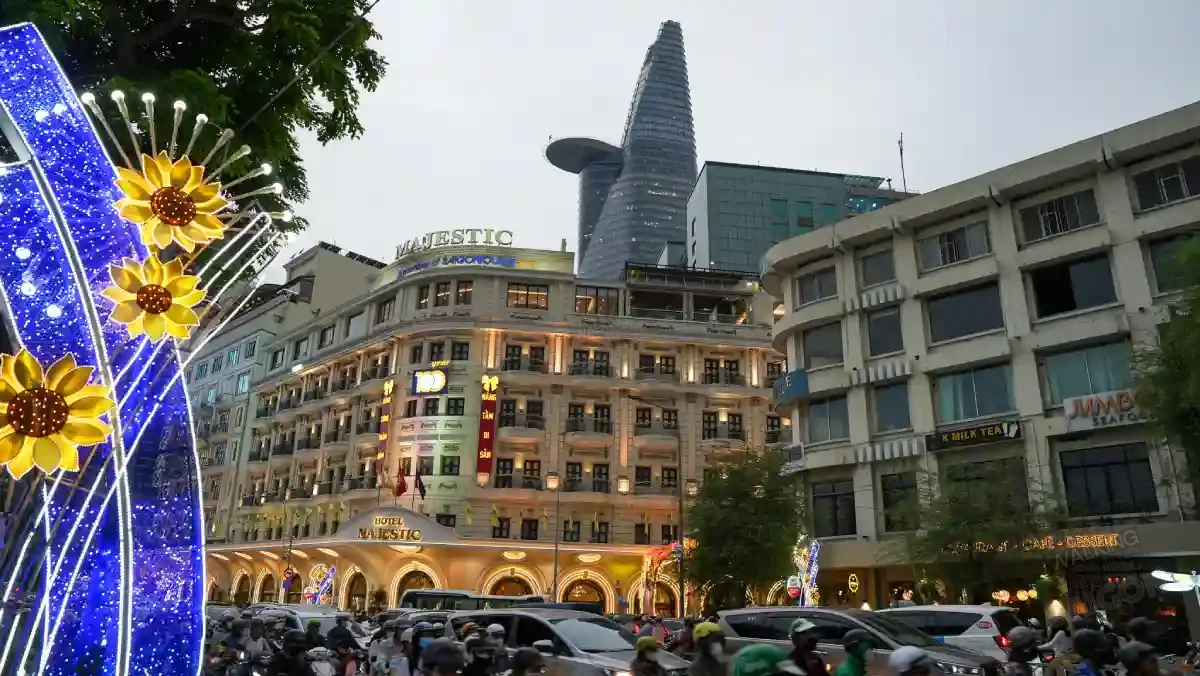
The family stood frozen at the edge of the crosswalk.
A father.
A mother.
Two children.
Hundreds of motorcycles streamed past them.
Engines hummed.
Helmets flashed in the afternoon light.
No traffic light was about to stop the flow.
No obvious gap was appearing.
For a moment, they looked exactly like thousands of visitors before them.
Excited to discover Saigon.
Completely terrified to cross the street.
If there is one experience that almost every foreign traveller remembers after visiting Ho Chi Minh City, it is not the food, the museums, or even the famous landmarks.
It is that first attempt to step off the curb.
Welcome To The Motorbike Capital Of Vietnam
Ho Chi Minh City is Vietnam's largest city and one of Southeast Asia's most dynamic urban centres.
Nearly ten million people call the city home.
More remarkably, the city is estimated to have around 7.6 million registered motorcycles, with thousands more entering from neighbouring provinces every day.
Across Vietnam, more than 77 million motorcycles are registered nationwide.
For visitors arriving from cities such as London, Amsterdam, Berlin, Copenhagen, Sydney, or Toronto, the difference can be shocking.
In many Western cities, public transport and private cars dominate the streets.
In Saigon, motorcycles are everywhere.
Students heading to university.
Office workers rushing to meetings.
Families carrying groceries.
Street vendors transporting their entire businesses.
Food delivery drivers weaving through traffic.
The city moves on two wheels.
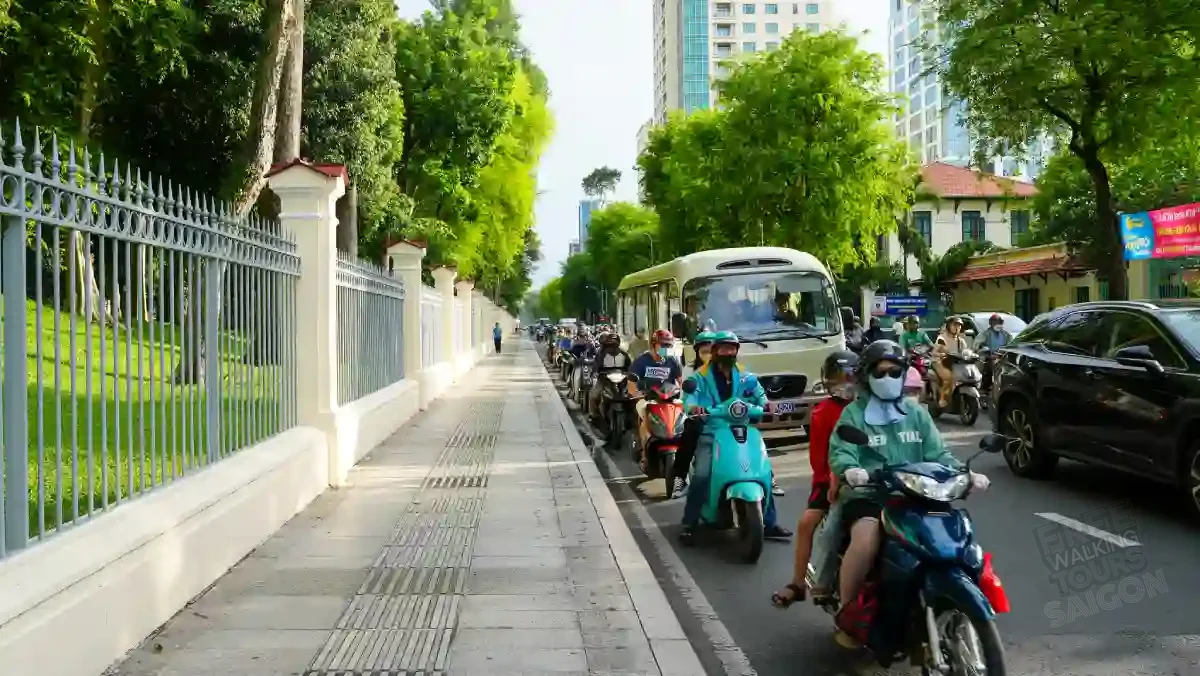
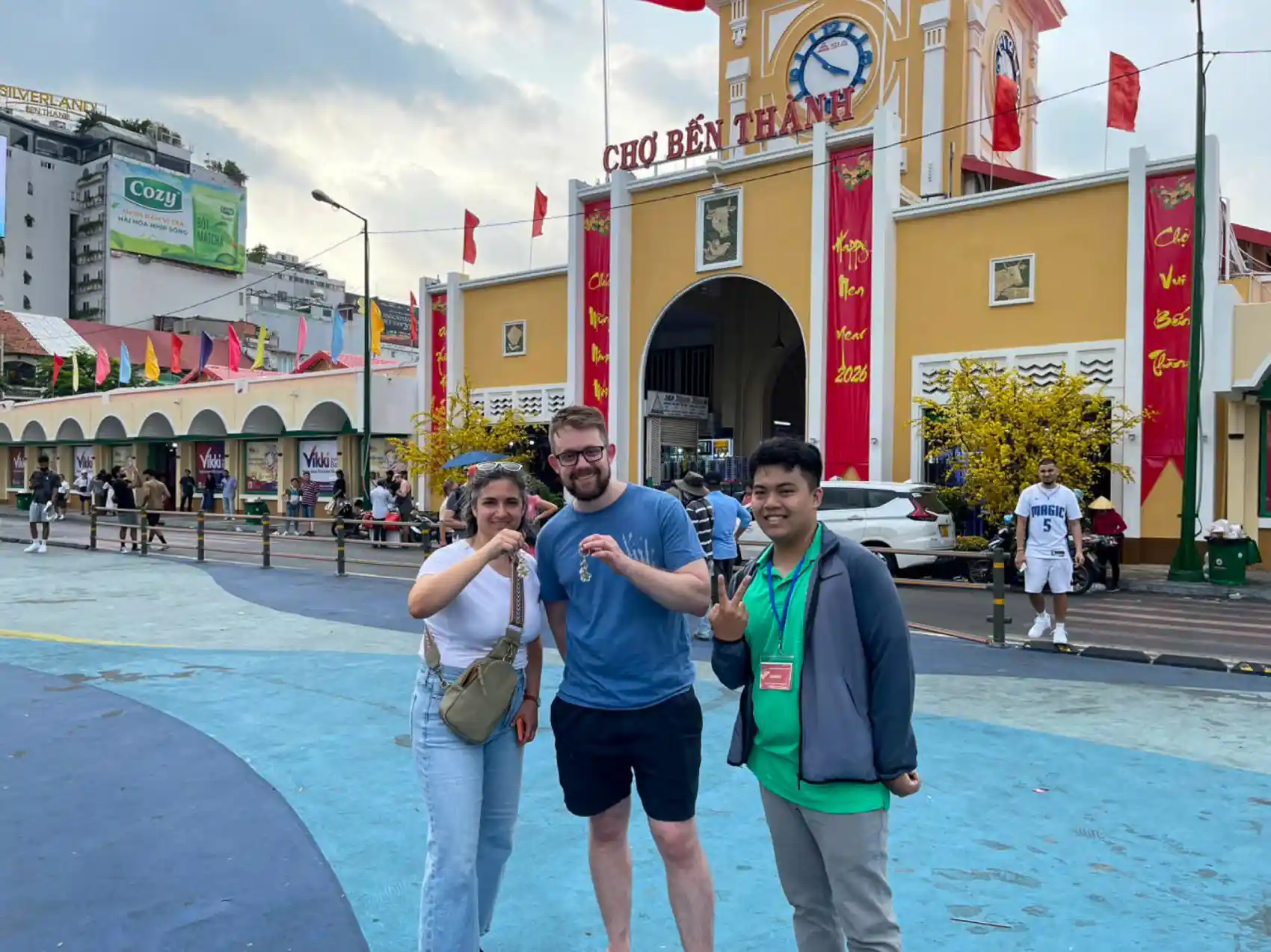
And once you understand that, everything starts to make sense — whether you are walking from your hotel to Ben Thanh Market or simply trying to find a coffee shop across the road.
The River Of Motorbikes
Stand near Bach Dang Wharf during rush hour.
Watch the traffic circle around the Tran Hung Dao Monument.
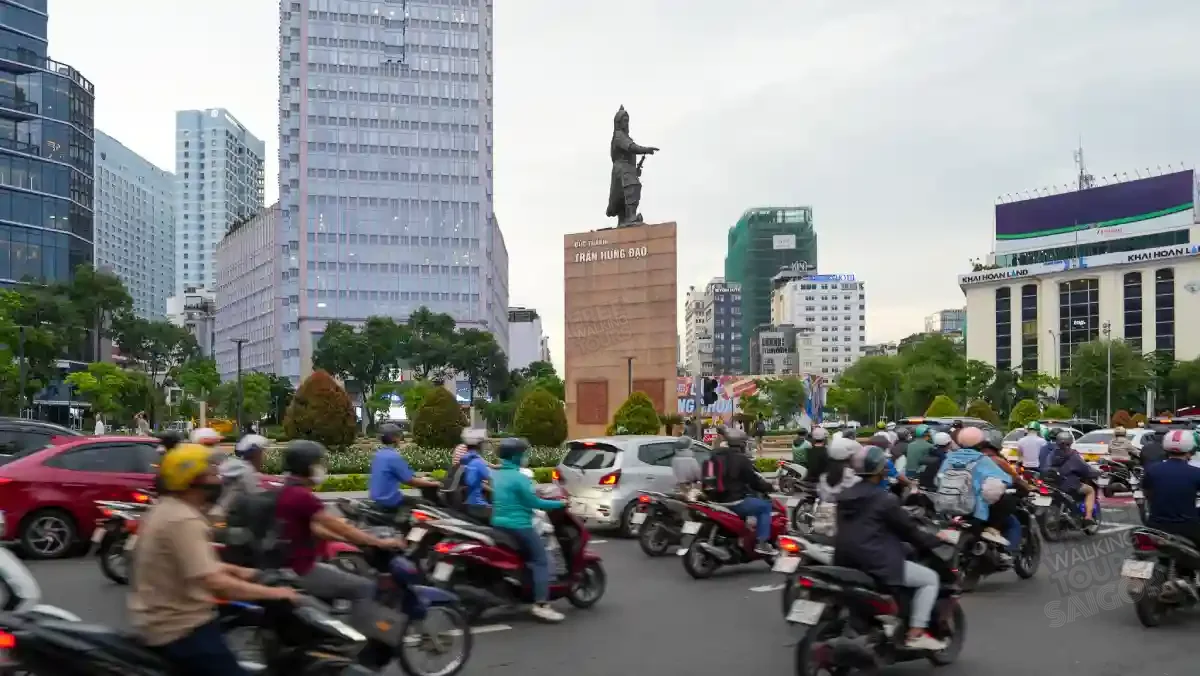
Walk along Ton Duc Thang Street as office workers head home.
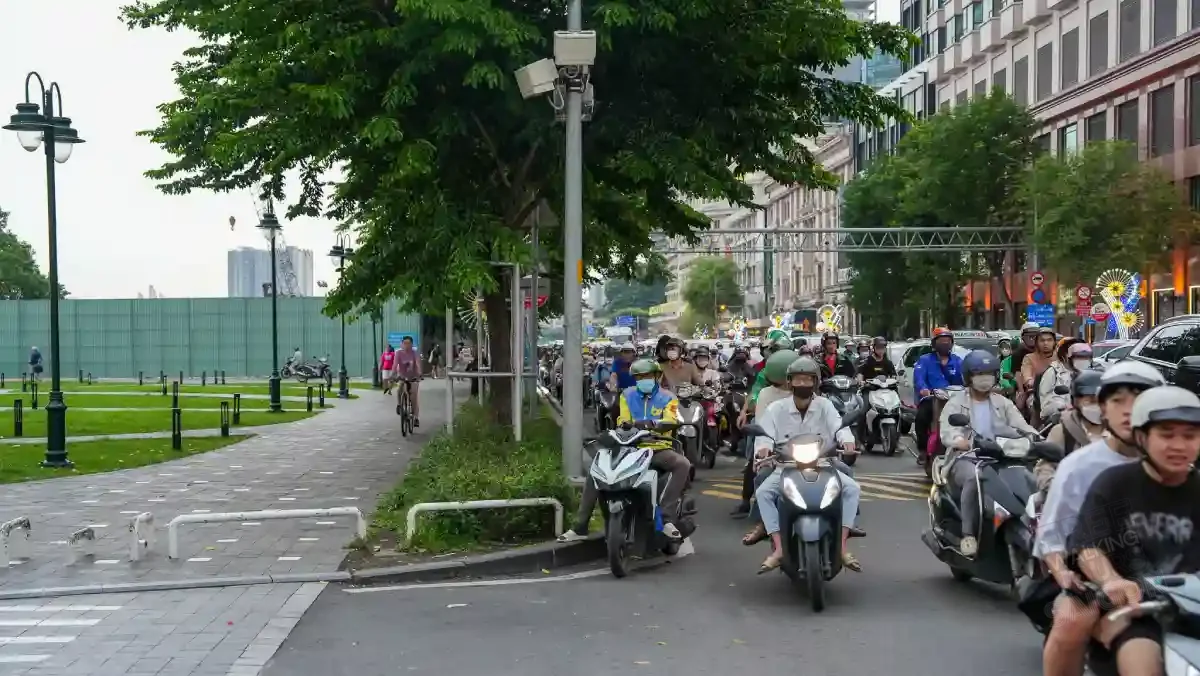
The scene often resembles a river.
Not because it is chaotic.
Because it flows.
Thousands of motorcycles move together in an endless stream.
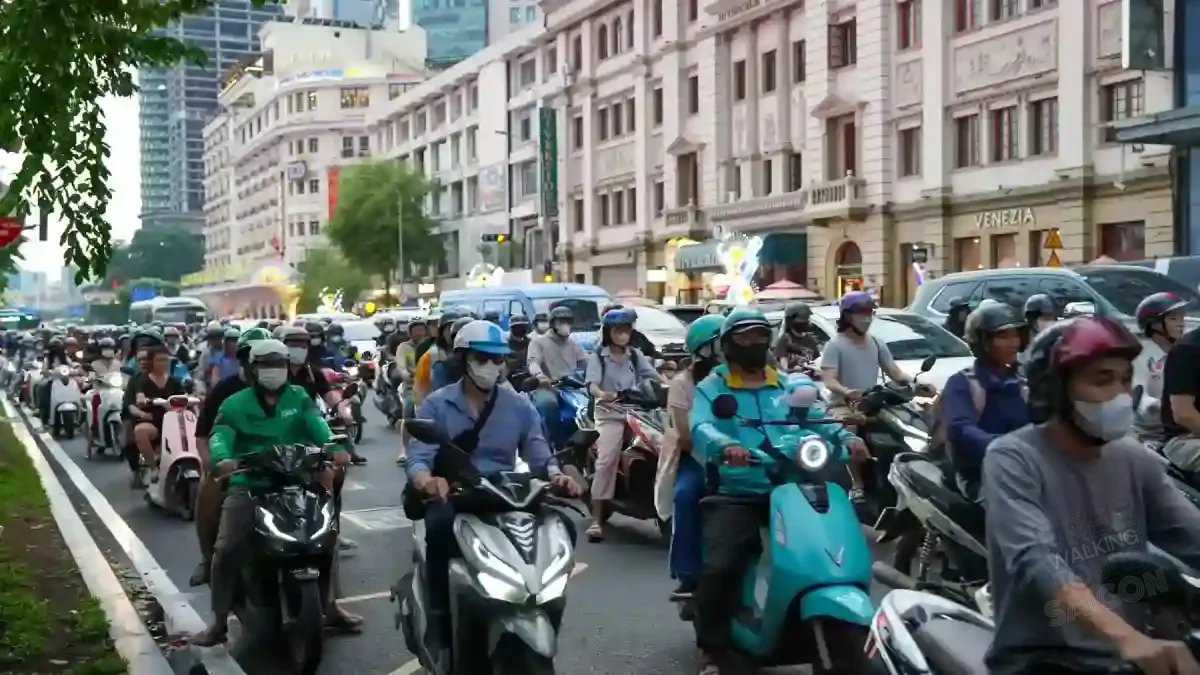
To a first-time visitor, it appears impossible.
To a local resident — or to a guest who has just finished a Free Walking Tour of Ho Chi Minh City — it feels completely normal.
The secret is that Saigon traffic operates less like a system of separate vehicles and more like a living ecosystem.
Every rider is constantly reading the movements of everyone around them.
Why Foreign Visitors Are Often Shocked
Many visitors arrive expecting traffic to behave the way it does back home.
They wait for a completely empty road.
They look for a large gap.
They expect vehicles to stop.
Sometimes they stand on the sidewalk for several minutes waiting for the perfect opportunity.
It rarely arrives.
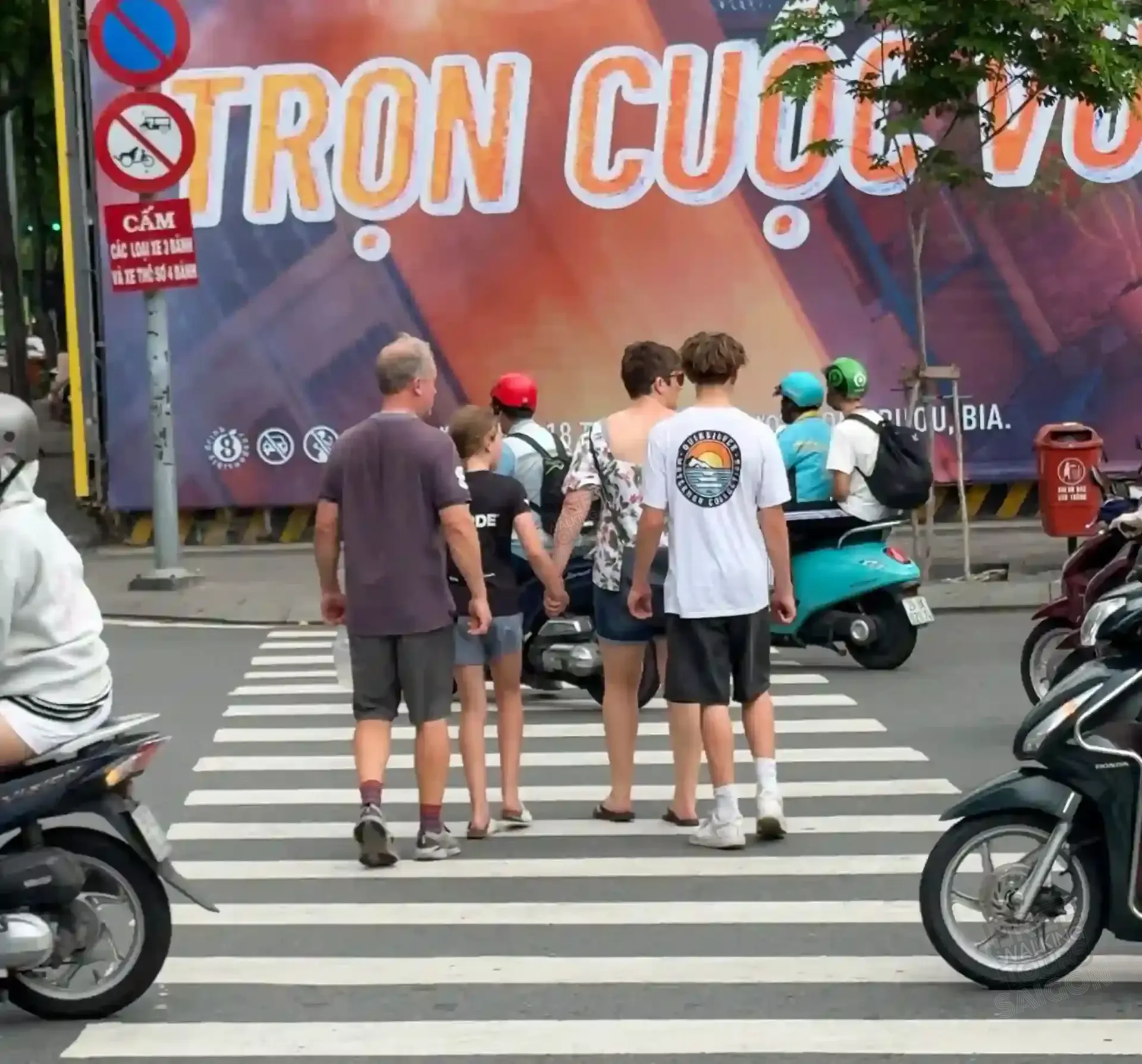
Meanwhile, local residents continue crossing calmly.
Again.
And again.
And again.
The difference is not bravery.
The difference is understanding.
The Secret Every Local Already Knows
Here is the most important lesson.
Walk slowly.
Walk steadily.
Walk predictably.
Do not suddenly stop.
Do not suddenly turn around.
Do not zigzag.
And above all:
Do not run.
This may sound strange.
But running is often the most dangerous thing a visitor can do.
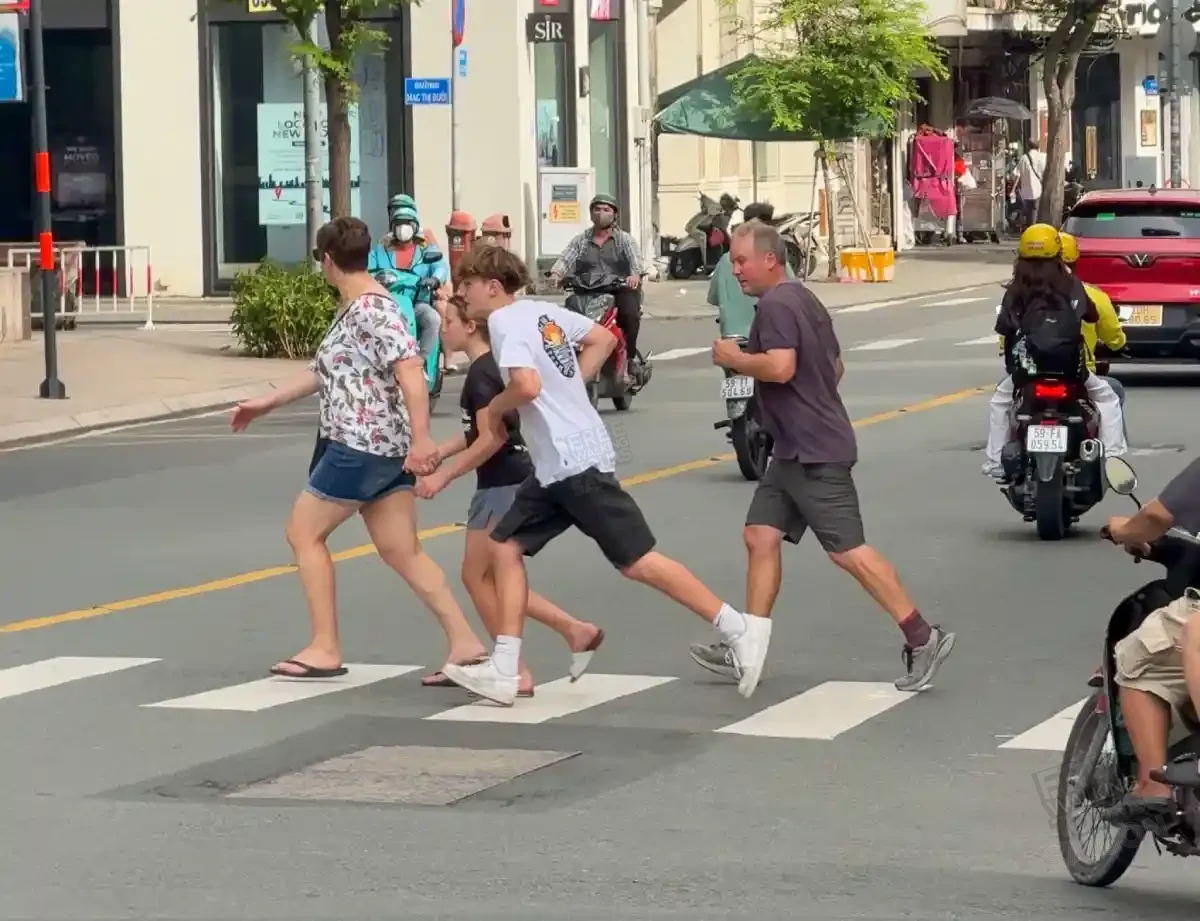
Motorbike riders are continuously predicting where pedestrians will be in the next few seconds.
When someone walks at a steady pace, riders naturally adjust their path and flow around them.
When someone suddenly sprints, hesitates, or changes direction, that prediction becomes much harder.
The entire system depends on predictability.
From Fear To Confidence
The most memorable moment is not usually the first crossing.
It is the second.
Or the third.
That moment when you suddenly realise you are no longer standing frozen on the sidewalk waiting for traffic to disappear.
You understand the rhythm.
You trust the flow.
And you begin moving through the city with confidence.
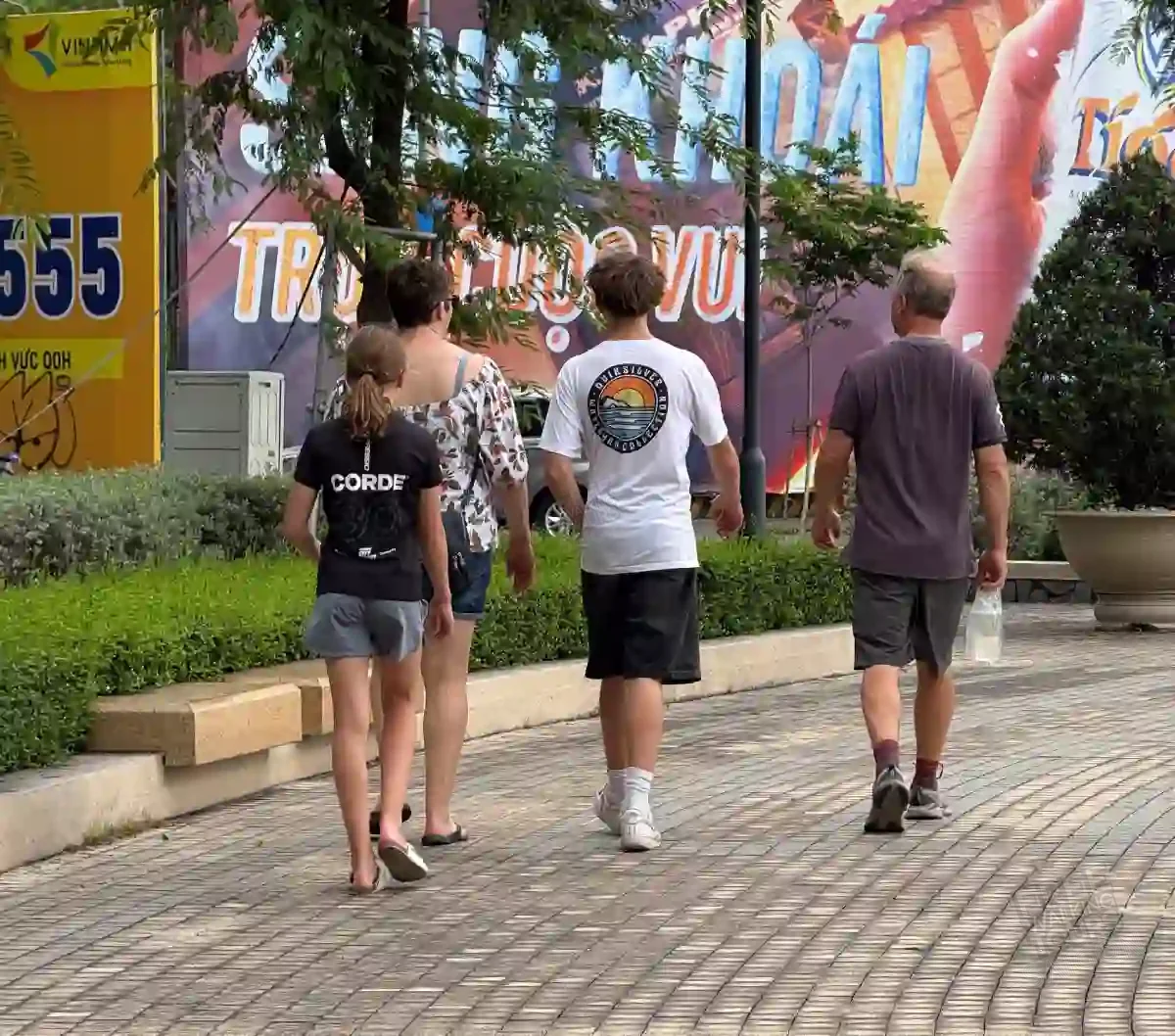
Many travellers arrive in Ho Chi Minh City convinced they will never be able to cross the street on their own.
A few hours later, they are doing exactly that.
Not because the traffic has changed.
Because they have learned how the city works.
Let A Local Show You The Way
One of the biggest advantages of exploring Saigon with a local guide is learning the small things that no guidebook can properly teach.
How to cross a busy intersection.
How to move with the flow of traffic.
How to recognise safe crossing points.
How locals navigate one of the busiest motorbike cities in the world every single day.
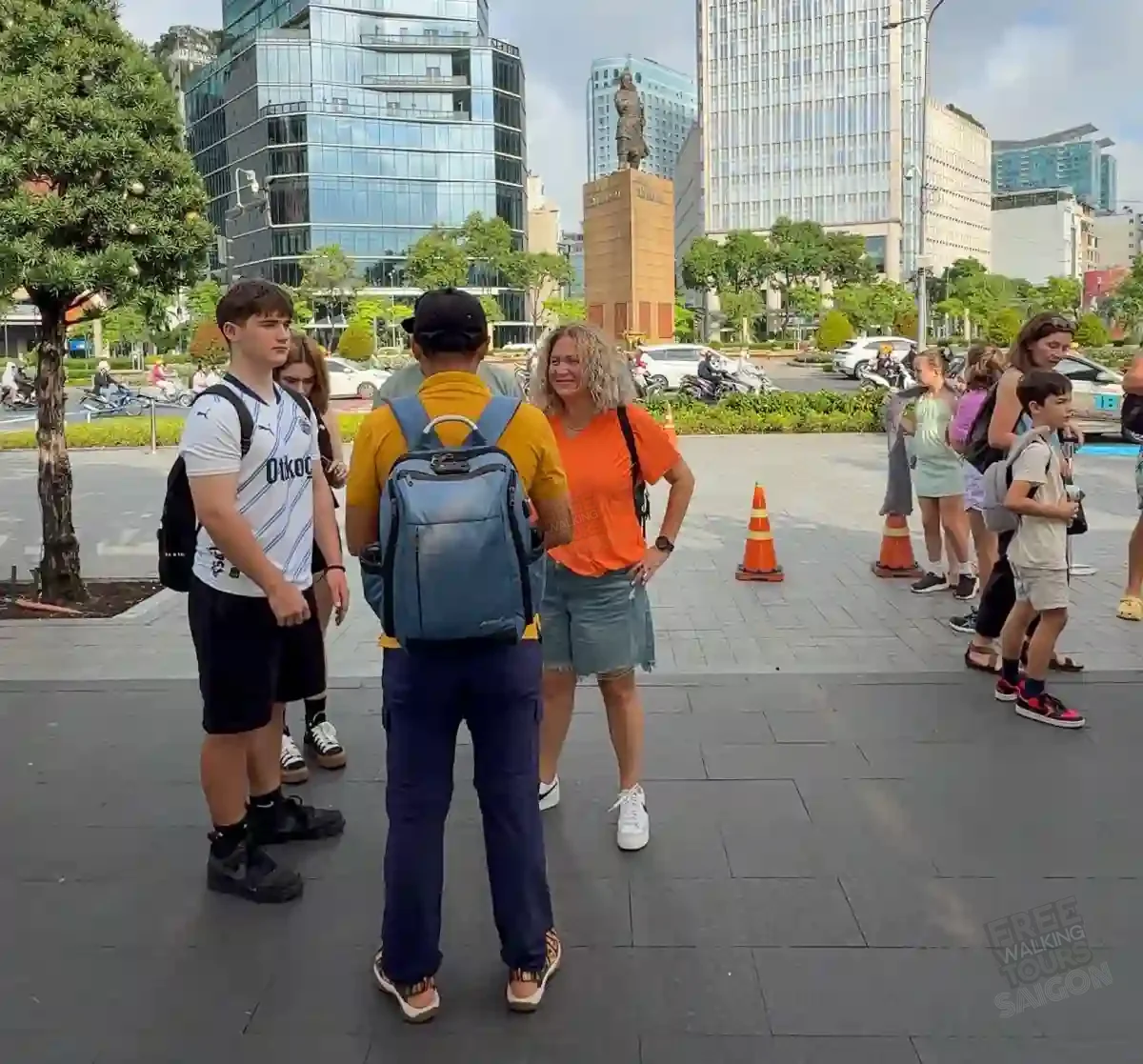
These simple lessons often become some of the most valuable travel skills visitors take home from Vietnam.
If you would like to experience Saigon with confidence while discovering the stories, history, Saigon street food, and daily life behind the traffic, join one of our local guides on a walking tour of Saigon.
The city may look overwhelming at first.
But once you understand its rhythm, it becomes unforgettable.
Explore Saigon With Local Guides
Book your tour: freewalkingtourssaigon.com
WhatsApp: +84 971 986 466
Join Free Walking Tours Saigon and discover the stories, food, culture, and hidden corners that most visitors never experience on their own.