Ho Chi Minh City Hall – A Historic Landmark on a Free Walking Tour
Few buildings tell the story of Saigon as clearly as Ho Chi Minh City Hall.
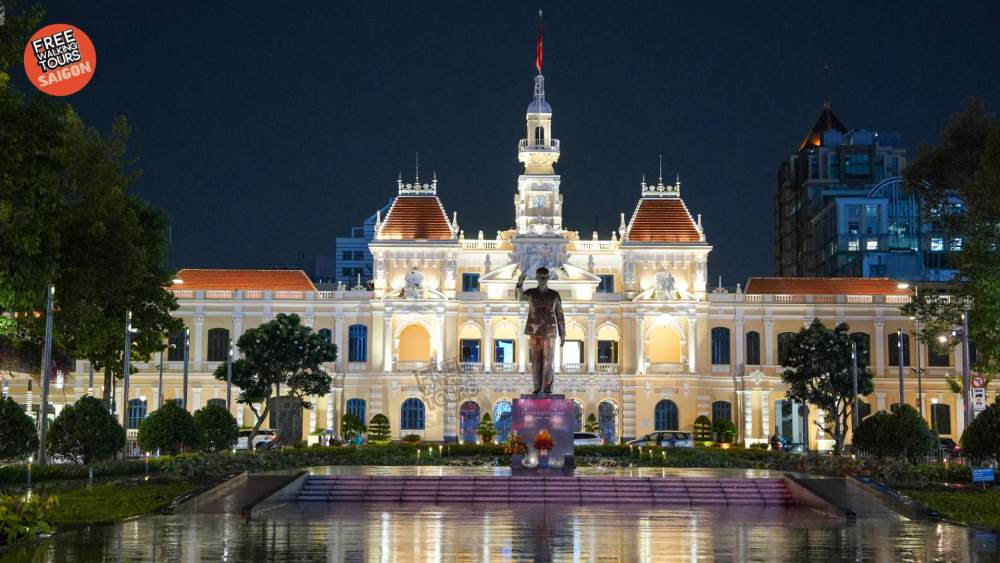
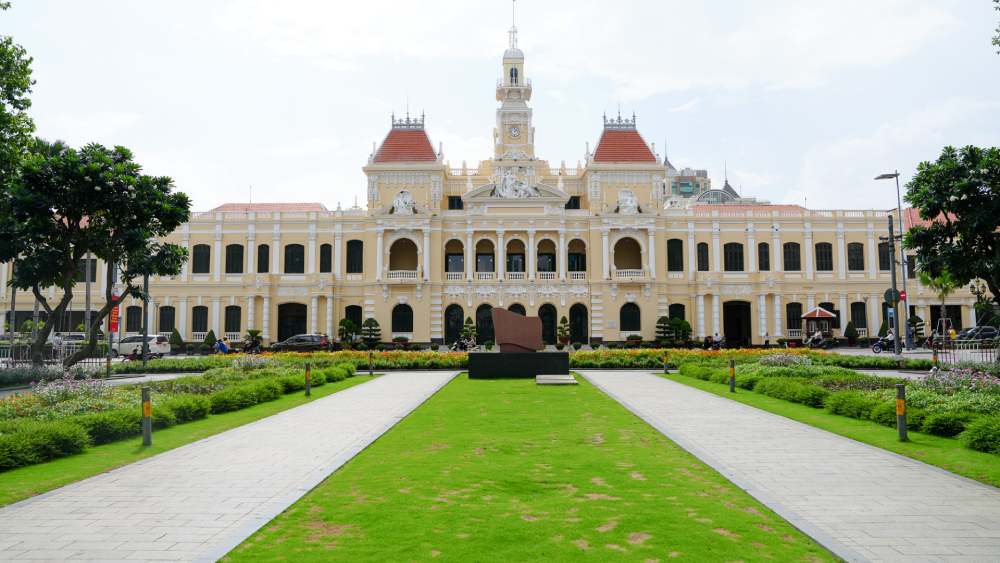
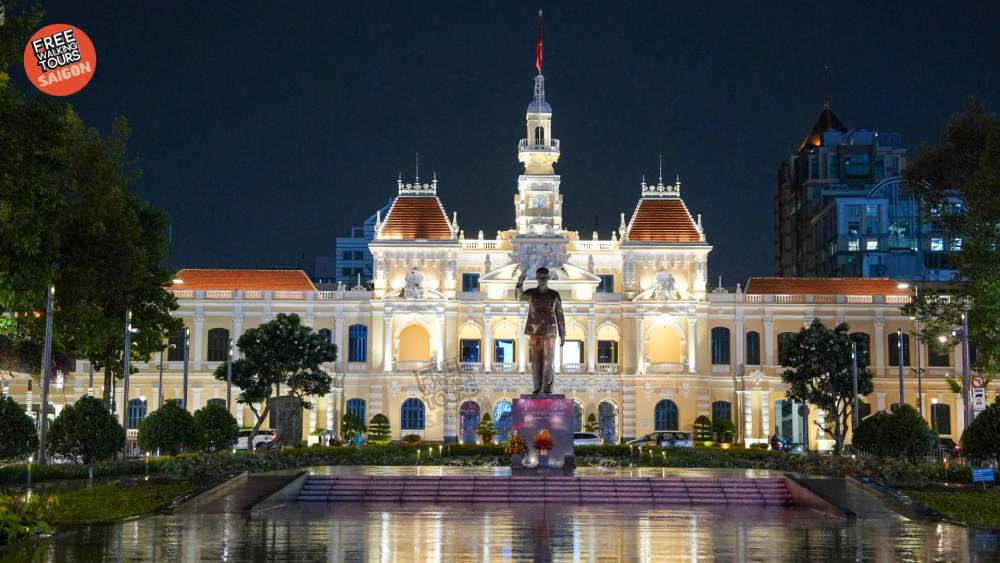
Seen in daylight, it reflects the elegance of French colonial ambition. Seen at night, illuminated and calm, it becomes a powerful reminder of the city’s resilience, change, and identity.
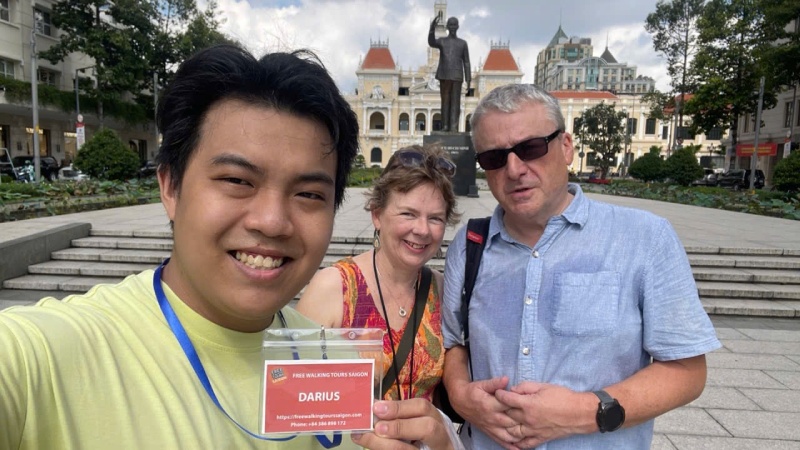
For travelers joining a free walking tour in Saigon, this landmark is more than a photo stop. It is a place where history, architecture, and the many transformations of the city come together.
A French Colonial Vision in the Heart of Saigon
Ho Chi Minh City Hall, officially known as the People’s Committee Building, was constructed between 1902 and 1908, during the French colonial period. Inspired by European city halls, particularly those in southern France, the building was designed to project order, authority, and permanence.
Its architectural style blends:
French Renaissance influences
Symmetrical façades
Decorative sculptures and reliefs
A central clock tower symbolizing control of time and administration
At the time, it stood as a symbol of colonial power in what was then known as Saigon, the capital of French Cochinchina.
Through Wars, Change, and a New Identity
Over more than a century, Ho Chi Minh City Hall has witnessed nearly every major turning point in the city’s history.
Colonial Saigon: administrative headquarters of French Indochina
War years: a silent observer of political turmoil and conflict
Post-1975: the city’s transformation after reunification
Modern Ho Chi Minh City: a symbol of governance in a rapidly growing metropolis
Despite wars, regime changes, and rapid urban development, the building remains largely unchanged, a rare architectural survivor in a city that constantly reinvents itself.
Daytime vs Nighttime: Two Faces of the Same City
By Day
In daylight, Ho Chi Minh City Hall appears formal and authoritative. Its pale yellow façade contrasts with green gardens and busy surrounding streets, reminding visitors of Saigon’s colonial foundations.
By Night
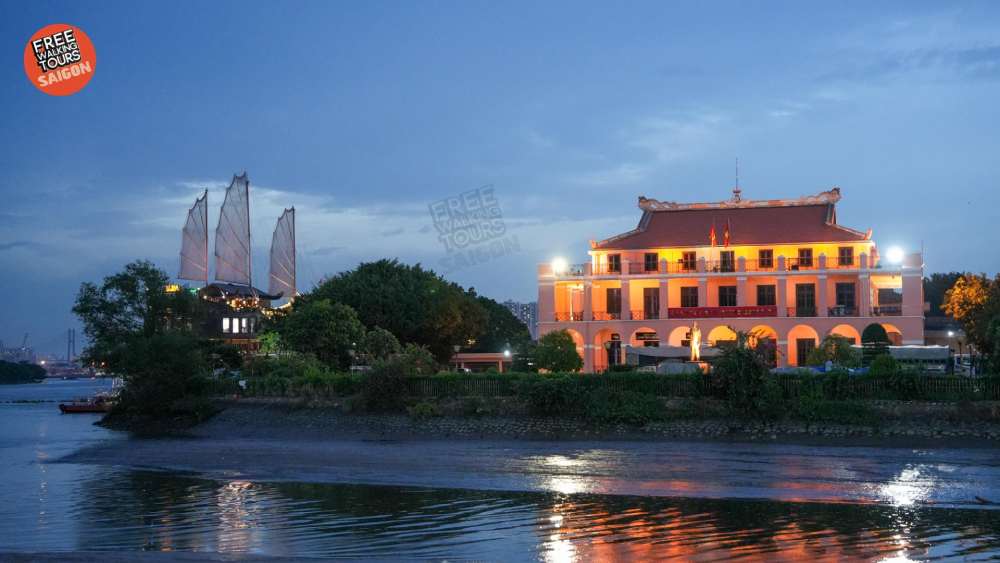
At night, the atmosphere shifts completely. Soft lighting highlights architectural details, reflections shimmer on the pavement after rain, and the surrounding square becomes a meeting place for locals.
This contrast perfectly reflects Saigon itself:
fast yet reflective
modern yet deeply rooted
constantly moving but never forgetting its past
Why This Landmark Is a Highlight of a Free Walking Tour in Saigon
Many international visitors search for:
free walking tour Saigon
Ho Chi Minh City walking tour
Saigon historical landmarks
things to see in Saigon at night
Ho Chi Minh City Hall naturally appears in all of these journeys.
On a free walking tour in Ho Chi Minh City, local guides help travelers understand:
why the French chose this architectural style
how Saigon evolved through colonialism and war
how locals today relate to this historic building
what the building symbolizes in modern Vietnam
Rather than just seeing it, you understand it.
A Symbol of Saigon’s Resilience
More than a government building, Ho Chi Minh City Hall represents:
continuity through change
the layered identity of Saigon
the balance between history and progress
It stands quietly as the city grows upward and outward, reminding visitors that Saigon’s story is not only about speed and development, but also about memory and survival.
Experience It on Foot, With a Local Perspective
The best way to experience Ho Chi Minh City Hall is not from inside a car or through a quick photo stop, but on foot, in context, with stories.
That’s why joining a free walking tour in Saigon offers something guidebooks cannot:
real historical context
local insights
slow exploration
meaningful connection
Walking past this landmark, hearing its stories, and seeing it both in daylight and after dark often becomes a defining moment for many travelers.
A Place That Tells Saigon’s Story
Ho Chi Minh City Hall is not just a beautiful building. It is a mirror of Saigon’s journey — from colonial ambition to modern identity.
If you want to truly understand Saigon, start here. And the best way to do that… is to walk.

 EN
EN
 English
 Pháp
Pháp
 Đức
Đức
 Tây Ban Nha
 Nga
Nga
 Tiếng Việt