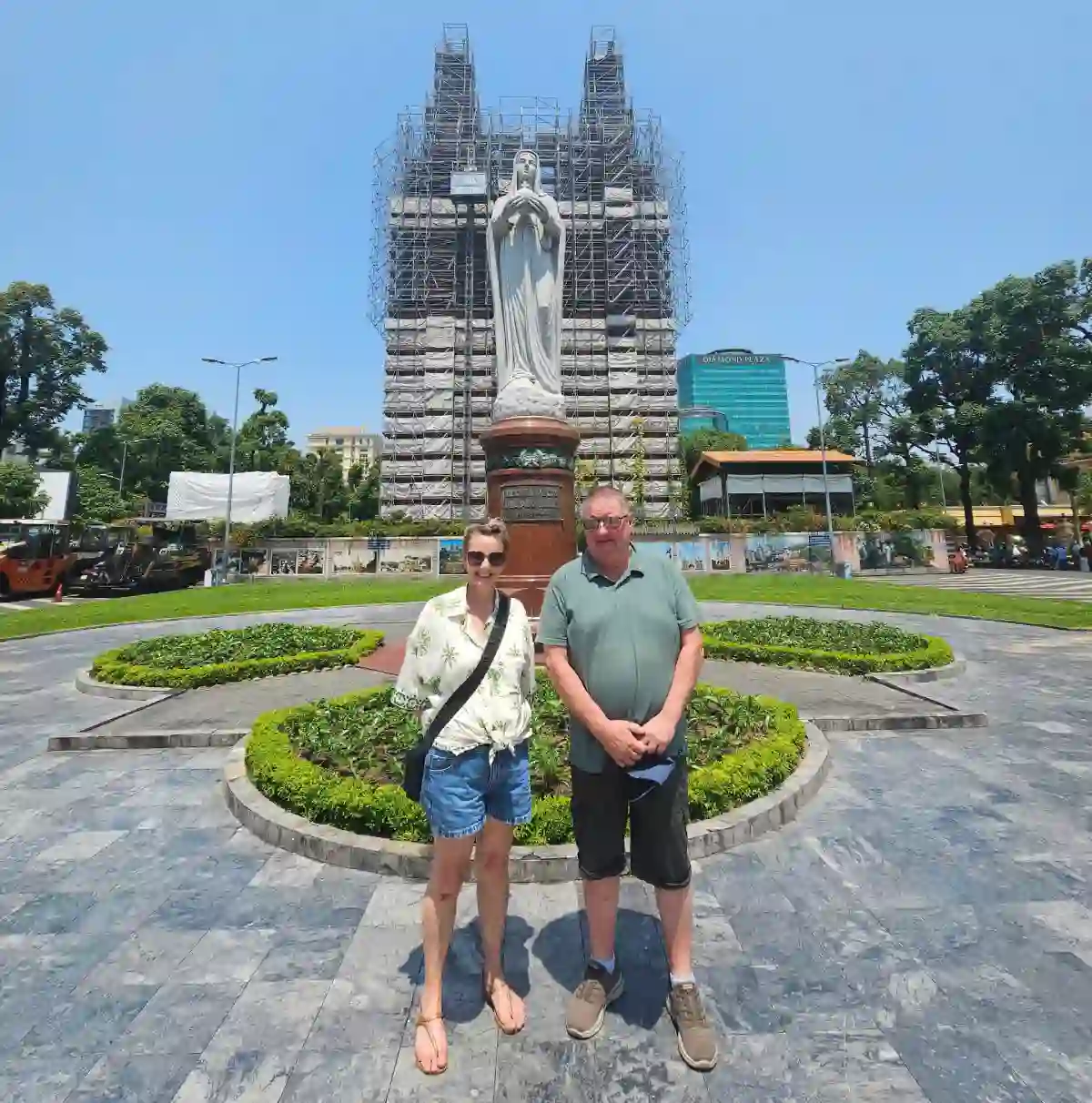
Few landmarks capture the spirit of Ho Chi Minh City quite like Notre Dame Cathedral Saigon.
Standing proudly in the heart of District 1, surrounded by tree-lined boulevards and some of the city's most important colonial buildings, the cathedral has long been one of the most recognizable symbols of Saigon. For generations of locals and visitors alike, it has served as a meeting point, a place of worship, a photography hotspot, and a reminder of the city's fascinating blend of Vietnamese and European heritage.
Yet visitors arriving today are often surprised.
Instead of seeing the famous twin bell towers unobstructed, they are greeted by scaffolding, restoration structures, and construction crews carefully working to preserve one of Vietnam's most important historic buildings.
Rather than diminishing its appeal, the restoration has become part of the cathedral's modern story.
A Landmark Built During French Colonial Saigon
Construction of Notre Dame Cathedral began in 1877 and was completed in 1880 during the French colonial period.
Every brick used to build the church was imported directly from France. More than a century later, many of those original red bricks continue to retain their color, giving the cathedral its distinctive appearance among the modern skyline of Ho Chi Minh City.
Its Romanesque and Gothic influences stand in striking contrast to the glass towers and busy streets surrounding it today.
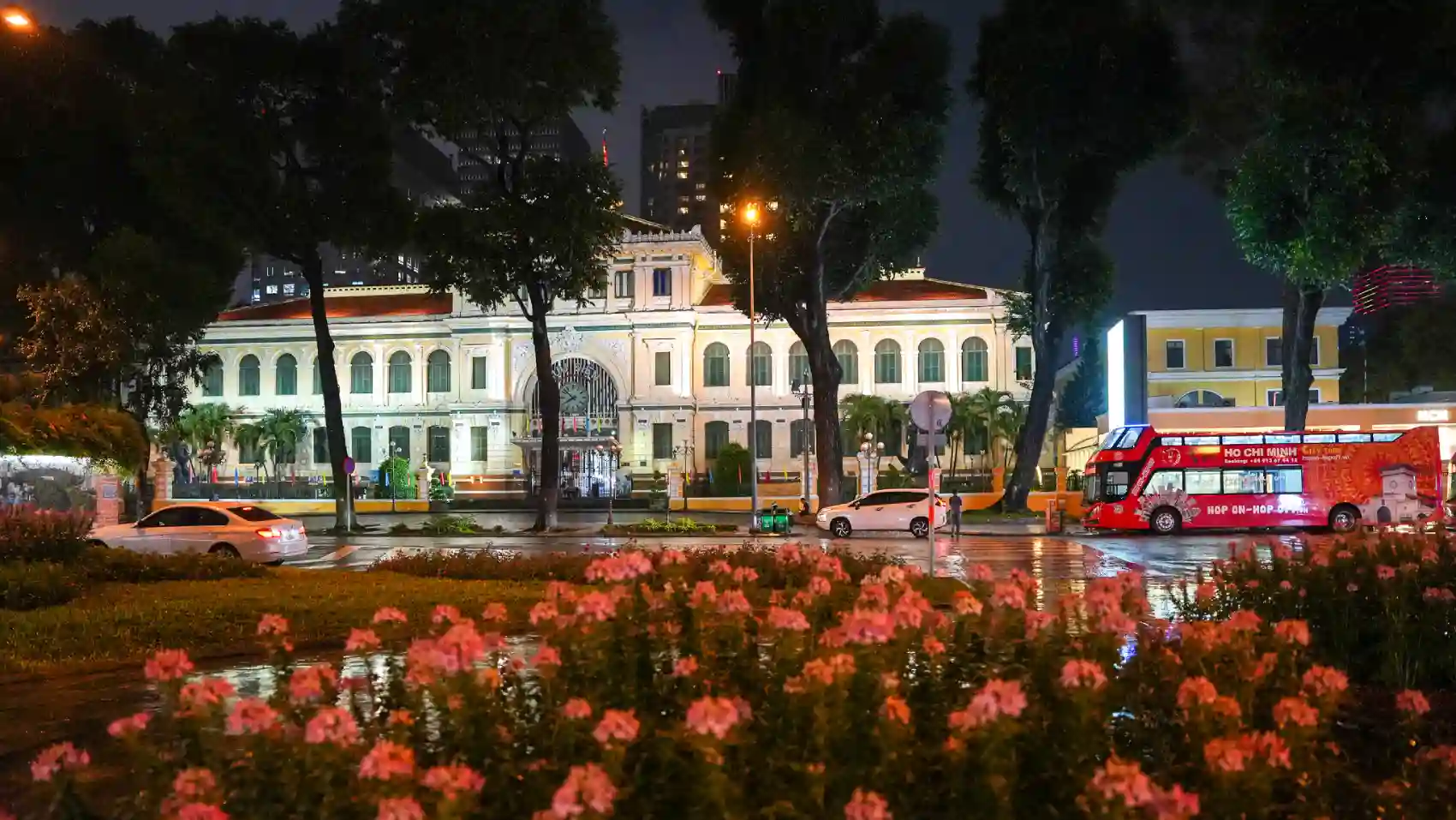
Located between Dong Khoi Street and Nguyen Du Street, the cathedral sits within one of the city's most historically significant districts, only a short walk from the nearby Saigon Central Post Office, another masterpiece of French colonial architecture.
Together, these landmarks form the cultural heart of old Saigon.
The Restoration Project That Is Bringing New Life to the Cathedral
One of the most common questions visitors ask is:
"Why is Notre Dame Cathedral covered in scaffolding?"
The answer lies in one of the largest heritage restoration projects currently underway in Vietnam.
Years of tropical weather, pollution, and natural aging affected portions of the structure, leading conservation teams to launch an extensive restoration effort aimed at preserving the cathedral for future generations.
Recent visitors can see enormous restoration frameworks surrounding sections of the church.
The work may temporarily change the appearance of the landmark, but it also offers a rare opportunity to witness history being preserved in real time.
Many travelers who expected disappointment actually leave impressed by the scale of the conservation effort and the commitment to protecting one of Saigon's most treasured landmarks.
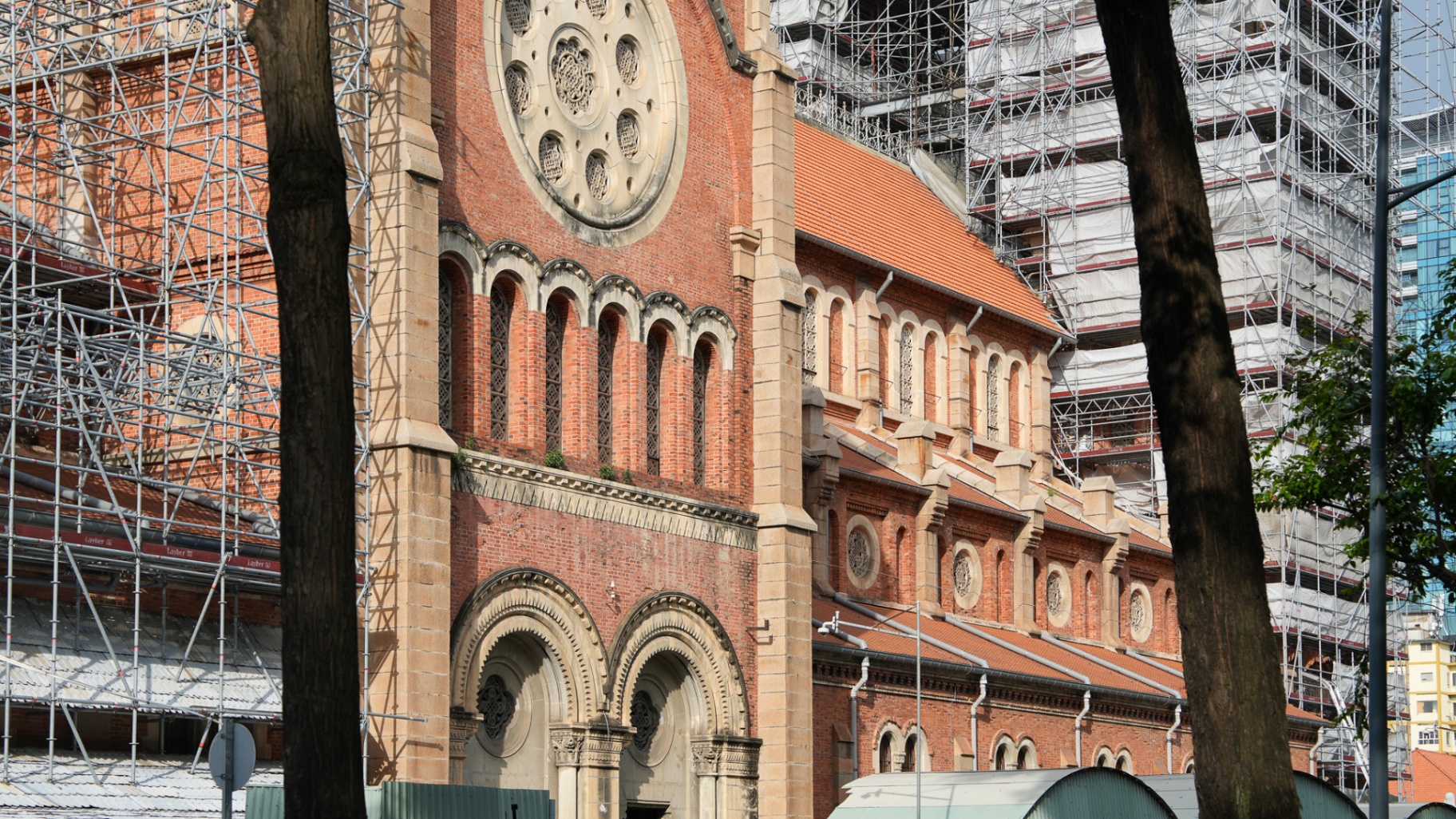
A Different Perspective From Street Level
The cathedral remains one of the most photographed locations in Ho Chi Minh City.
From street level, visitors can appreciate the intricate brickwork, decorative windows, and elegant arches that define the building's design.
The broad sidewalks and mature trees surrounding the cathedral create a surprisingly peaceful atmosphere despite being located in the center of Vietnam's largest city.
Throughout the day, travelers gather here to take photographs, rest between sightseeing stops, and watch local life unfold around them.
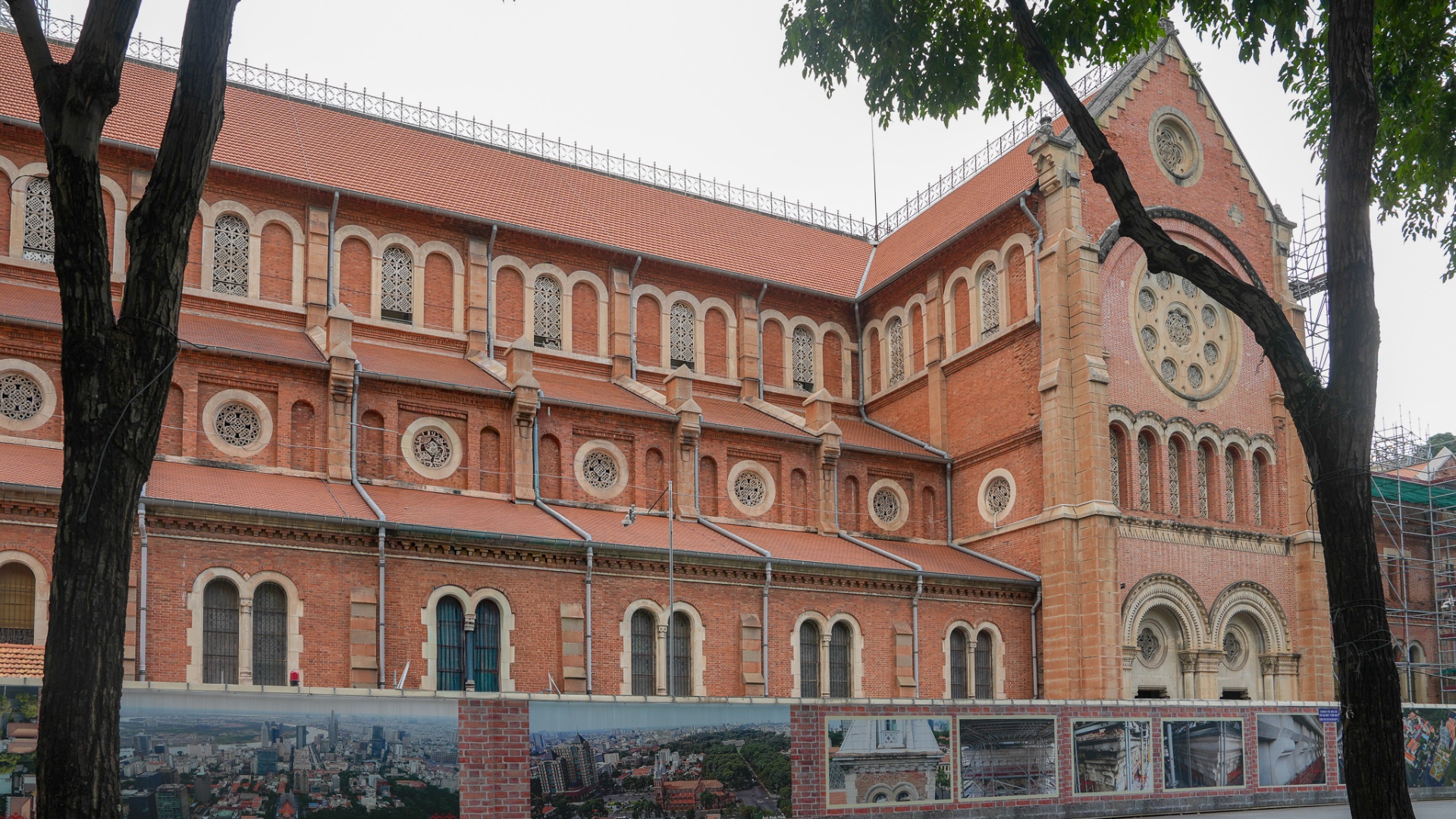
The area is particularly beautiful during the early morning when the streets are quieter and soft sunlight illuminates the cathedral's red-brick facade. It pairs naturally with an early-morning Saigon street food walk through the surrounding lanes of District 1.
Seeing Notre Dame Cathedral From Above
While most visitors experience the cathedral from the ground, seeing it from above reveals an entirely different perspective.
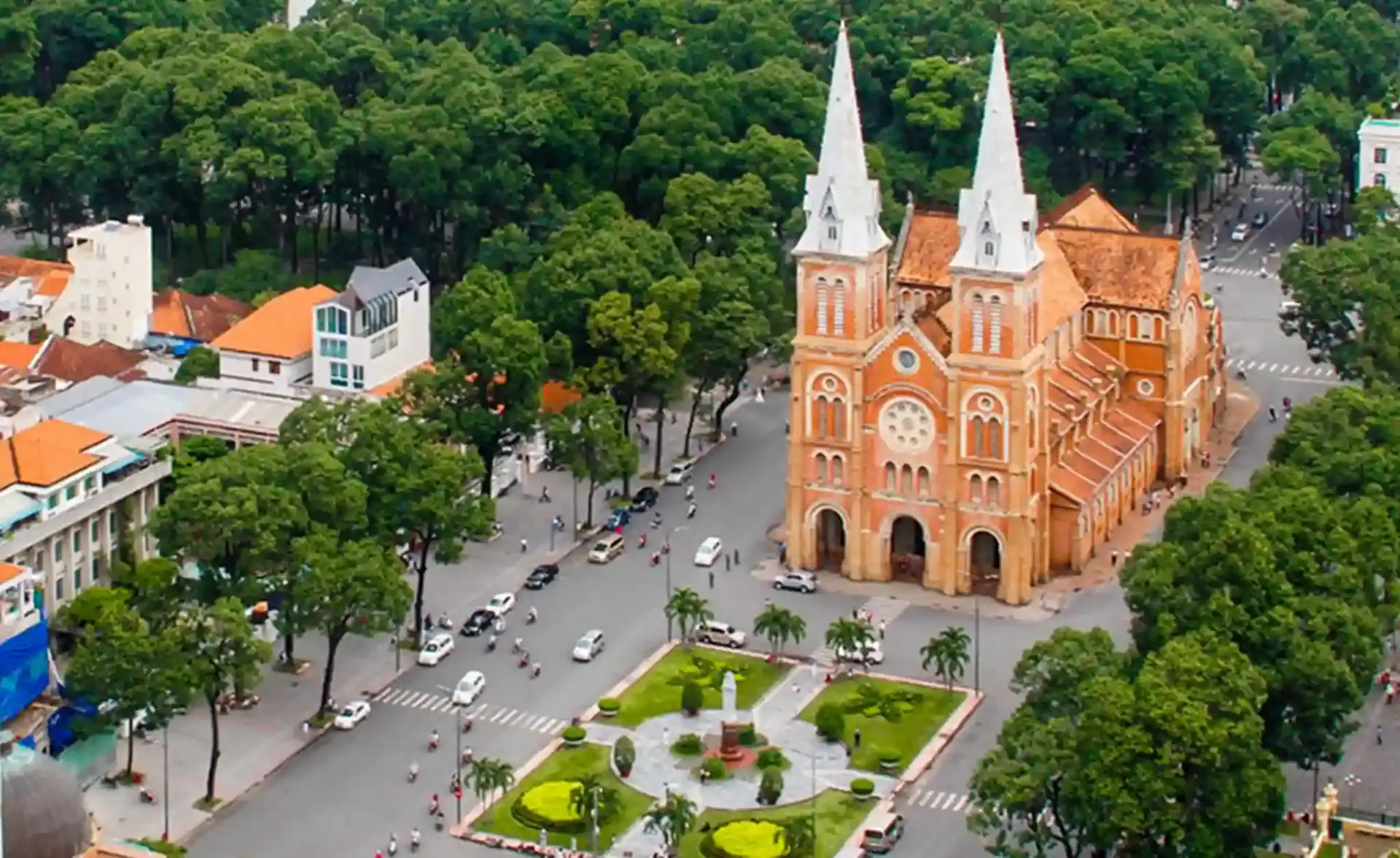
The aerial view highlights its strategic location within District 1, surrounded by wide boulevards, green public spaces, and some of the city's most important historical institutions.
From above, it becomes easier to understand why this area remains one of the most visited parts of Ho Chi Minh City and a centerpiece of many city walking routes.
Inside the Cathedral
Before restoration work began, the interior of Notre Dame Cathedral was known for its soaring arches, elegant symmetry, and peaceful atmosphere.
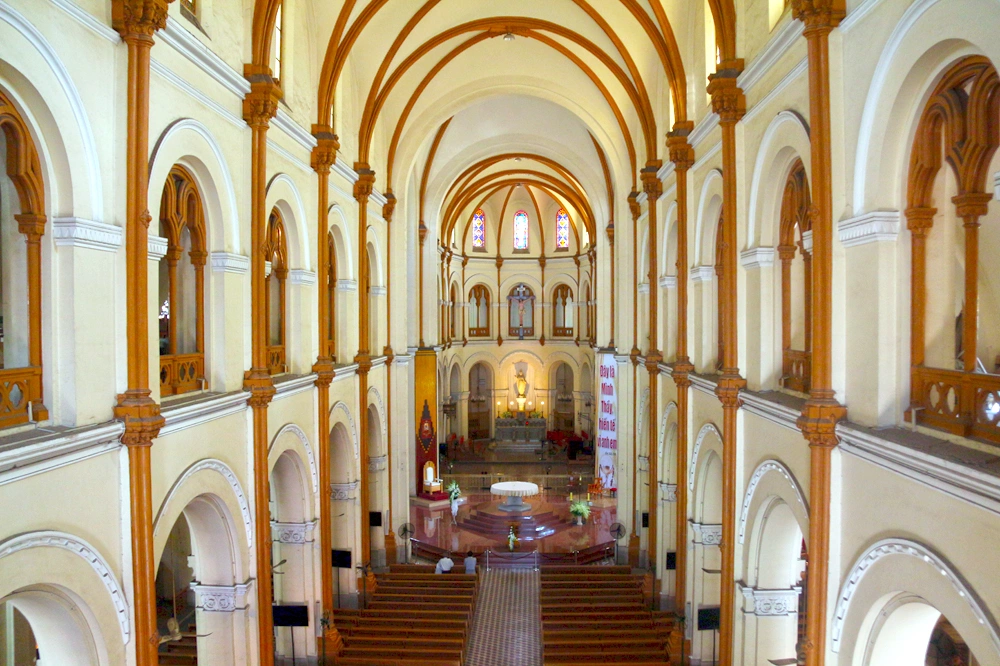
Rows of wooden pews, stained-glass windows, and a spacious central nave created a striking contrast to the energy of the streets outside.
Although access may vary depending on the current restoration phase, visitors should always check local conditions before planning a visit.
Even when interior access is restricted, the cathedral remains one of the city's most rewarding architectural landmarks to explore from the outside.
Why Notre Dame Cathedral Remains One of Saigon's Most Important Attractions
Many cities have historic churches.
Few have one that serves as such a powerful symbol of the city's identity.
Notre Dame Cathedral represents:
- French colonial history
- Architectural heritage
- Religious significance
- Urban transformation
- Cultural continuity between old and modern Saigon
It also sits at the center of several other must-see attractions, making it one of the easiest landmarks to include in a day of exploring District 1.
Visitors often combine it with:
- Saigon Central Post Office
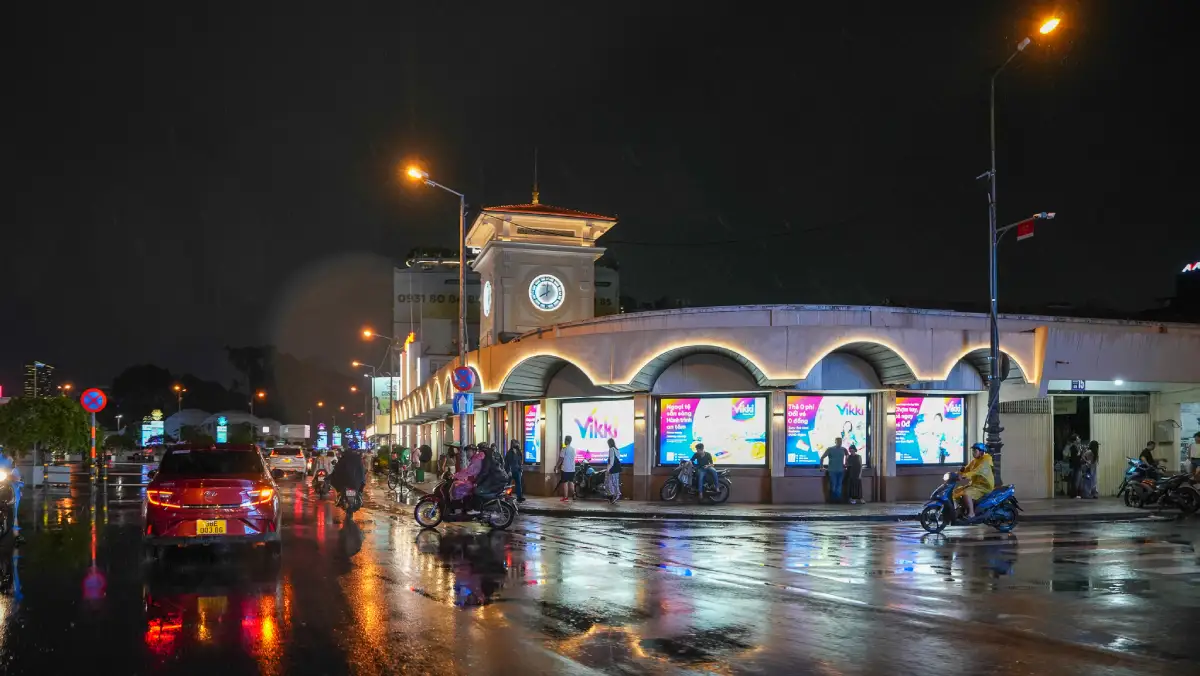
- Ben Thanh Market
- Nguyen Hue Walking Street
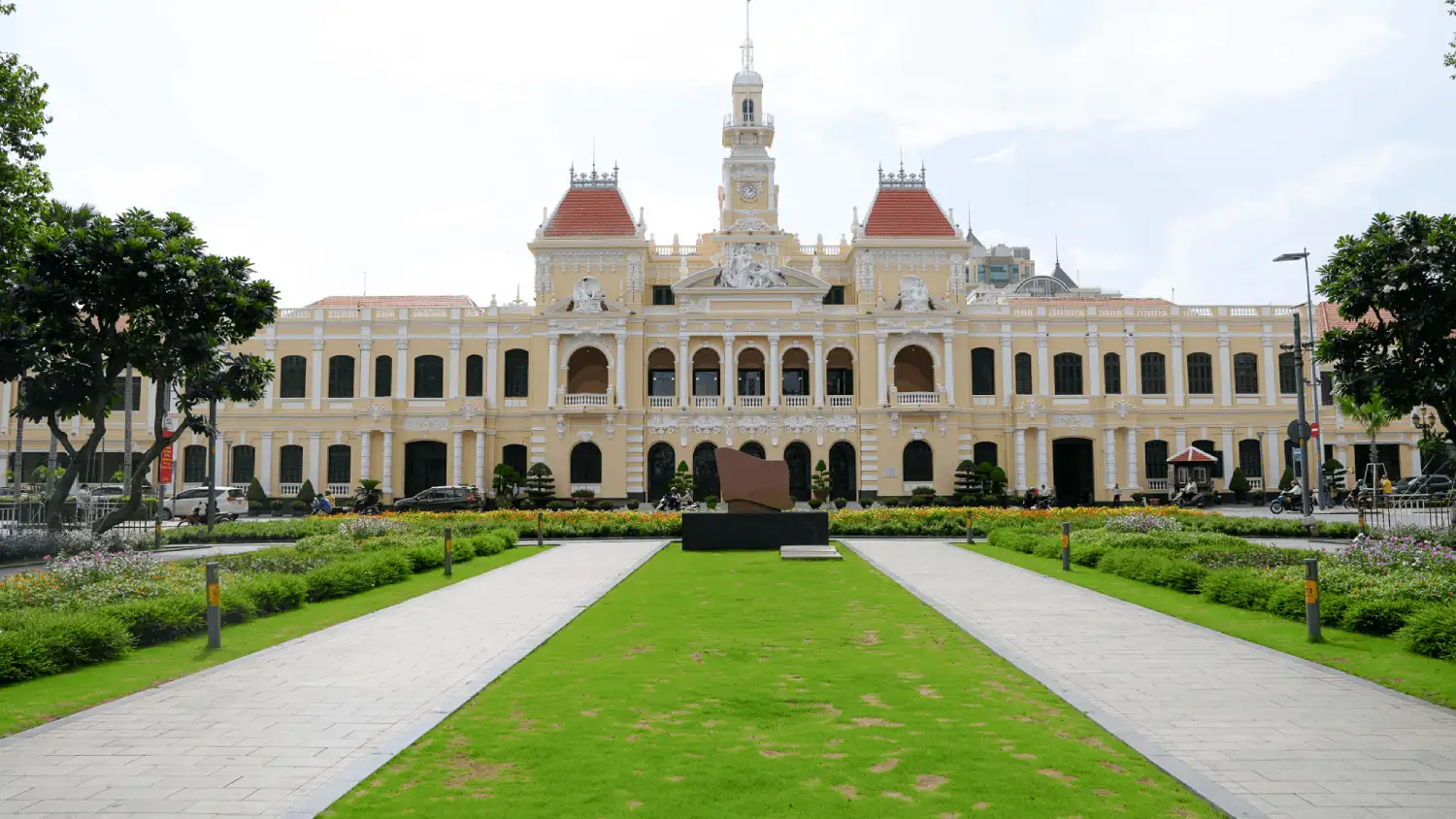
- Ho Chi Minh City Hall
Together, these sites tell the story of Saigon's past and present.
Exploring Notre Dame Cathedral With Local Guides
Understanding the cathedral's significance becomes much easier when viewed within the broader story of Saigon.
Many visitors see the building, take a photograph, and move on.
Local guides help connect the cathedral to the wider history of French colonial Saigon, the development of District 1, and the transformation of Ho Chi Minh City into the vibrant metropolis it is today.
If you're interested in discovering landmarks like Notre Dame Cathedral, City Hall, Nguyen Hue Walking Street, and the Central Post Office through local stories and historical context, our Free Walking Tours Saigon City Highlights experience offers an engaging introduction to the city's most iconic sights.
Frequently Asked Questions
Can you visit Notre Dame Cathedral Saigon in 2026?
Yes. Notre Dame Cathedral Saigon remains open to visitors in 2026, although parts of the exterior and interior may be restricted while the heritage restoration continues. You can still walk around the square, photograph the building, and combine it with nearby District 1 landmarks. Always check the current restoration status locally before planning a visit inside.
Why is Notre Dame Cathedral under restoration?
After more than 140 years of tropical weather, humidity, and urban pollution, Notre Dame Cathedral Saigon required extensive conservation work. The ongoing restoration is one of the largest heritage projects in Vietnam, aimed at preserving the original French-imported bricks, structural elements, bell towers, and interior so the cathedral can safely serve future generations.
How long does it take to visit Notre Dame Cathedral?
Most visitors spend around 20 to 30 minutes at Notre Dame Cathedral Saigon — enough time to walk around the square, take photographs, and appreciate the architecture. Paired with nearby landmarks like the Saigon Central Post Office, Ho Chi Minh City Hall, and Nguyen Hue Walking Street, the area easily fills a relaxed half-day of walking in District 1.