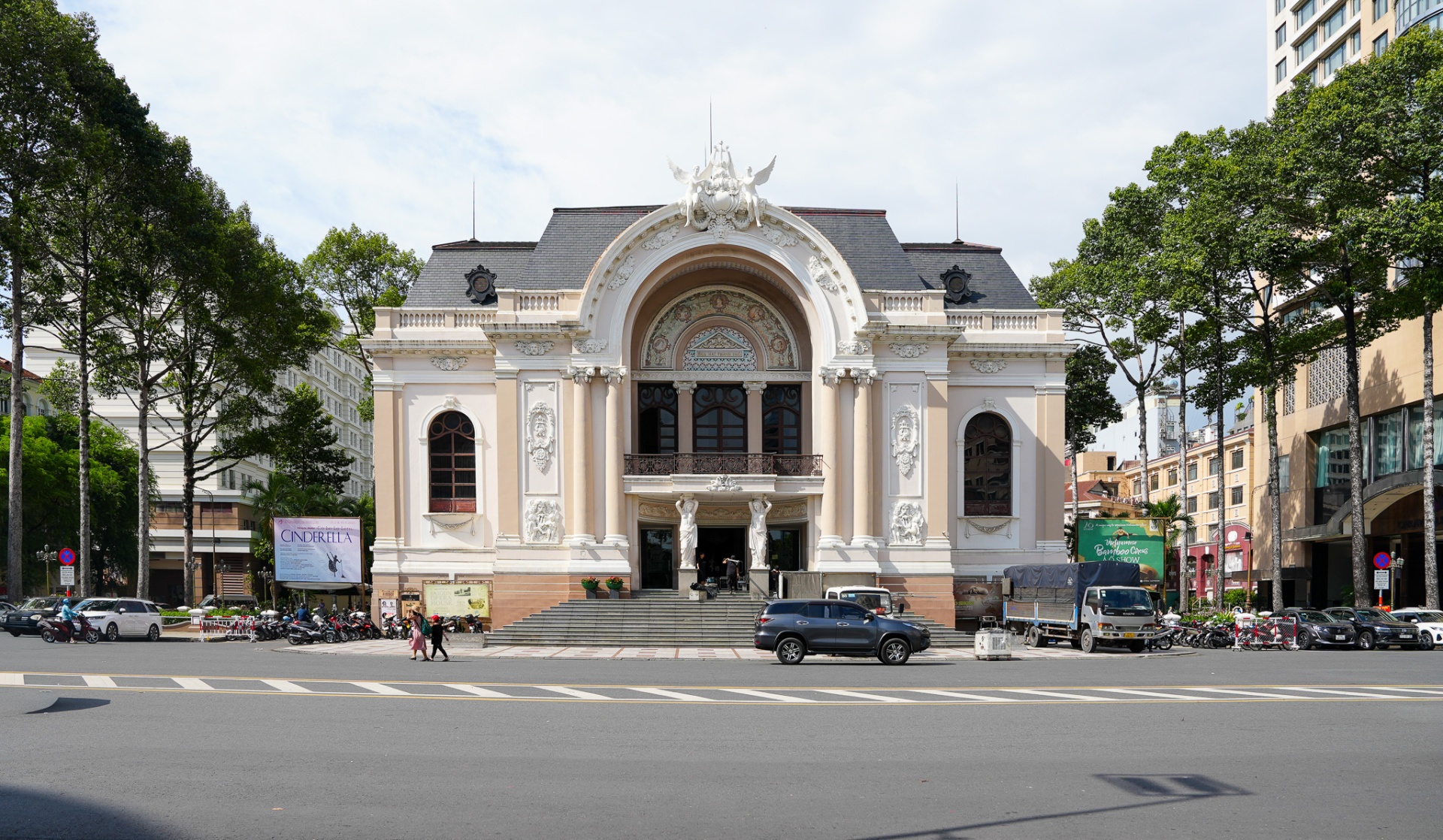
The Saigon Opera House is one of those landmarks that almost everyone photographs, yet surprisingly few people take the time to truly look at.
Standing at the heart of District 1, it is surrounded by everything that defines modern Ho Chi Minh City. Motorbikes weave through busy intersections. Luxury hotels welcome travelers from around the world. Glass skyscrapers rise above historic streets that have existed for generations.
At first glance, the contrast feels unexpected.
A French theatre completed in 1900 seems almost out of place among the modern skyline that surrounds it.
But the longer you spend here, the more the Opera House begins to make sense.
In many ways, it tells the story of Ho Chi Minh City better than any museum ever could.
This is a city that has changed dramatically over the last century, yet certain landmarks continue to connect the present with the past. The Saigon Opera House is one of those rare places.
More than 120 years after its construction, it remains one of the most beautiful examples of French colonial architecture in Vietnam and one of the most recognizable landmarks in Ho Chi Minh City.
Whether you are interested in history, architecture, photography, or simply exploring the city's most iconic attractions, the Saigon Opera House offers a fascinating glimpse into the many layers of Saigon's story.
Why the Saigon Opera House Matters
One question appears on almost every tour.
“Is it still an opera house?”
People usually smile when they ask it.
Perhaps because the building feels too elegant, too historic, almost too perfect to belong to the busy city surrounding it.
The answer is yes.
More than a century after it first opened its doors, performances are still held here today.
Many visitors arrive expecting a museum.
Instead, they discover a living landmark.
A building that has survived colonial rule, war, political transformation, economic growth, and the extraordinary development of modern Ho Chi Minh City.
Few places tell the story of Saigon more effectively.
Within just a few minutes, visitors can learn about French colonial architecture, Vietnamese history, urban development, and the cultural life of the city.
That is why the Opera House remains one of the most important attractions in District 1 and a highlight of many walking tours through Ho Chi Minh City — often paired with nearby landmarks on our Saigon City Highlights walking tour.
The Saigon Opera House, officially known as the Municipal Theatre of Ho Chi Minh City, was completed in 1900 during the French colonial era.
At the turn of the twentieth century, Saigon was rapidly developing into one of the most important cities in French Indochina. Inspired by the elegant theatres of Paris, French architects designed cultural buildings that reflected European artistic traditions while establishing a sense of prestige within the colony.
The Opera House quickly became one of the city's most important cultural venues.
Over the following decades, however, the building witnessed far more than theatrical performances.
It experienced political change, social transformation, conflict, and reconstruction. Throughout these different periods, the Opera House adapted to the needs of the city around it.
Today, it has returned to its original role as a venue for performances and cultural events while standing as one of the finest surviving examples of French colonial architecture in Vietnam.
Yet history alone does not explain why people are drawn to it.
For that, you need to stand in front of it yourself.
Where Old Saigon Meets Modern Ho Chi Minh City
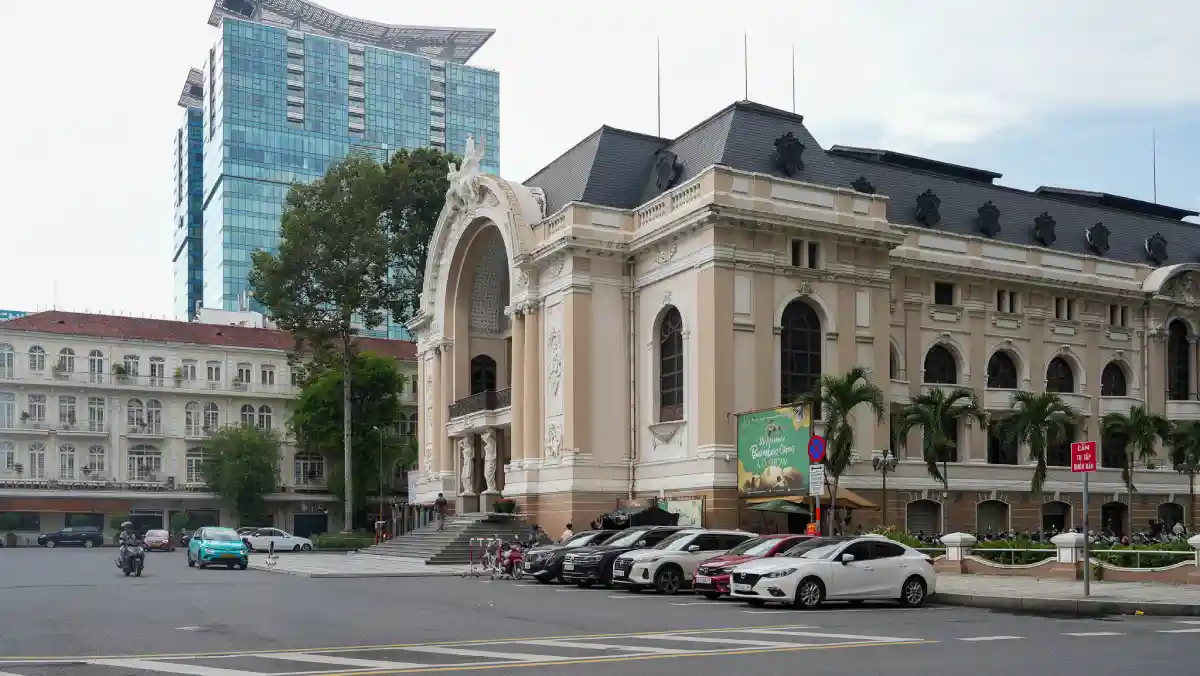
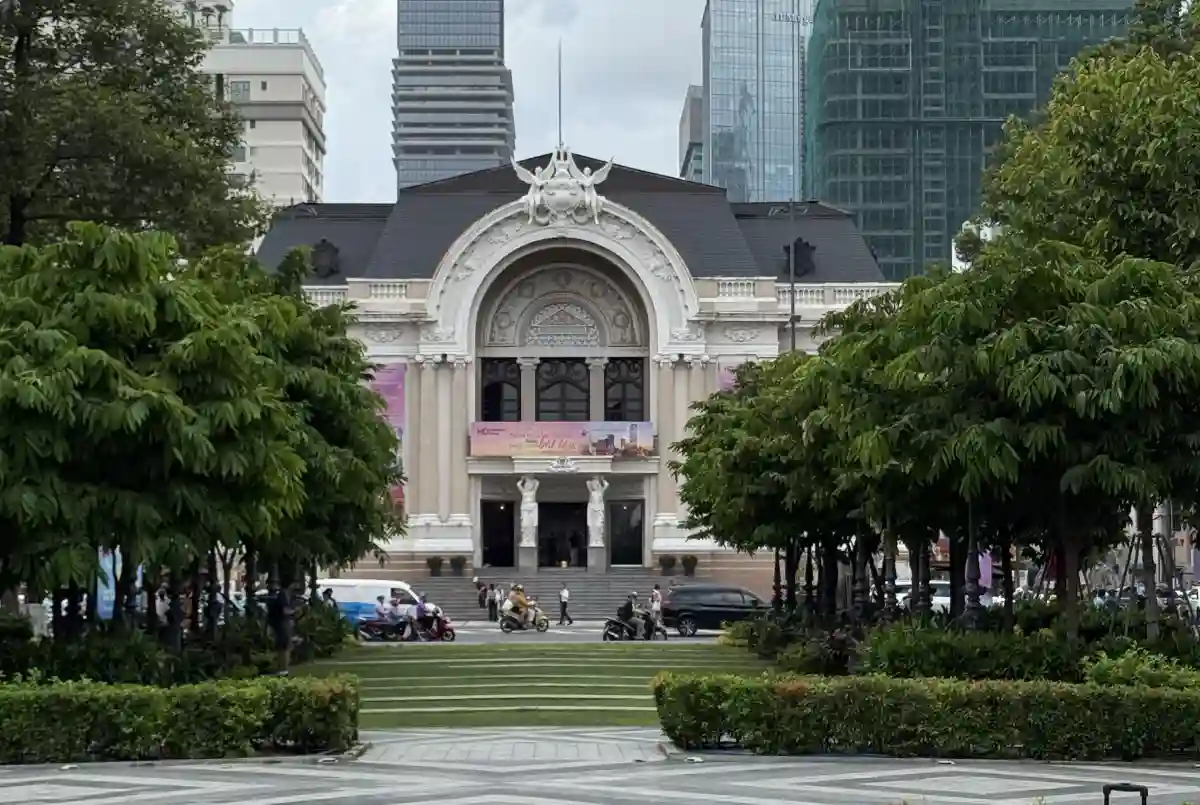
If there is one photograph that captures the essence of modern Saigon, it might be this view.
A historic theatre completed more than a century ago.
Glass towers rising behind it.
Two completely different eras sharing the same skyline.
This contrast is what makes the Saigon Opera House so fascinating.
The building represents the city's past.
The skyscrapers represent its future.
Together, they tell the story of a city that is constantly evolving while remaining deeply connected to its roots.
Many travelers arrive in Ho Chi Minh City expecting either a colonial city or a modern Asian metropolis.
What they discover is both.
The Opera House is one of the clearest examples of this unique identity.
For photographers, this location offers one of the most compelling compositions in the city. For visitors, it offers something even more valuable: perspective.
Most travelers photograph the Opera House from across the street.
Few take the time to look closely.
And that is a mistake.
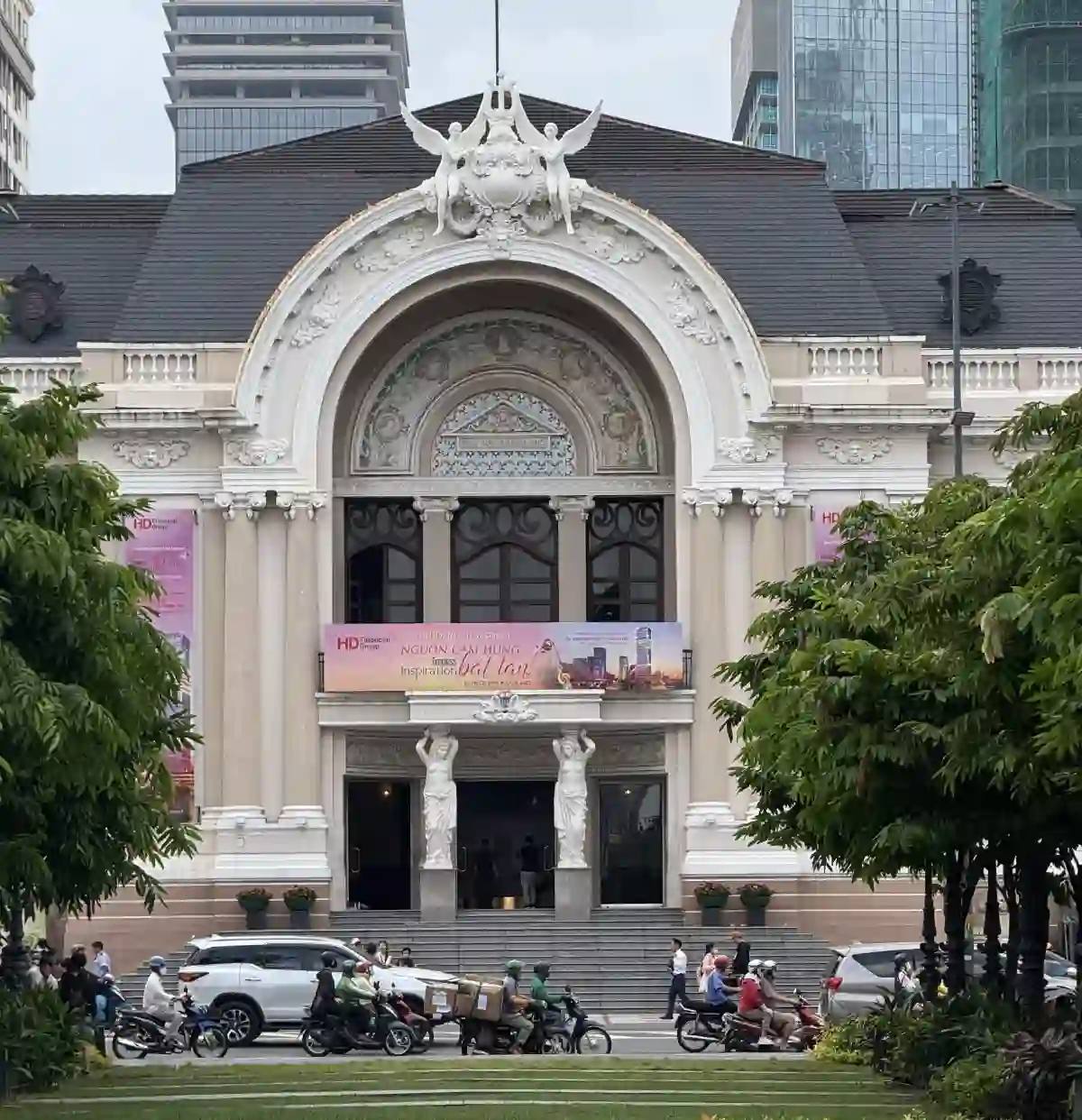
The closer you get, the more fascinating the building becomes.
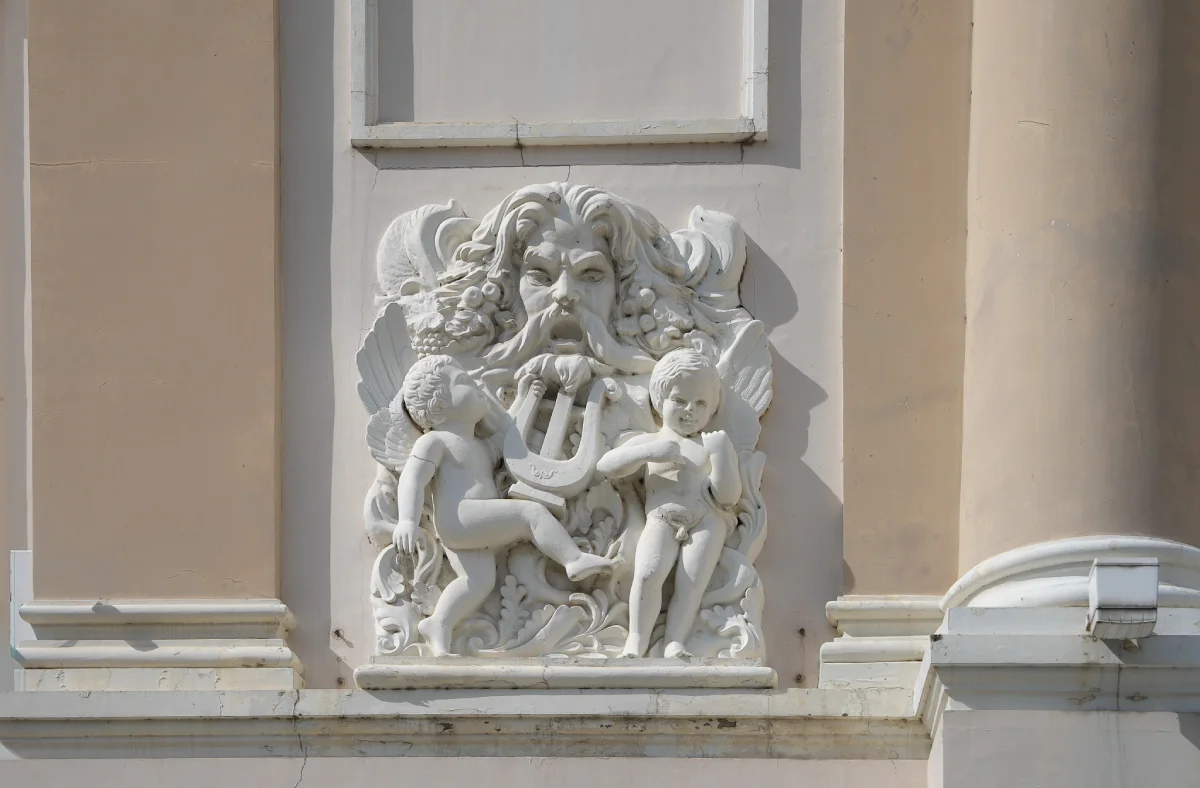
Decorative reliefs cover the façade. Classical figures emerge from carved stone. Cherubs, floral motifs, and ornamental details reveal the artistic influences that shaped the building's design.
One particularly beautiful relief depicts a classical figure surrounded by decorative elements inspired by European mythology.
Many people walk past without noticing it.
Yet these details are part of what makes the Opera House extraordinary.
The architects were not simply constructing a theatre.
They were creating a work of art.
Even after more than a century, the craftsmanship remains remarkable.
Every carving tells a story.
Every decorative feature reflects the ambition and artistic vision of the period in which the building was created.
Most people walk beneath them without realizing they are there.
Once you notice them, however, it becomes impossible to look away.
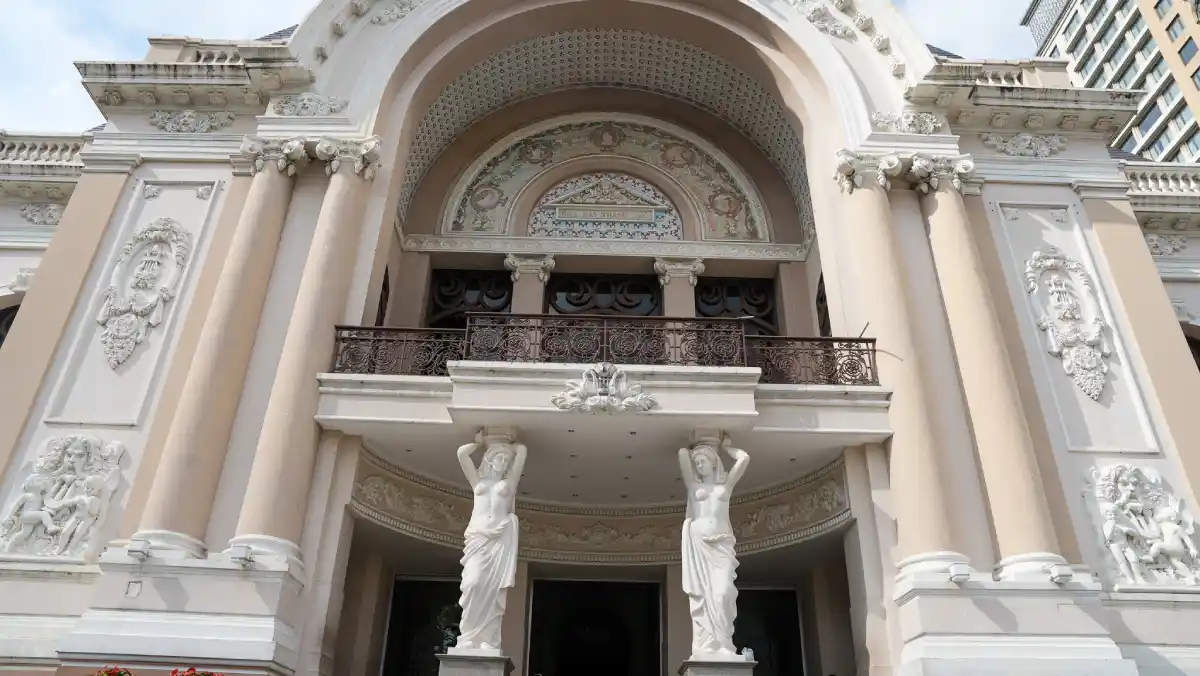
Supporting the balcony above the main entrance are two sculpted female figures known as caryatids.
Inspired by classical Greek architecture, caryatids replace traditional columns with elegantly carved female forms.
For more than 120 years, these figures have quietly watched Saigon transform around them.
They watched horse-drawn carriages disappear from the streets.
They watched bicycles give way to motorbikes.
They watched colonial Saigon become modern Ho Chi Minh City.
Today, they watch visitors from around the world gather beneath them with cameras in hand.
Few architectural details connect the past and present so beautifully.
The next time you visit the Opera House, pause for a moment and look up.
Most visitors never do.
Looking Up: The Crown of the Opera House
The higher your eyes travel, the more impressive the Opera House becomes.
Above the entrance, decorative arches frame the upper façade. Sculptural details create a sense of movement and elegance. Ornamental carvings draw attention toward the crown of the building.
Many visitors never notice these features because they are focused on the entrance below.
Yet some of the finest craftsmanship can be found high above street level.
The upper façade demonstrates why the Opera House is considered one of the most beautiful examples of Beaux-Arts architecture in Vietnam.
It rewards curiosity.
The longer you look, the more details you discover.
And that is perhaps the greatest strength of the building.
It reveals itself gradually.
The Best Time to Visit the Saigon Opera House
The Opera House is beautiful at any time of day.
But each hour offers a different experience.
Early morning provides softer light, fewer crowds, and excellent conditions for photography.
Late afternoon brings warm golden sunlight that highlights the cream-colored façade and enhances the building's architectural details.
After sunset, the Opera House takes on an entirely different character.
Illuminated against the night sky, it becomes one of the most beautiful landmarks in Ho Chi Minh City.
For photographers, golden hour and blue hour are particularly rewarding.
For travelers, however, the best time to visit is often whenever you have enough time to slow down.
Too many visitors rush past.
The Opera House deserves more than a quick photograph.
It deserves a few quiet minutes of observation.
Can You Go Inside the Saigon Opera House?
Yes.
Visitors can admire the exterior throughout the day, while access to the interior is generally available during performances and special cultural events.
If you have the opportunity to attend a performance, it is well worth considering.
Experiencing the building as it was originally intended offers a deeper appreciation of its history and purpose.
Even if you never step inside, however, the exterior architecture alone makes the Opera House one of the most rewarding places to visit in Ho Chi Minh City.
Experiencing the Opera House with a Local Guide
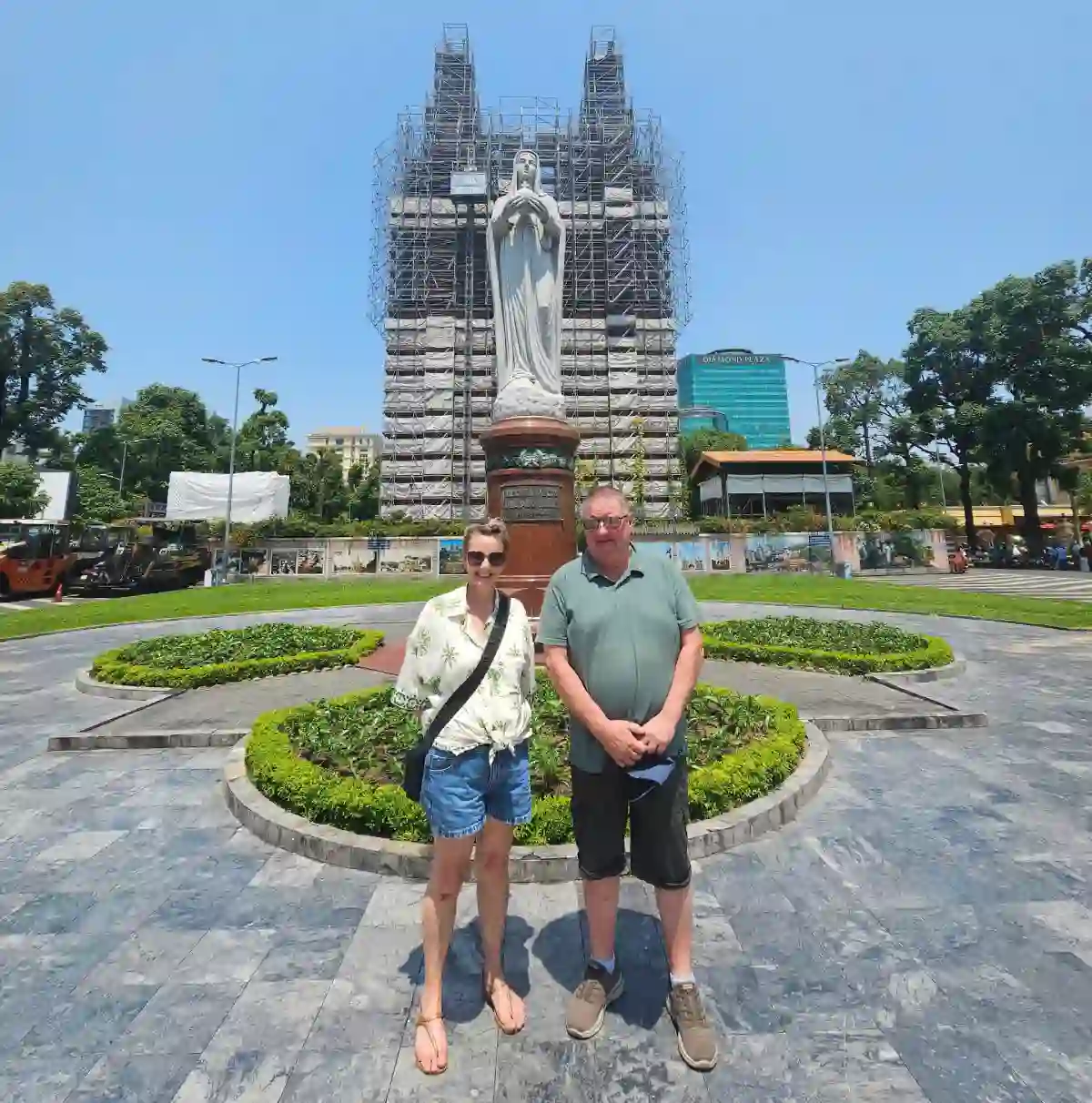
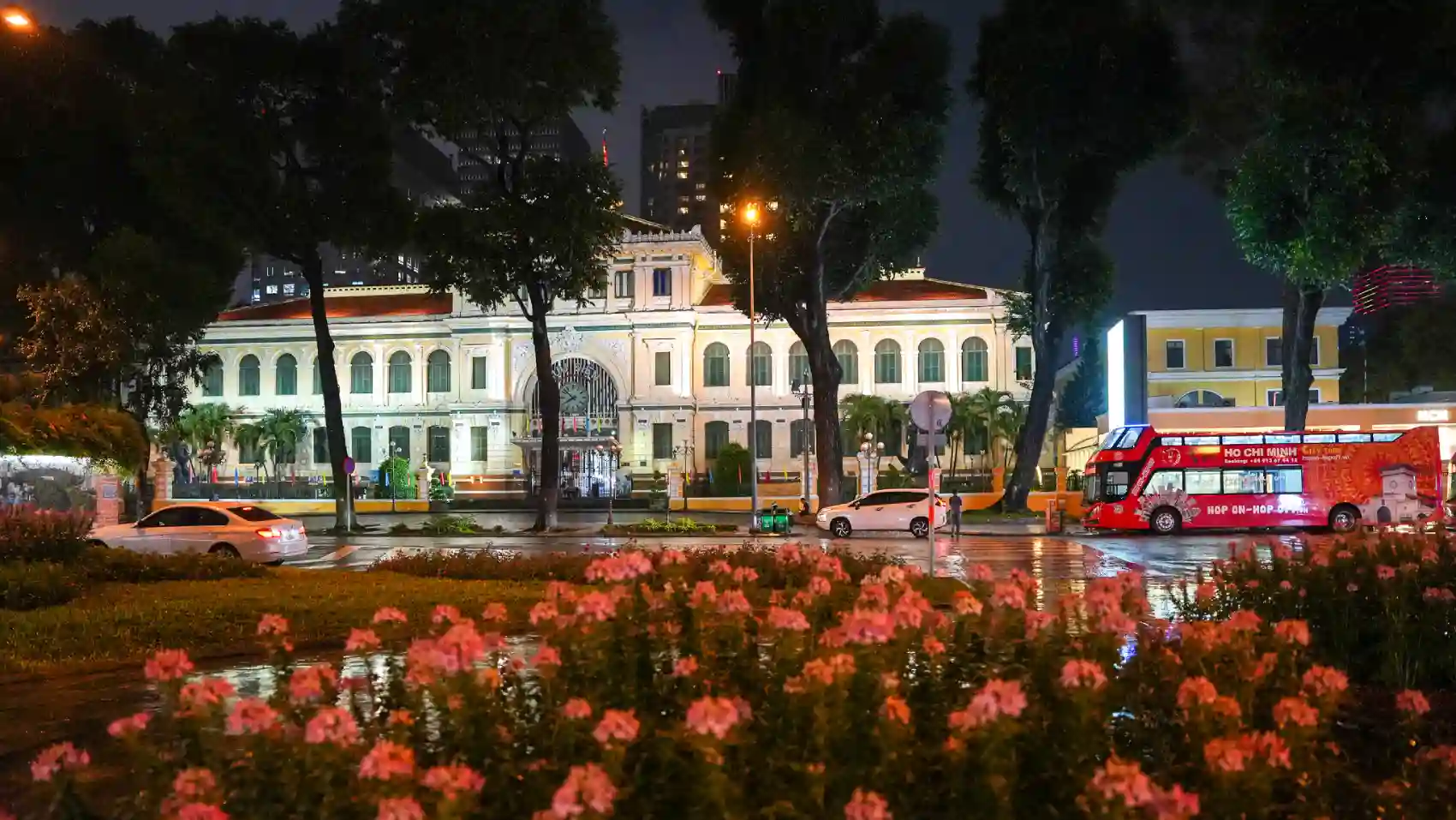
The Opera House sits within easy walking distance of the Saigon Central Post Office, Notre Dame Cathedral and Nguyen Hue walking street, which is why it appears on almost every itinerary through the historic centre.
On our small-group walks, we usually pause here for a few quiet minutes — long enough to point out the caryatids, the cherub reliefs, and the way the modern skyline frames the building from Lam Son Square.
Many travellers pair a morning at the landmarks with an evening street food walk through District 1 — two very different sides of Saigon within the same neighbourhood.

Why the Saigon Opera House Remains a Symbol of Ho Chi Minh City
Cities change.
Buildings disappear.
New skylines emerge.
Yet some places continue to define a city regardless of how much time passes.
The Saigon Opera House is one of those places.
For more than a century, it has witnessed the story of Saigon unfold around it.
It has survived political change, economic transformation, and the rapid development of one of Southeast Asia's most dynamic cities.
Today, it remains exactly what great landmarks should be.
Not simply a beautiful building.
Not simply a historical monument.
But a connection between past and present.
A place where old Saigon still lives.
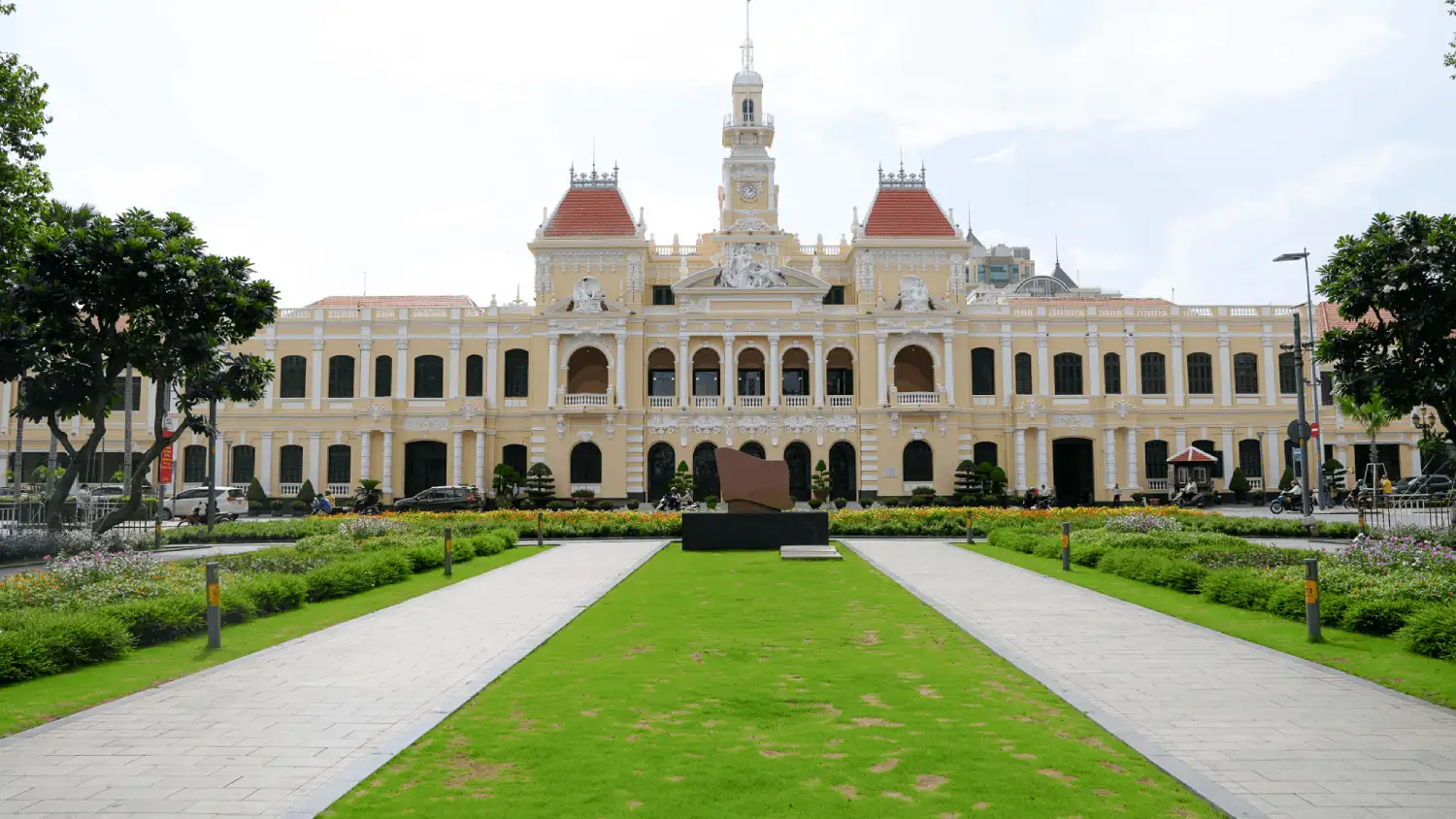
And perhaps the perfect place to begin discovering Ho Chi Minh City — alongside landmarks like the Notre Dame Cathedral Saigon, the Saigon Central Post Office, and Ho Chi Minh City Hall.