Start with the weather, not the photograph
The best answer to what to wear for a walking tour in Ho Chi Minh City begins with the day’s conditions. Saigon is warm for much of the year, and a route can combine open pavements, shaded lanes, indoor stops and busy crossings. A good outfit therefore needs to handle heat, movement and small changes of plan rather than look impressive in one photograph.
Check the forecast before leaving, but do not treat it as a guarantee. A dry morning can become a wet afternoon, while a cloudy day can still feel hot and humid. Pack one useful extra layer instead of carrying a heavy collection of clothes. The aim is to stay comfortable enough to notice the city, pause safely and change direction when the weather or traffic demands it.
This guide is for independent walkers and people deciding what to wear on a local-led tour. It does not promise a fixed temperature, route or dress rule for every attraction. Current conditions and the instructions at a particular religious or cultural site take priority.
Choose shoes for pavement, crossings and pauses
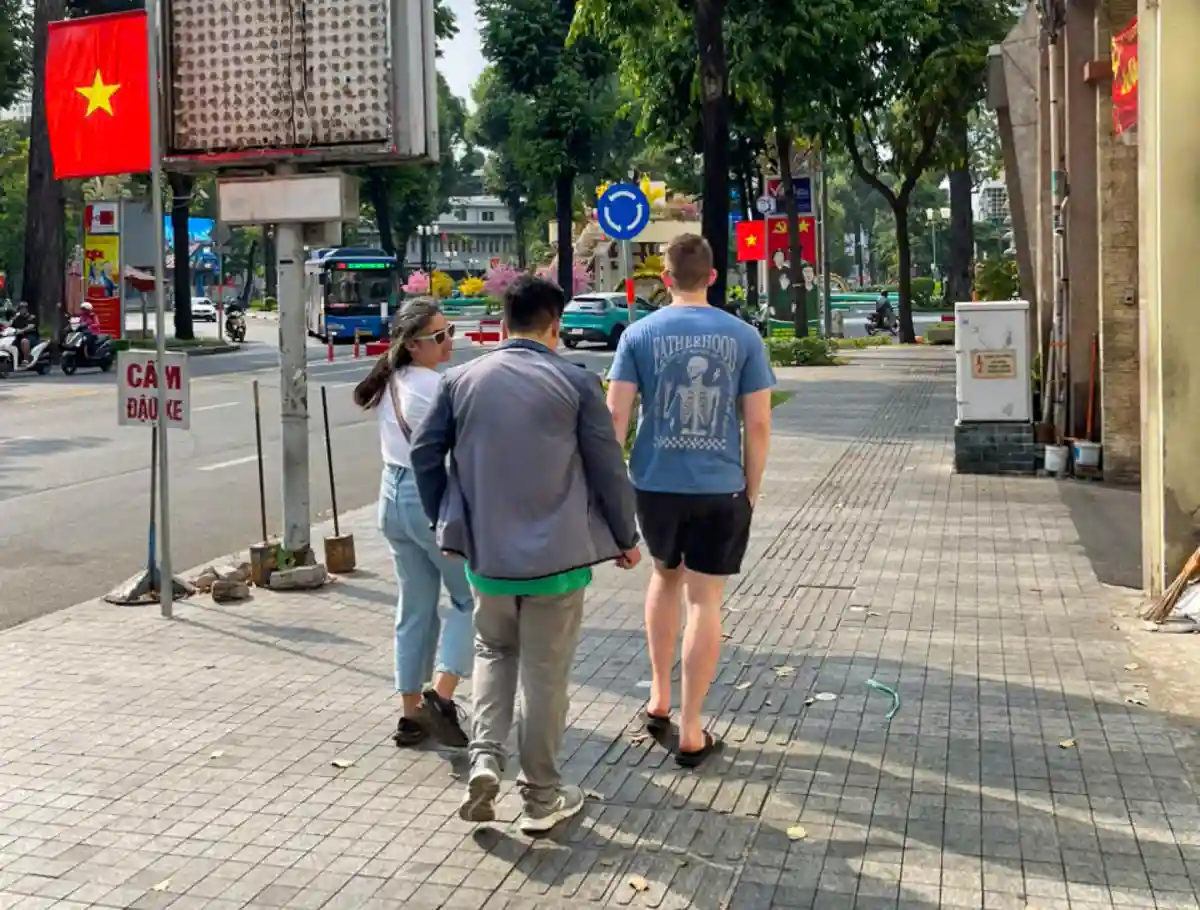
Shoes are the most important part of a walking-tour outfit. Choose a pair you have already worn, with enough room for your toes and a secure fastening. The sole should feel stable on ordinary pavement and offer some grip when surfaces are wet. Trainers, walking shoes or simple flat shoes can all work if they fit well and do not rub.
Avoid bringing brand-new shoes on a long city walk. A small blister becomes a serious nuisance when you are crossing roads, standing at a market or walking between several stops. Very smooth soles can also feel uncertain on polished floors, painted crossings and puddled pavement. High heels are rarely practical for a route that includes broken edges, kerbs or frequent pauses.
Open footwear is a personal choice, but it should stay secure while you walk. Loose slides can slow you down and make uneven surfaces awkward. If you expect rain, consider how quickly the shoes dry and whether they remain comfortable after getting wet. Carrying spare socks in a small waterproof bag is often more useful than carrying a second pair of shoes.
Wear breathable layers you can adjust
A lightweight, breathable top is usually easier to manage than a thick shirt or jacket. Cotton, linen and technical fabrics each have advantages; choose what feels comfortable to you and dries reasonably well. A loose cut can help air circulate, but very long or trailing garments may catch on chairs, motorbikes or crowded pavement.
A thin overshirt or scarf can do several jobs. It can provide shade, cover shoulders when you enter a religious site, and give you a little warmth in strong air conditioning. It is also easier to remove than a heavy layer when the walk moves outdoors again. Neutral, washable clothing is practical because dust, rain and food splashes are normal possibilities on an urban route.
A walking tour includes listening, looking, sitting and waiting as well as moving. Choose clothes that let you bend, step up a kerb and carry a phone without constantly adjusting them. The most useful outfit is the one you stop thinking about after the first few minutes.
What to wear in hot and humid weather
In hot weather, light layers and a hat with a secure fit can make an outdoor route easier. Sunglasses may help with glare, but keep them easy to remove when you need to read signs or make eye contact at a crossing. These are practical precautions, not medical advice or a forecast.
Choose socks that do not bunch and clothes that do not become heavy when damp. If you sweat easily, a spare top can be more helpful than a jumper. Use shade when it is available and build in a pause before you feel exhausted. You do not need to complete every optional stop for the walk to be worthwhile.
Rain protection for a Saigon walking tour
Rain changes more than your clothes. It can reduce visibility, make painted surfaces slippery and encourage people to gather under shopfronts. A light raincoat keeps both hands available for a railing, a bag or a careful crossing. An umbrella can work well in lighter rain, but it may block your view and take up space on a crowded pavement.
Protect your phone, passport, medication and any paper notes in a resealable waterproof pouch. A plastic bag inside your day bag is a simple second layer. Wear shoes that remain secure when wet, and avoid carrying an outfit that becomes uncomfortably heavy after one shower.
If rain becomes heavy, pause in a legitimate public place without blocking an entrance and reassess the route. Do not treat a forecast as a reason to push through unsafe visibility or flooded pavement. Our Saigon rainy season walking guide explains how to shorten or pause a walk; its advice is general and conditions still need to be judged on the day.
Dressing respectfully at temples and assembly halls
A city walk may pass a temple, pagoda, church or assembly hall without warning. The appropriate response is to treat the place as active for worship, not as a photo set. Clothing that covers the shoulders and is suitably modest is a useful default when you know religious sites are part of the route.
If your outfit is shorter or more open, carry a clean, lightweight layer that you can put on before entering. A shawl, overshirt or loose trousers can be practical. Dress is only one part of respectful behaviour: lower your voice, keep doorways clear, avoid touching religious objects and ask before taking photographs.
Rules differ between sites, and a caretaker’s request is more specific than a general travel tip. Remove shoes, hats or other items when signs, local custom or the site’s caretaker require it. If a ceremony is taking place, wait quietly or remain outside rather than assuming that visitors can walk through.
What to carry with your walking outfit
A small cross-body bag or day pack is easier to manage than a large suitcase-style bag. Keep it light enough that your shoulders do not tire before the route is over. Carry water, a charged phone, payment essentials, sun protection and any medication you need. Keep valuables secure without repeatedly displaying them in the middle of the street.
Clothing for a guided or self-guided route
On a guided walk, wear something that lets you hear and stay with the group without discomfort. A secure bag and comfortable shoes matter more than coordinated colours. Tell the guide early if heat, mobility or footwear creates a problem; a route may have options, but the group cannot help if nobody knows what is happening.
On a self-guided walk, you have more control over pauses and clothing changes. That freedom does not remove the need to plan for traffic. Read our Saigon street-crossing guide before setting off, especially if this is your first visit. Clothing should support a steady pace and clear sightlines, not encourage you to hurry.
For a broader explanation of what a local-led walk can involve, see what to expect from a Ho Chi Minh City free walking tour. The page describes the experience in general; confirm current meeting details directly before attending any tour.
Common outfit mistakes to avoid
The most common mistake is choosing clothes for a short photograph rather than several hours outside. A stiff shirt, untested shoes or a heavy bag can make a simple route tiring. Another is carrying no rain protection because the sky looked clear at breakfast. A small layer and a waterproof pouch are cheap insurance against a change of plan.
Do not wear clothing that makes it difficult to step over a puddle, climb a kerb or keep your bag close. Avoid dangling jewellery and loose accessories in crowded areas. If you need prescription glasses or medication, keep them protected and accessible rather than buried under spare clothes.
A simple packing checklist
Before leaving, check that your shoes are comfortable, your phone is charged and your bag closes securely. Add water, sun protection, a rain layer or compact umbrella, tissues, essential medication and a waterproof pouch. If temples or other religious sites are included, pack a layer that covers shoulders or knees.
Keep the checklist proportional to the route. A short District 1 walk does not require expedition equipment, and carrying too much can be its own problem. Our self-guided District 1 walking route gives a more specific example of planning a city walk, including pauses and optional sections.
The right clothes cannot remove heat, traffic or weather uncertainty. They can give you more attention for the city around you. Dress for movement, carry one or two sensible contingencies and be willing to change the plan when conditions change.
Frequently asked questions
- What shoes are best for a walking tour in Ho Chi Minh City?
- Choose comfortable shoes with a secure fit and a sole that grips on smooth, wet or uneven pavement. There is no single required style; comfort, stability and weather suitability matter more than appearance.
- Do I need long trousers for a walking tour in Saigon?
- Not necessarily. Lightweight trousers, longer shorts or a breathable skirt can work, but bring a layer that helps you dress modestly if you enter a religious site. Follow signs and local requests at each place.
- Should I bring a raincoat or an umbrella?
- A light raincoat keeps both hands available at crossings and in busy streets. An umbrella can be useful in lighter rain or while waiting. Check the forecast and choose the option you can use safely.
- What should I wear to a temple in Ho Chi Minh City?
- Wear clothing that is respectful and not overly revealing, and carry a light layer for shoulders or knees if needed. Remove shoes only when asked and follow the site’s own signs or instructions.
Sources: Vietnam Tourism etiquette guidance and the site’s current local information. Weather and venue conditions can change; verify them before travelling.