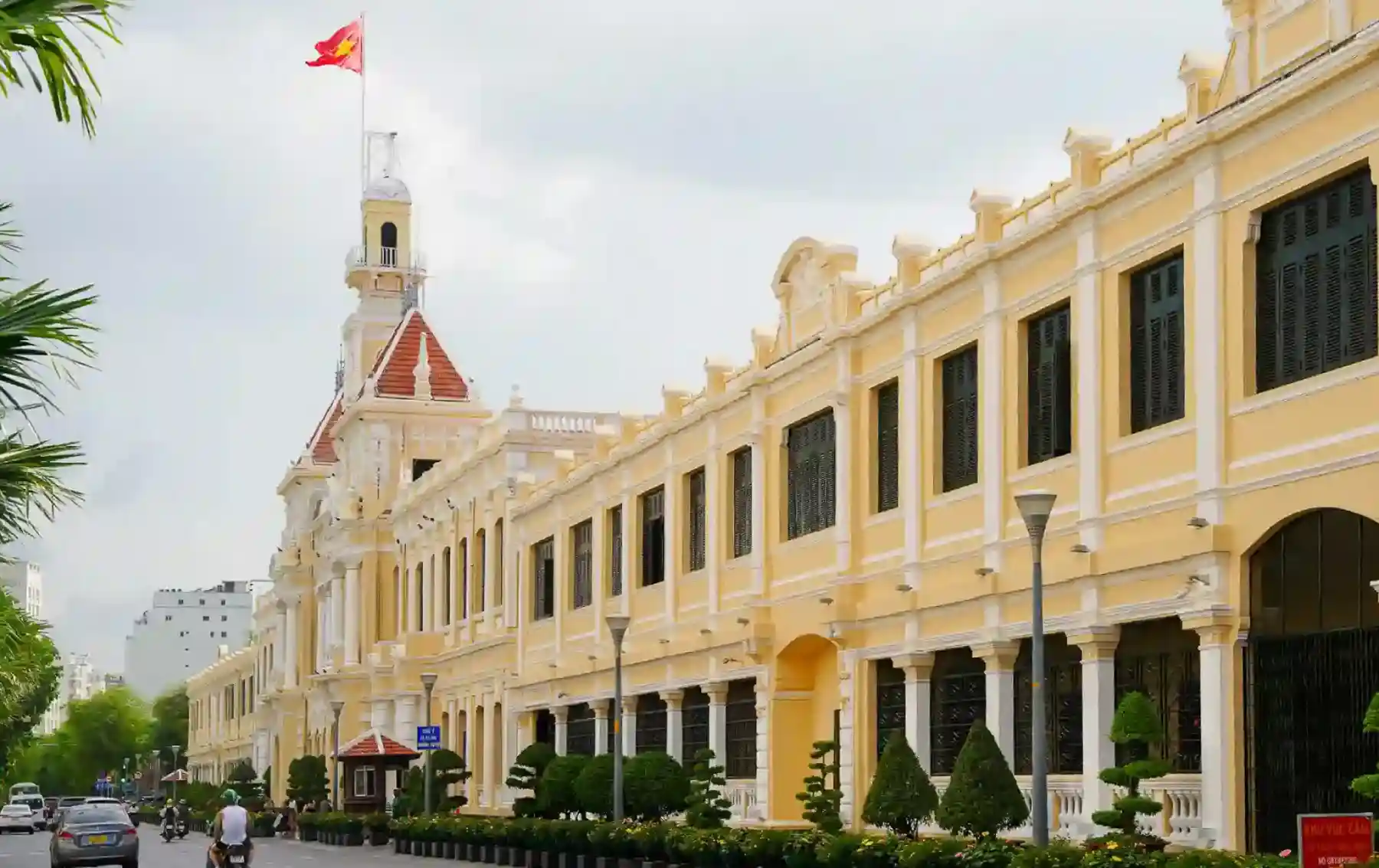
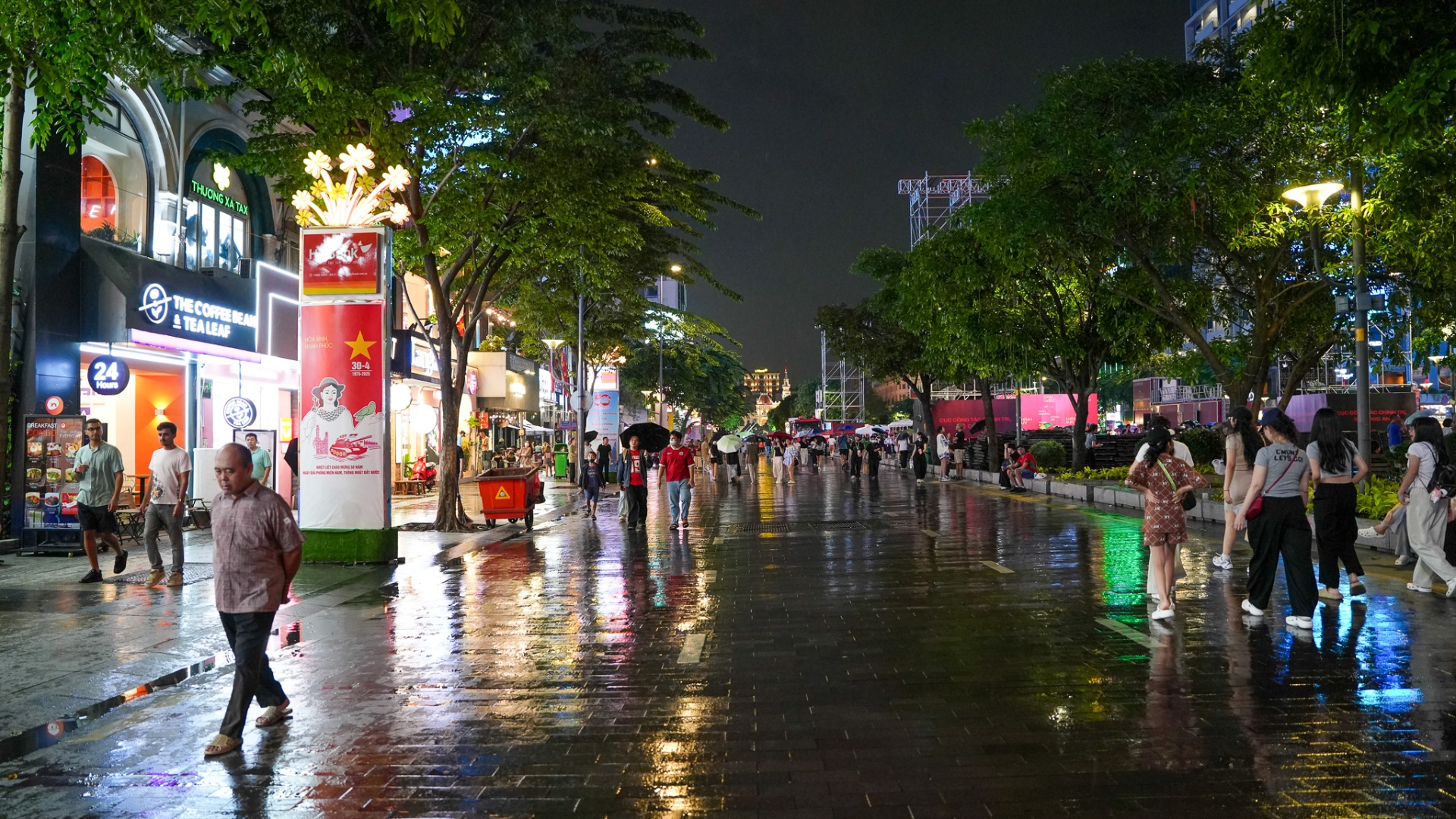
Most evenings, the same thing happens on Nguyen Hue Walking Street.
Someone slows down.
They stop for a moment, look around, and take it all in.
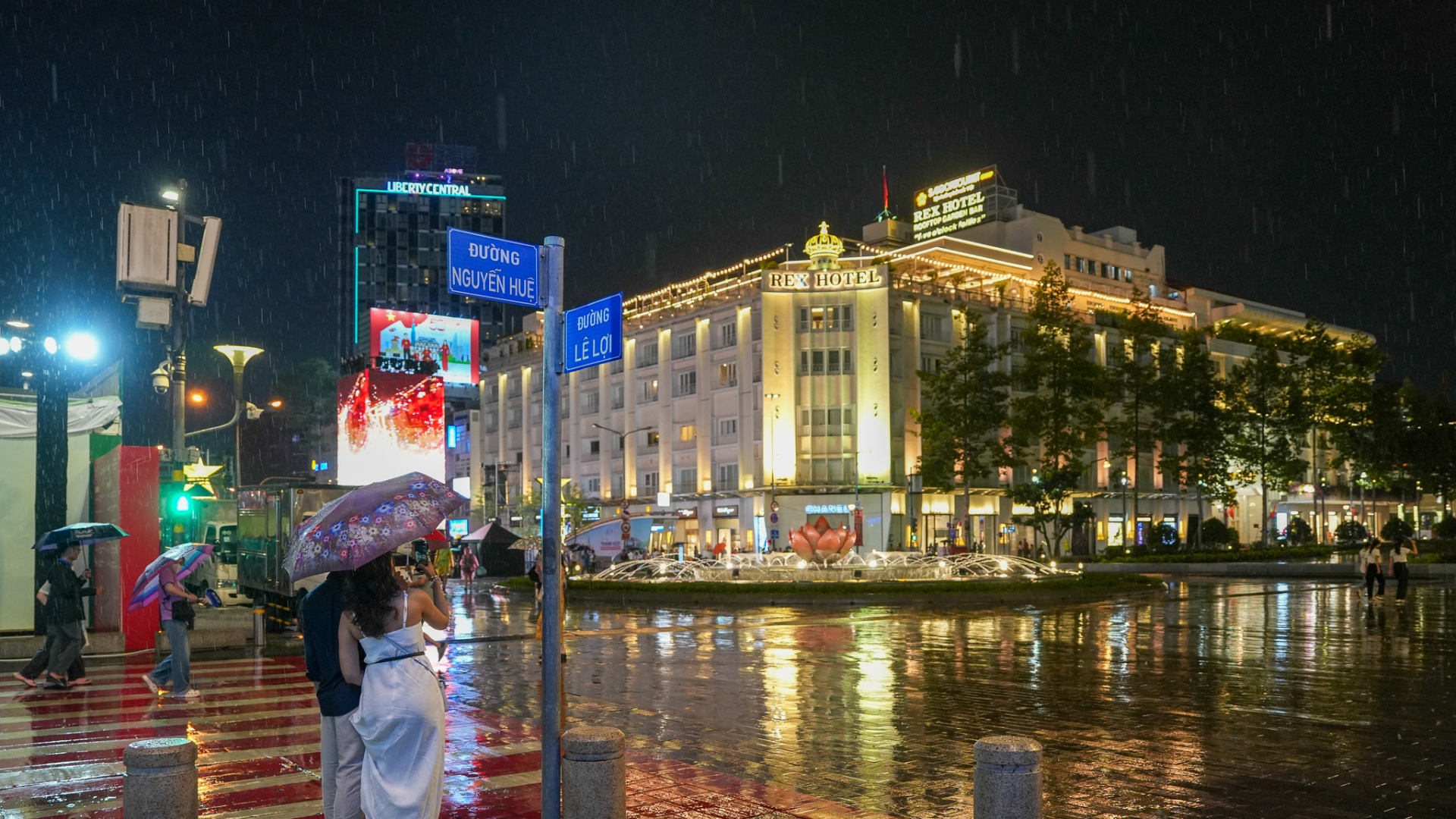
The lights reflecting across the pavement after rain.
Families enjoying an evening stroll.
Friends gathering for coffee.
Street performers drawing small crowds.
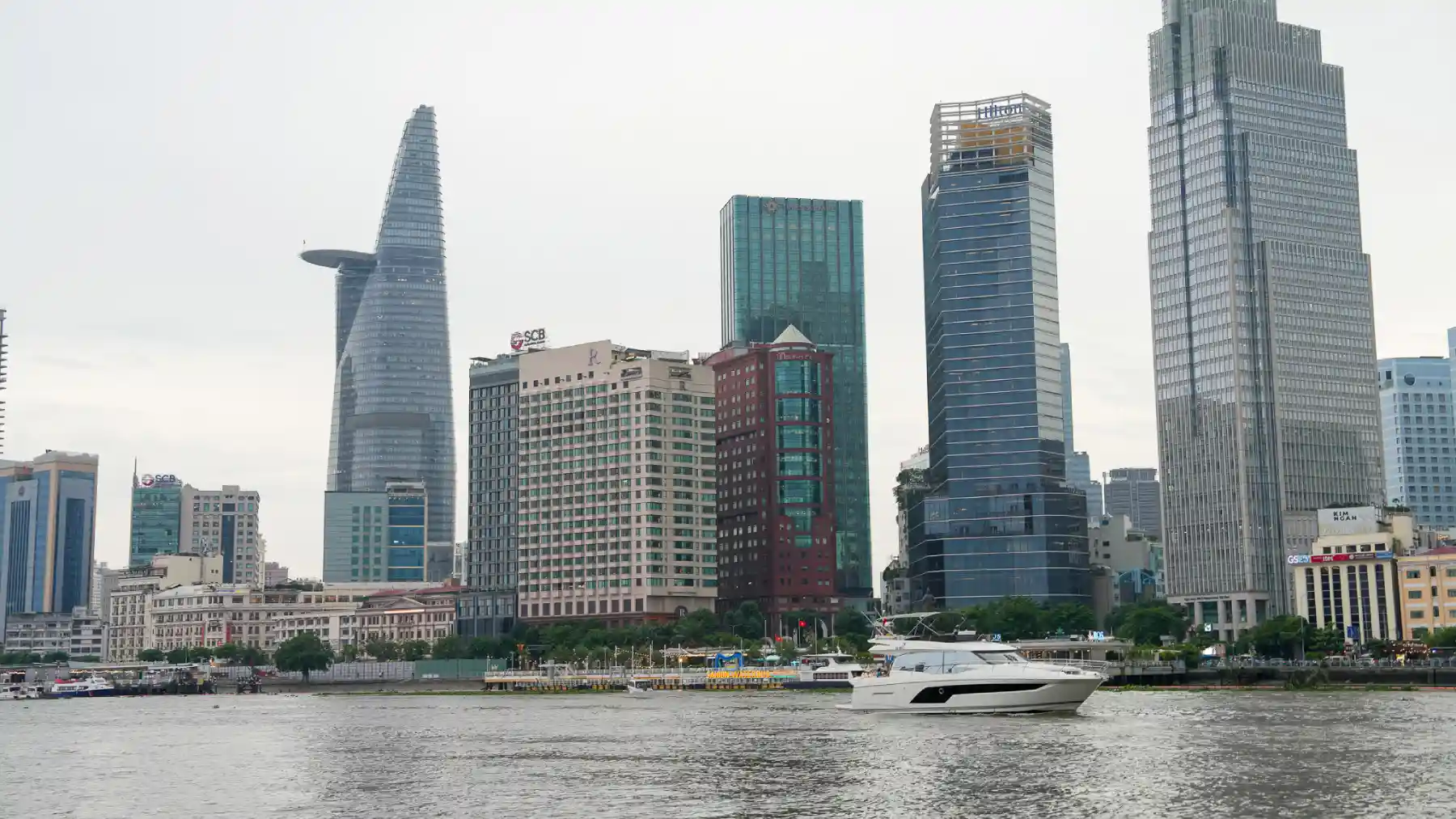
The skyline of modern Ho Chi Minh City rising above it all.
It is a simple scene, yet it captures something essential about Saigon.
The city moves fast. Motorbikes fill the streets. New buildings continue to reshape the skyline. Life rarely seems to slow down.
Yet here, in the heart of District 1, people pause.
That is what makes Nguyen Hue Walking Street special.
More than a tourist attraction, it is one of the few places where visitors can experience how modern Saigon actually lives.
Stretching from Ho Chi Minh City Hall to the Saigon River, this vibrant pedestrian boulevard has become a gathering place for locals, travellers, photographers, families, and anyone curious about the energy that defines Vietnam's largest city.
For first-time visitors, it is often the perfect introduction to Ho Chi Minh City.
For locals, it remains one of the city's favourite meeting places. On weekends, it is common to see everything from family gatherings and graduation photos to impromptu music performances taking place along the boulevard.
And for many travellers, it becomes one of the memories they remember long after leaving Saigon.
Why Nguyen Hue Walking Street Matters
Many travellers visit Ho Chi Minh City expecting chaos.
Motorbikes.
Traffic.
Constant movement.
Then they arrive at Nguyen Hue Walking Street and discover something unexpected.
Space.
The wide pedestrian boulevard creates a rare sense of openness in one of Southeast Asia's busiest cities.
Without the noise of traffic, visitors can slow down and observe the city from a different perspective.
Children run through the open square.
Young couples take photographs.
Office workers gather after work.
Tourists and locals share the same public space.
The atmosphere changes constantly throughout the day, but it never loses its energy.
This is where modern Saigon comes together.
A Different Side of Saigon After Dark
Most guidebooks focus on famous landmarks.
The cathedral.
The post office.
The museums.
But many locals would argue that the real character of the city appears after sunset.
As darkness falls, Nguyen Hue transforms.
Glass buildings reflect neon lights.
Restaurants fill with conversations.
Music drifts through the evening air.
The boulevard becomes a stage where thousands of everyday stories unfold at the same time.
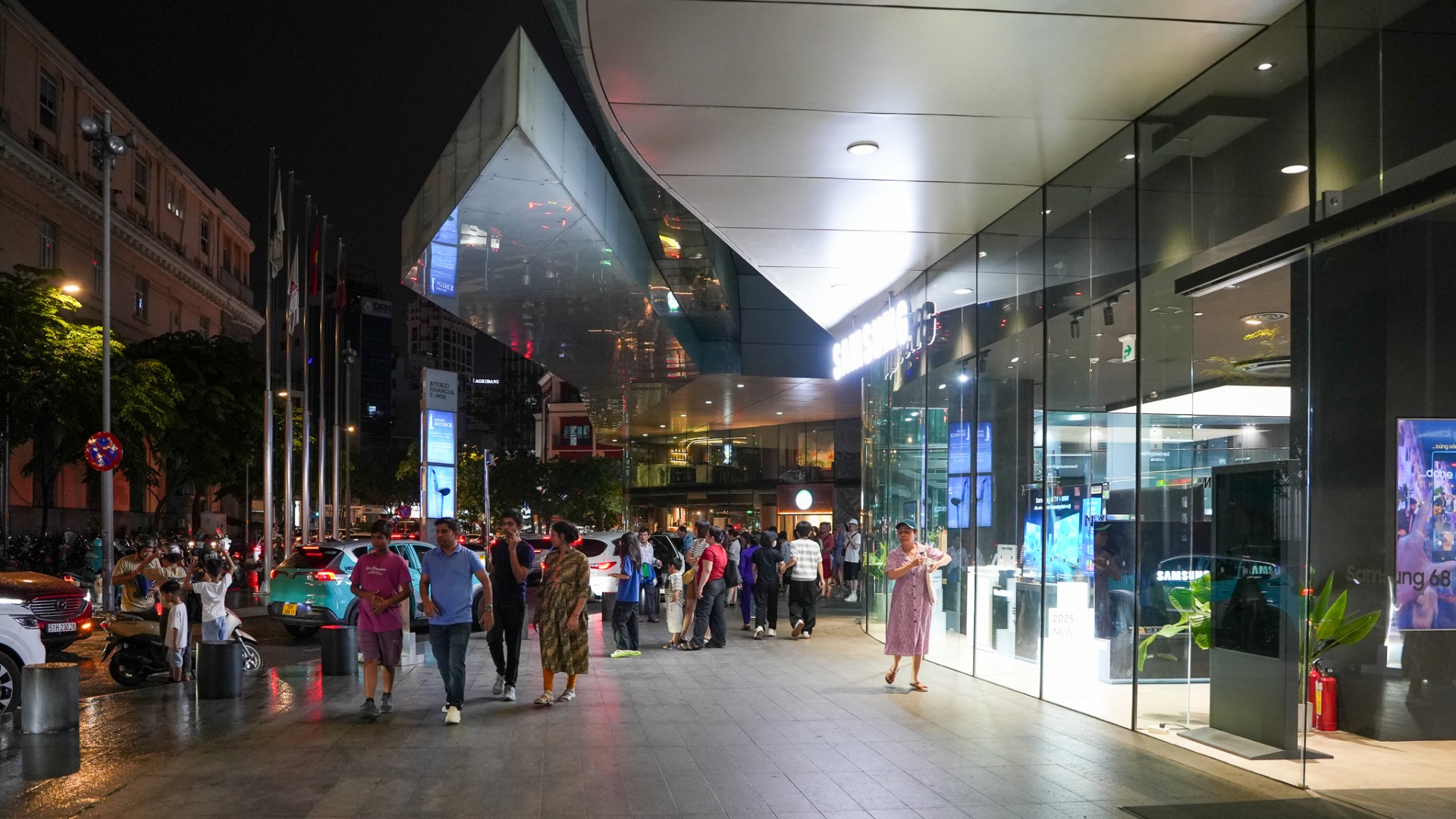
Unlike the nightlife of Bui Vien Walking Street, which revolves around bars and late-night entertainment, Nguyen Hue feels more balanced.
Families, travellers, students, professionals, and elderly residents all share the same space.
It feels energetic without being overwhelming.
Modern without losing its local character.
The Most Beautiful Time to Visit
Many visitors arrive during the afternoon.
The boulevard is pleasant.
The architecture is easy to appreciate.
The cafés are open.
But the real magic happens after sunset.
Especially after rain.
The wet pavement becomes a giant mirror.
Reflections from LED screens, cafés, hotels, and city lights create a constantly changing canvas of colours.
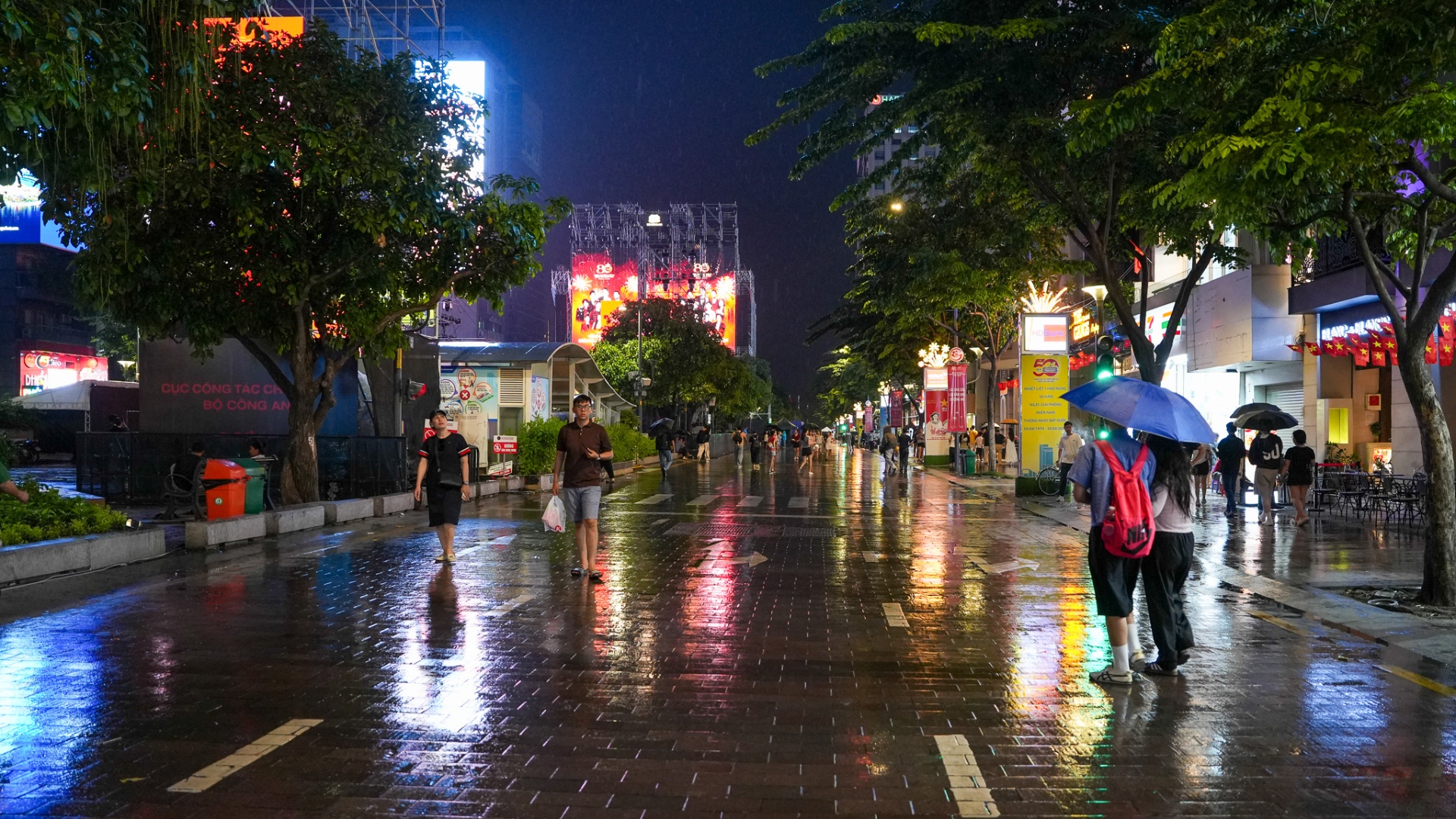
Photographers often spend hours here waiting for these moments.
The combination of tropical rain, modern architecture, and urban life produces scenes that feel almost cinematic.
It is one of the reasons Nguyen Hue Walking Street has become one of the best photo spots in Ho Chi Minh City — especially for visitors exploring Saigon after dark.
Cafés, Restaurants and People Watching
One of the pleasures of Nguyen Hue is how easy it is to spend an entire evening without following any plan.
Choose a café.
Order a Vietnamese coffee.
Find a seat overlooking the boulevard.
Then simply watch.
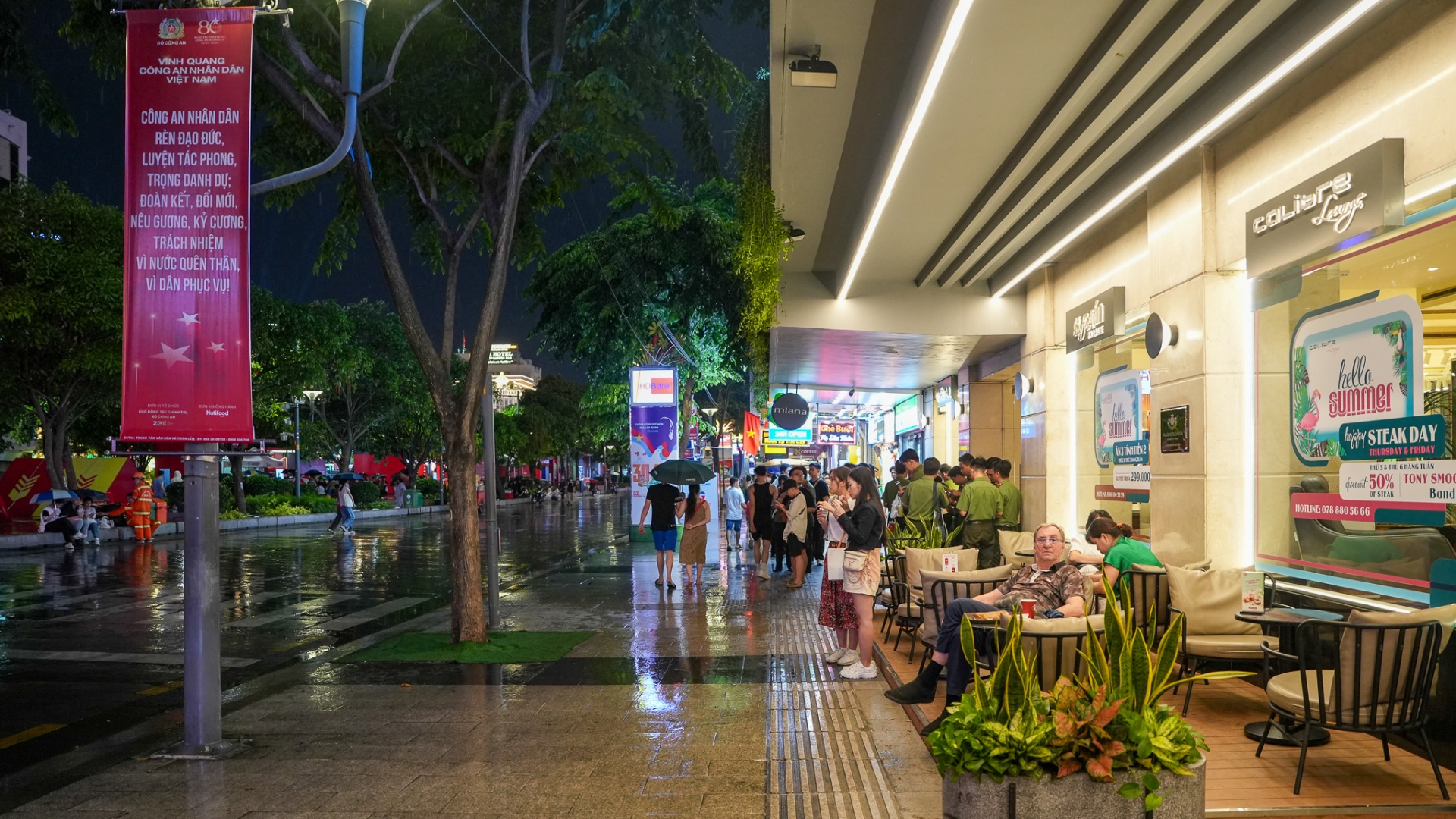
The street provides a constant stream of life.
Students taking graduation photographs.
Street performers entertaining crowds.
Families enjoying an evening walk.
Travellers discovering Saigon for the first time.
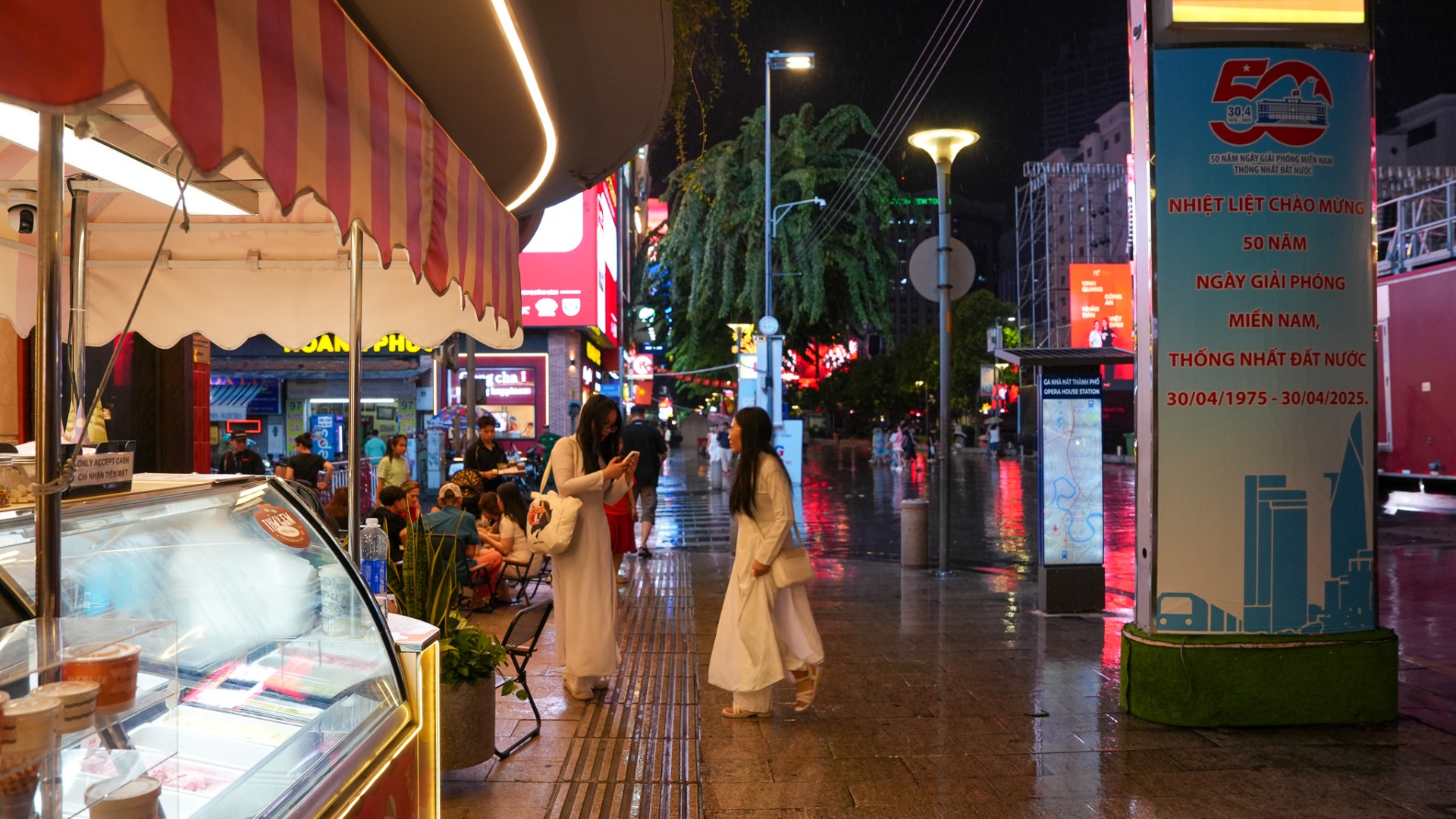
The experience feels less like visiting an attraction and more like participating in the city itself.
For food lovers, Nguyen Hue also provides easy access to some of the city's most popular dining districts, while our Saigon street food walk follows the flavours hidden in the back alleys just beyond the boulevard.
Where History Meets Modern Saigon
One reason Nguyen Hue Walking Street feels so unique is its location.
Within a few minutes' walk, visitors can reach some of the most important landmarks in Ho Chi Minh City.
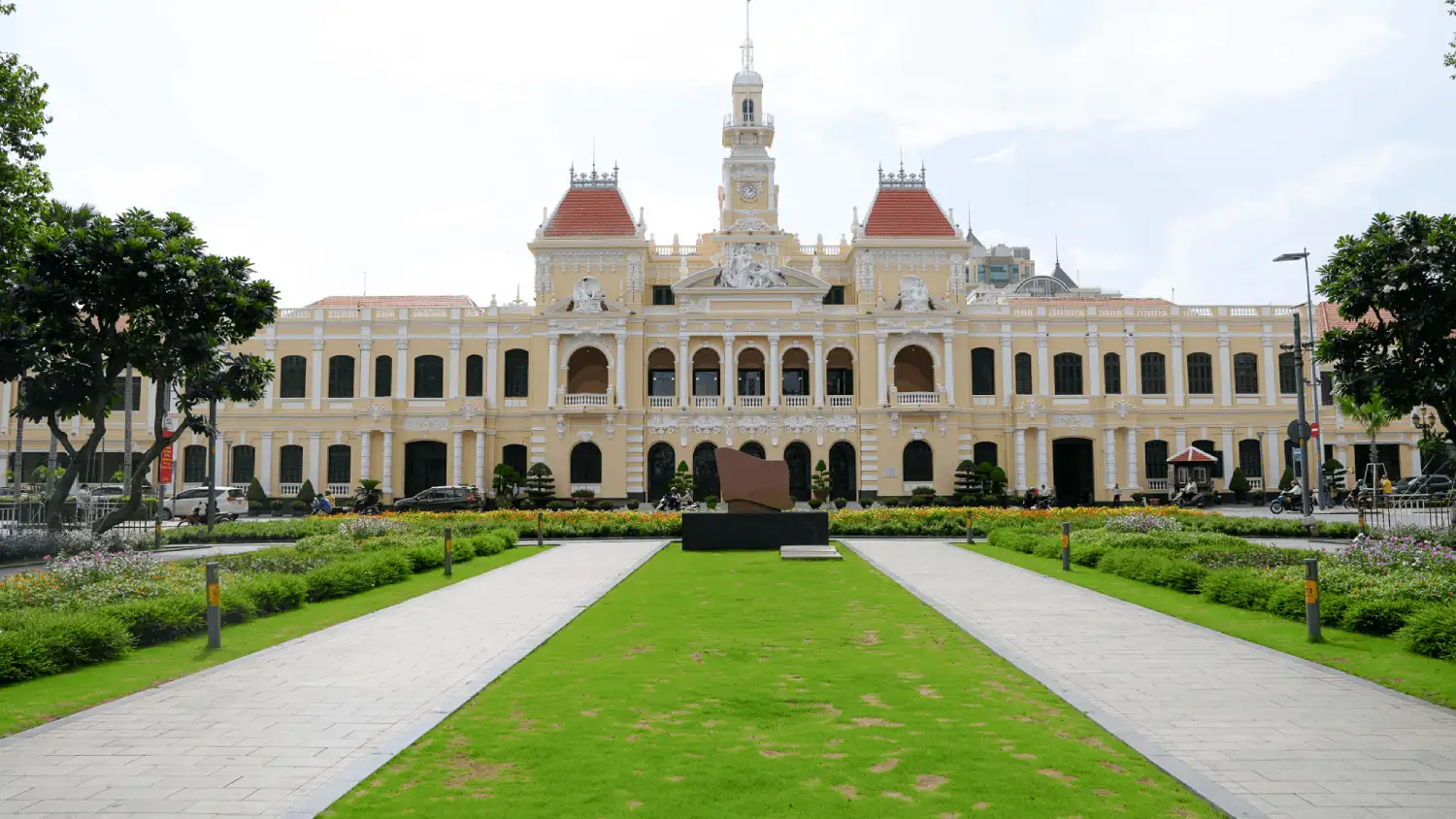
At the northern end stands the magnificent Ho Chi Minh City Hall.
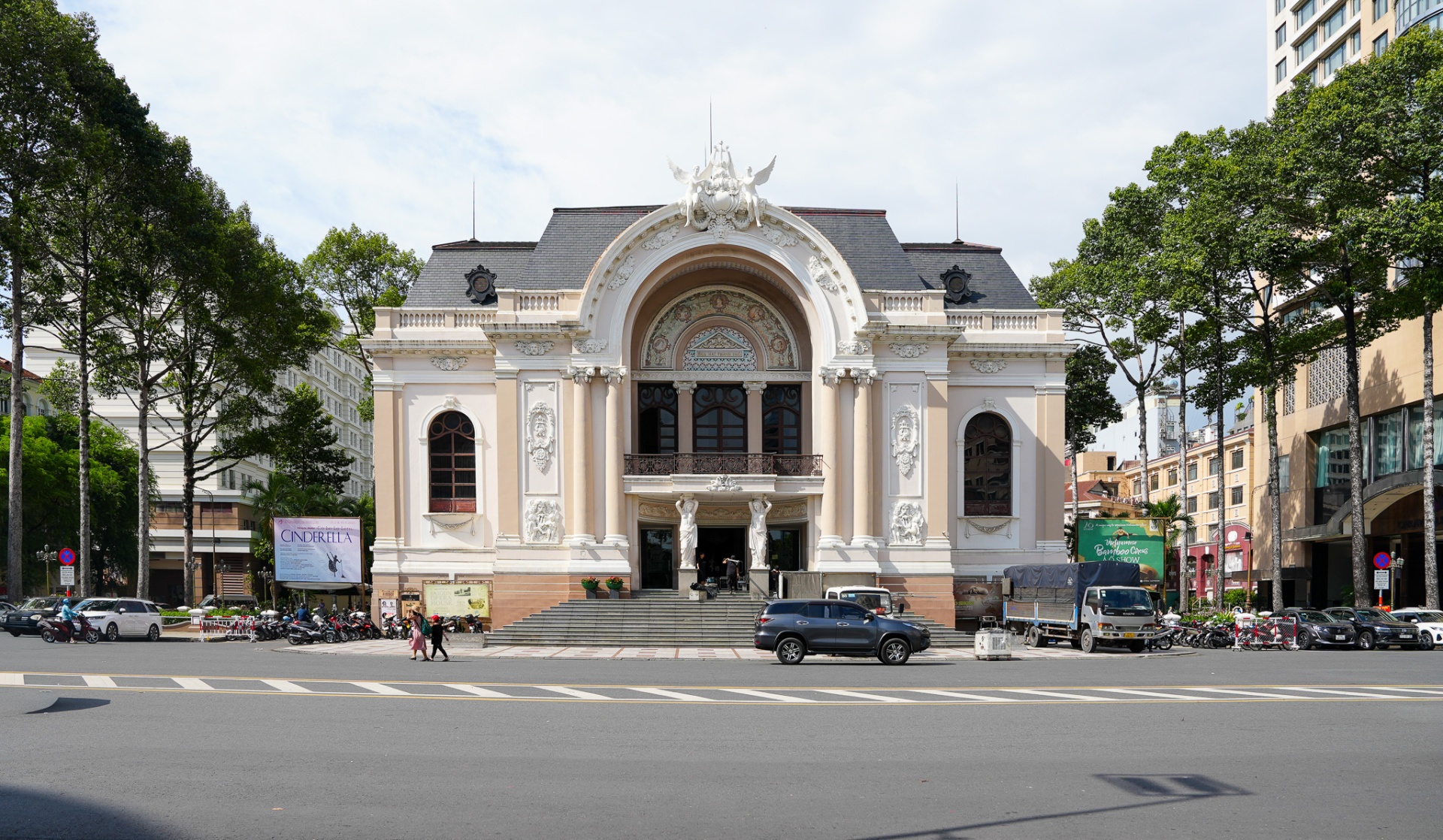
Nearby sits the elegant Saigon Opera House.
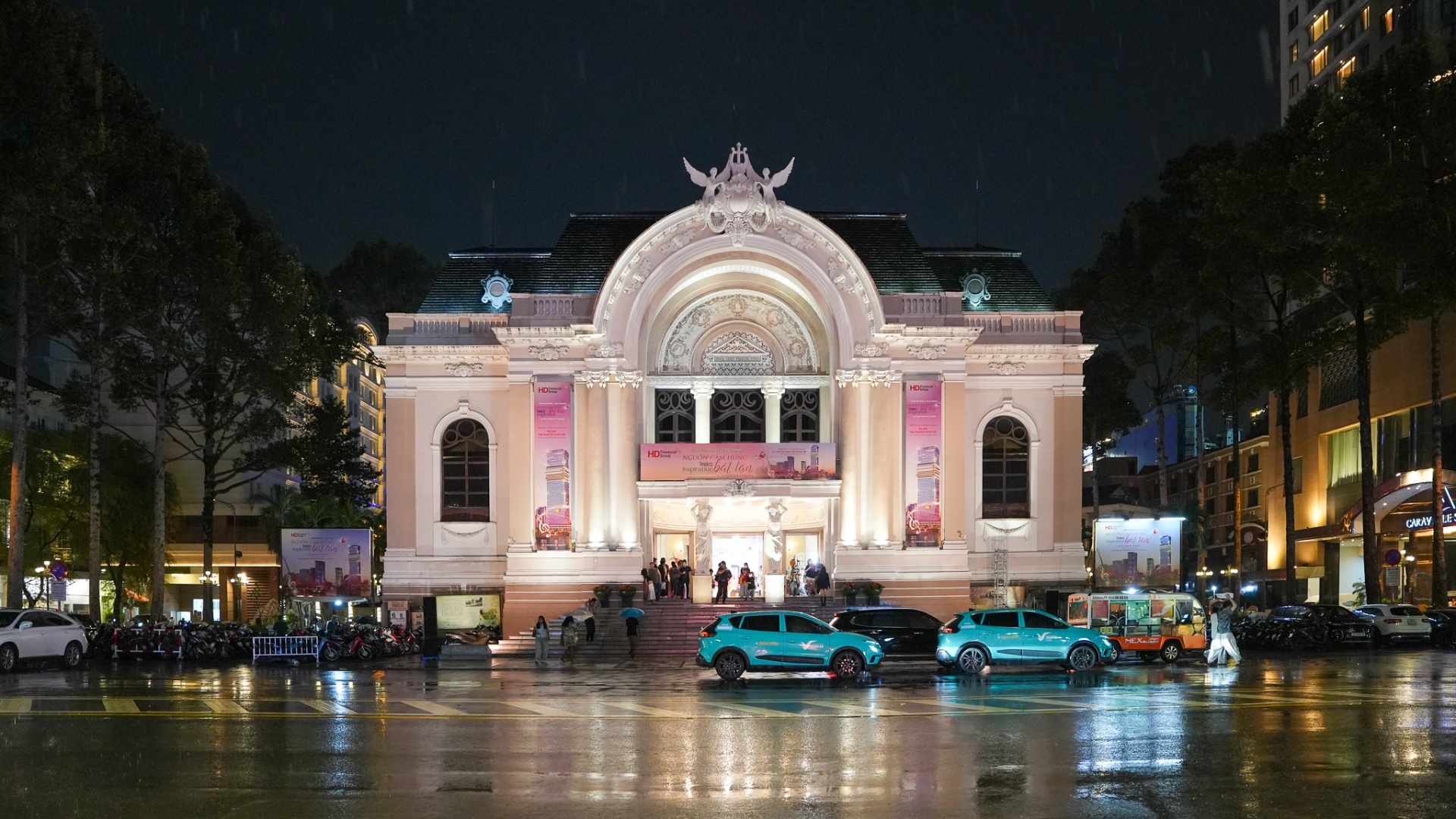
A short walk away are the Saigon Central Post Office and Notre Dame Cathedral Saigon.
Few cities offer such a dense concentration of architectural and historical landmarks within a walkable area.
This is why Nguyen Hue often serves as the centrepiece of our Saigon City Highlights walking tour.
The boulevard connects many of the stories that shaped modern Ho Chi Minh City.
Few places offer a better starting point for exploring District 1 on foot.
The View Everyone Waits For
Eventually, most visitors find themselves standing near the centre of the boulevard facing north.
Ahead stands Ho Chi Minh City Hall.
Behind them stretches the boulevard toward the river.
Around them, the lights of District 1 shimmer across the wet pavement.
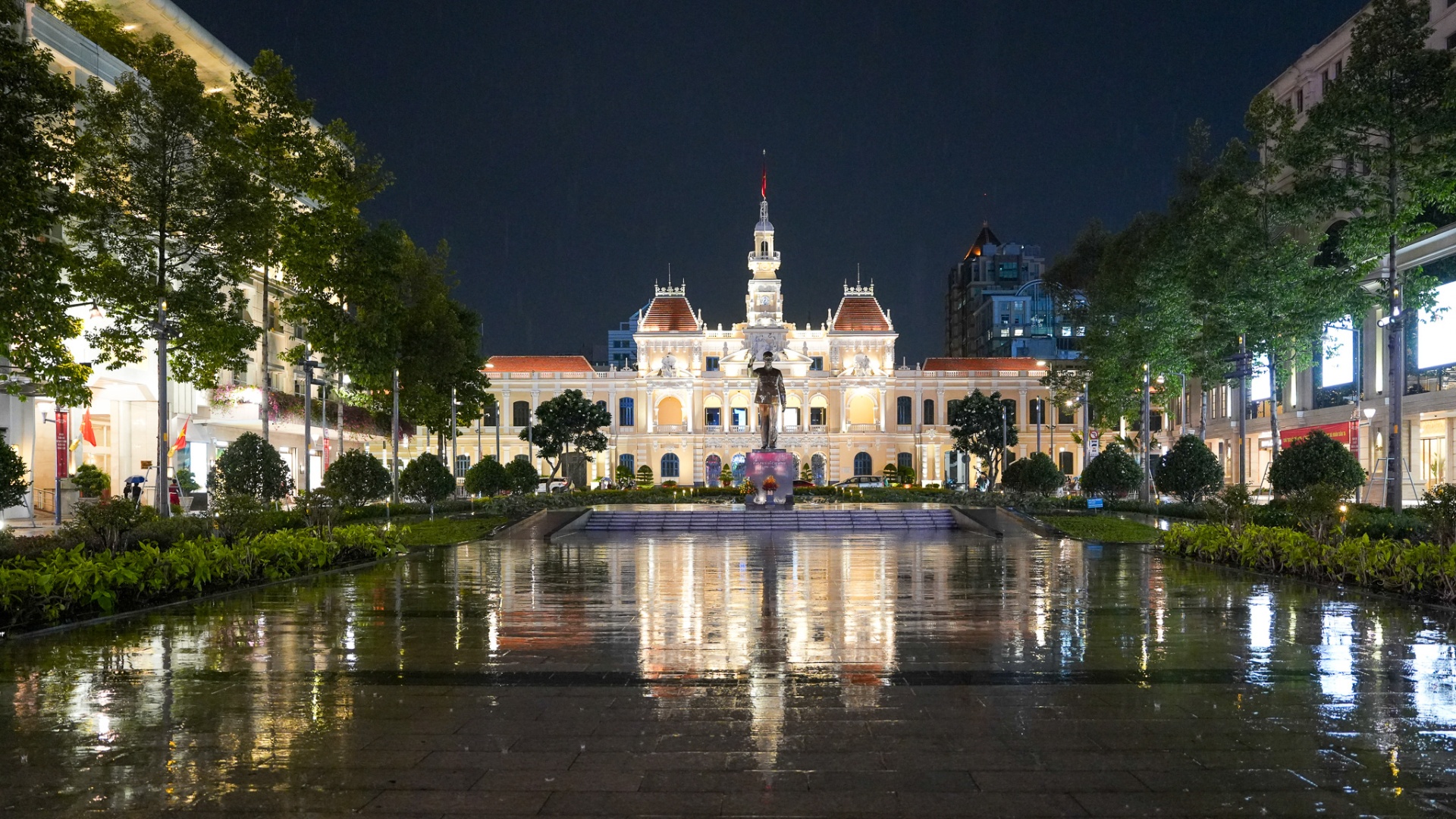
It is one of the most iconic views in the city.
Not because it is the oldest.
Not because it is the largest.
But because it perfectly captures the identity of modern Saigon.
Historic architecture.
Contemporary energy.
Thousands of individual stories happening simultaneously.
Why Nguyen Hue Walking Street Belongs on Every Saigon Itinerary
Some attractions teach history.
Others provide entertainment.
Nguyen Hue Walking Street does something different.
It helps visitors understand how Ho Chi Minh City feels.
The boulevard reveals the confidence of a city that continues to evolve while remaining deeply connected to its past.
It is where old Saigon and modern Ho Chi Minh City meet.
Where locals and travellers share the same public space.
Where architecture, culture, food, photography, and everyday life come together naturally.
And if you only have one evening in Saigon, there is a good chance this is where you should spend it — ideally alongside the landmarks covered in our guide to the most iconic landmarks in Ho Chi Minh City.