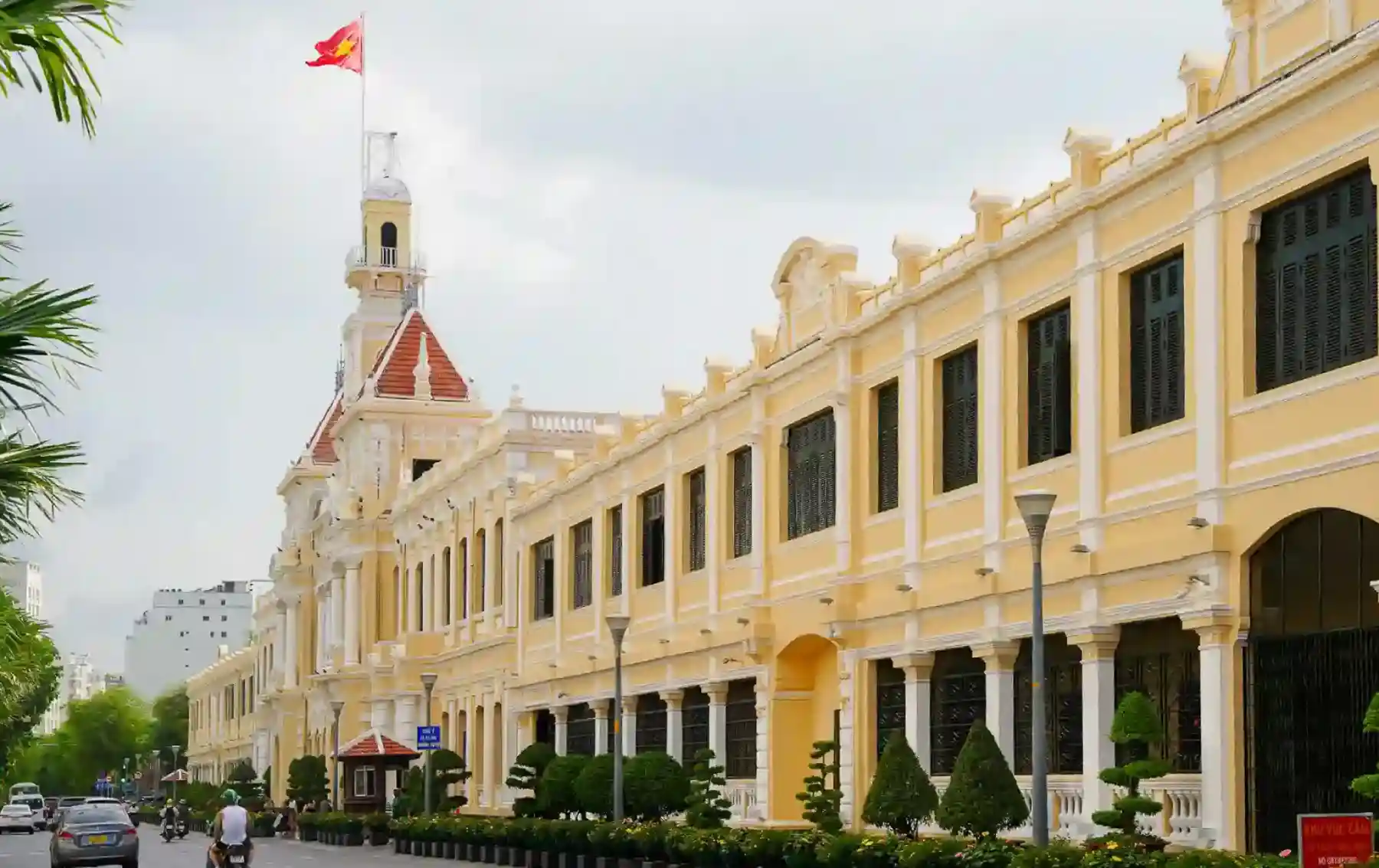
On most mornings, our walking tour begins on a narrow stretch of pavement near Lam Son Square, where the smell of Vietnamese coffee drifts out of a side-street café and a security guard waves the first motorbikes onto Dong Khoi.
Guests usually look up before they look around.
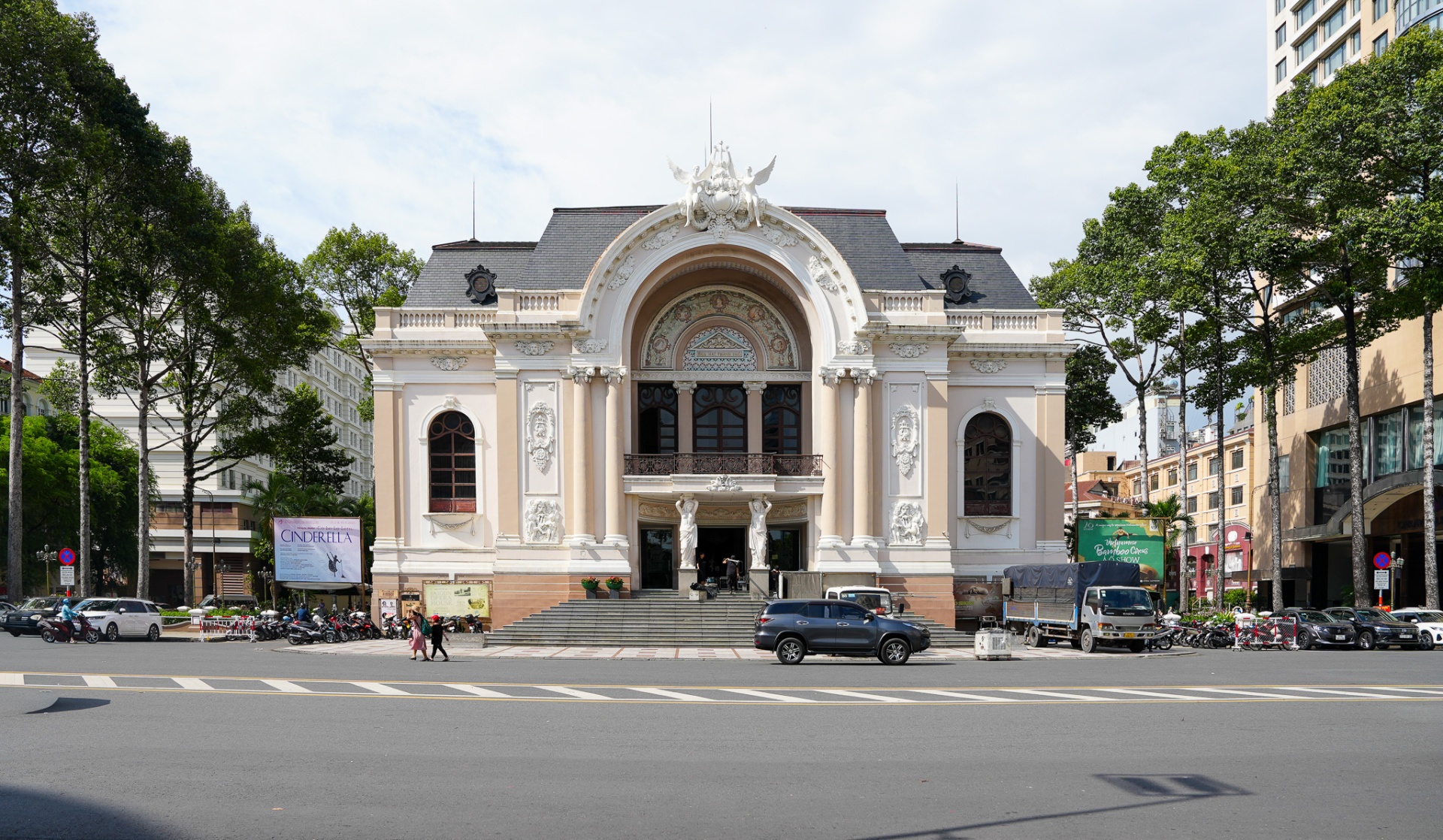
Above them, the slate roof and stone caryatids of the Saigon Opera House catch the early light, while a glass tower behind it reflects the same sky in a different century.
That single view — old stone, new glass, endless traffic — is the honest introduction to Ho Chi Minh City.
It tells you, before any guide says a word, that this is a city built in layers.
To read those layers, you do not need a long list of attractions.
You only need to stand in five places.
Five of the most iconic landmarks in Ho Chi Minh City.
Five chapters of one continuous story that stretches across more than a century.
Together, these famous landmarks in Saigon explain how a small colonial outpost on the Saigon River became one of Southeast Asia's most restless and creative cities.
1. Saigon Opera House: Where Old Saigon Still Stands Proud
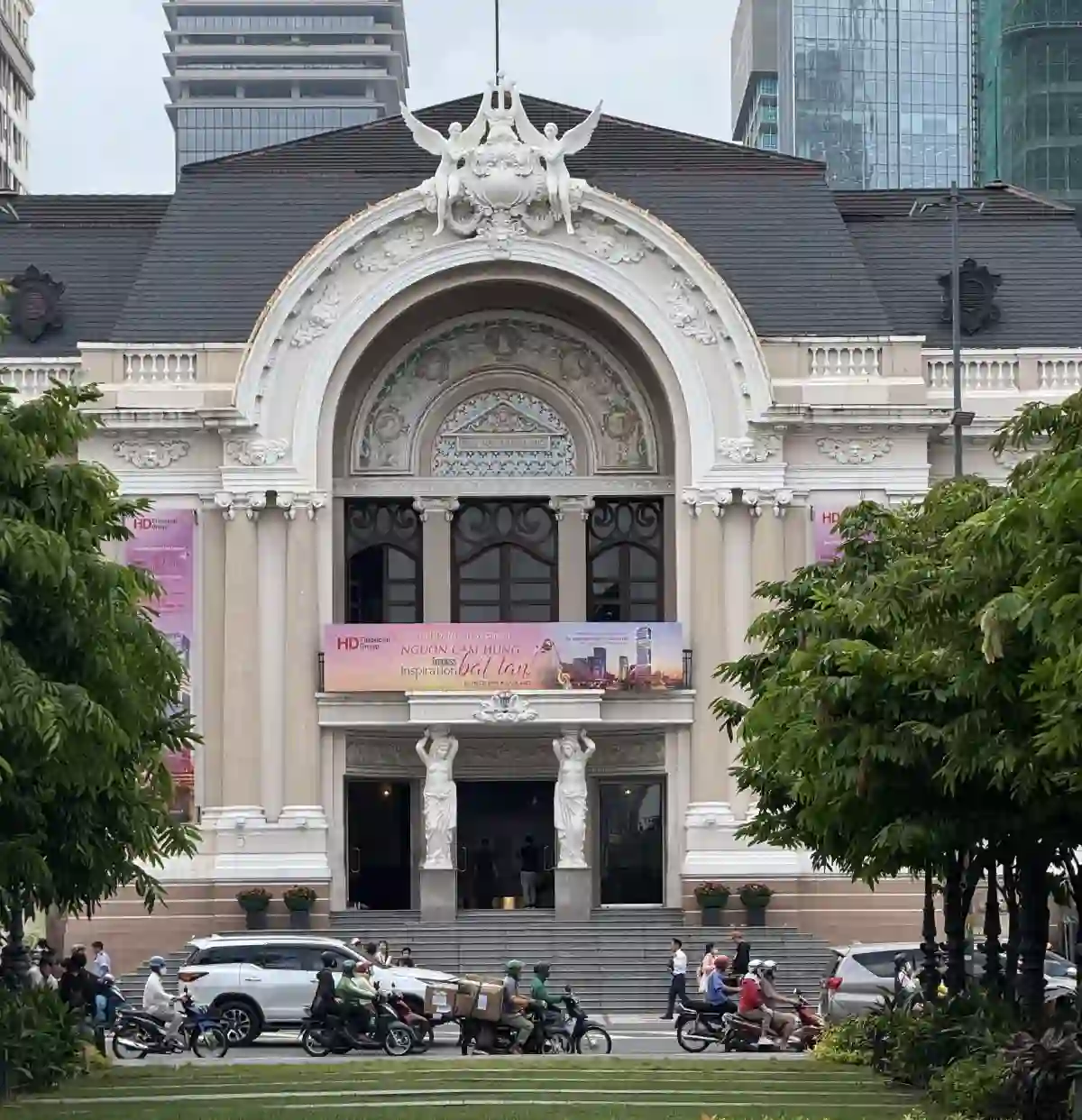
The Saigon Opera House is often the first landmark that captures a visitor's attention.
Standing on Lam Son Square in the heart of District 1, its elegant façade feels almost untouched by time.
Completed in 1900, the building represents the artistic ambition of French colonial Saigon. Decorative reliefs, classical sculptures, and Beaux-Arts architecture transform what could have been an ordinary theatre into one of the most beautiful buildings in Vietnam.
Yet the most fascinating thing about the Opera House is not the building itself.
It is what surrounds it.
Luxury hotels stand nearby.
Modern office towers rise behind its slate roof.
Thousands of motorbikes pass every hour.
The contrast is extraordinary.
The Opera House reminds visitors that Ho Chi Minh City is not a city trapped in the past.
It is a city that carries its history forward while constantly reinventing itself.
For photographers, it remains one of the best photo spots in Saigon.
For travellers, it is often the first glimpse into the city's soul.
Guide's note: on our walks, we usually pause across the street rather than directly in front. From that angle you can frame the Opera House between two scooters and a glass tower in a single photograph — and that one frame says more about modern Saigon than any guidebook caption.
2. Ho Chi Minh City Hall: The Elegant Face of Modern Saigon
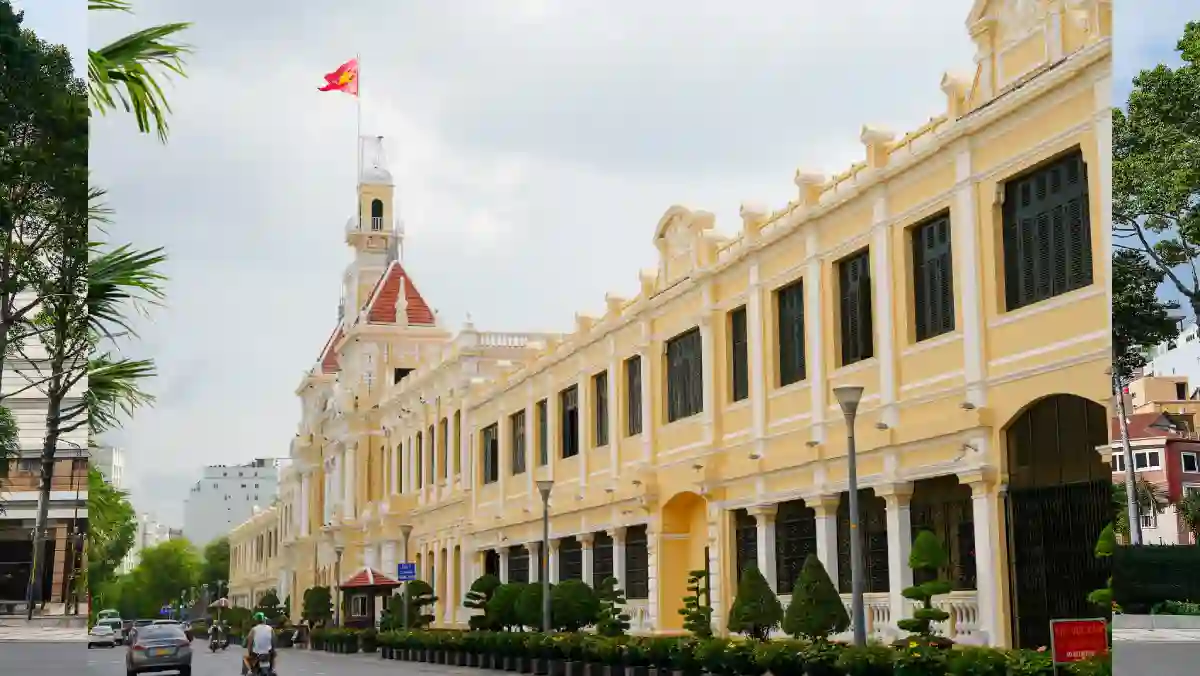
A short walk from the Opera House leads to another architectural masterpiece.
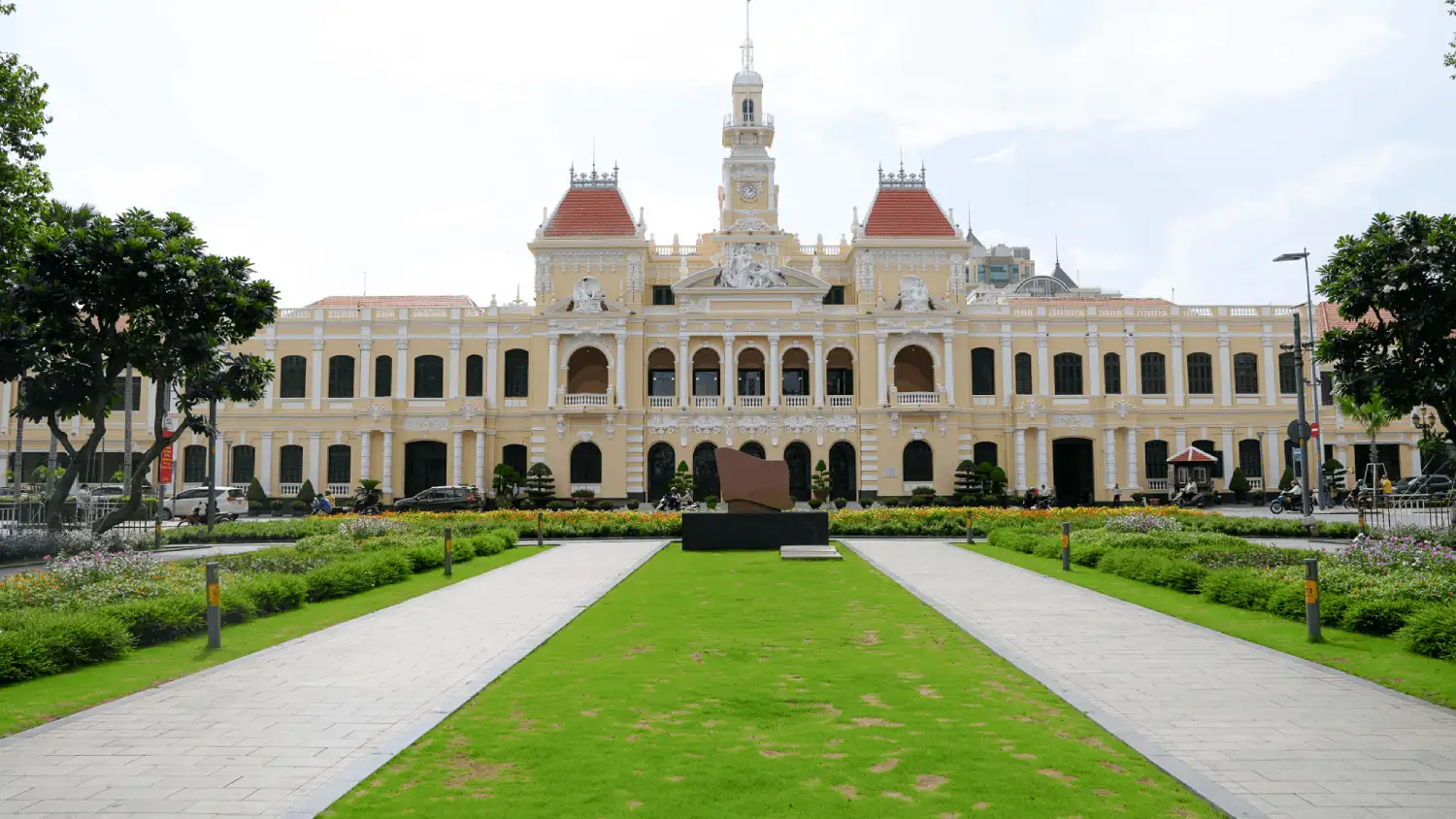
At the northern end of Nguyen Hue Walking Street stands Ho Chi Minh City Hall, one of the most recognizable landmarks in Ho Chi Minh City.
Its golden façade glows under the tropical sunlight.
Its clock tower rises above the surrounding streets.
Its architecture reflects the confidence and prestige of a city that has always looked toward the future.
Unlike many historical buildings, City Hall remains an active government building today.
Visitors cannot usually enter.
But standing outside is enough.
The building forms the visual centrepiece of modern downtown Saigon.
By day, it dominates the skyline.
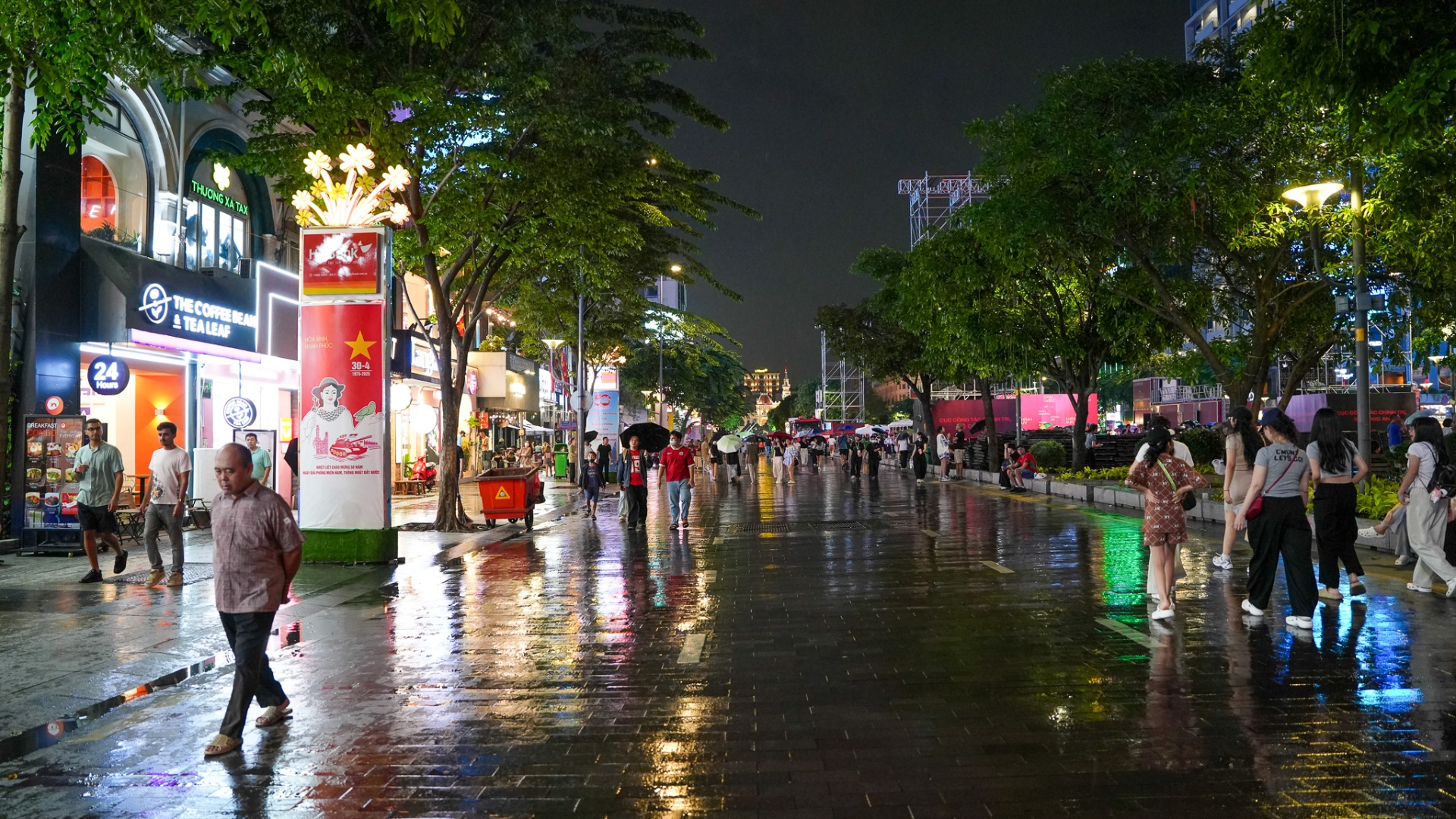
By night, it becomes one of the city's most beautiful illuminated landmarks.
Few places better represent the meeting point between history, government, and everyday life.
A small local tip: arrive around 6.30pm, when office workers fill Nguyen Hue Walking Street and the façade slowly lights up. Sit on the low granite ledge, order a sugarcane juice from a passing vendor, and you will see why locals still treat City Hall as the living heart of District 1 attractions rather than a backdrop for photos.
3. Saigon Central Post Office: A Building That Still Connects People
Across the world, historic buildings often become museums.
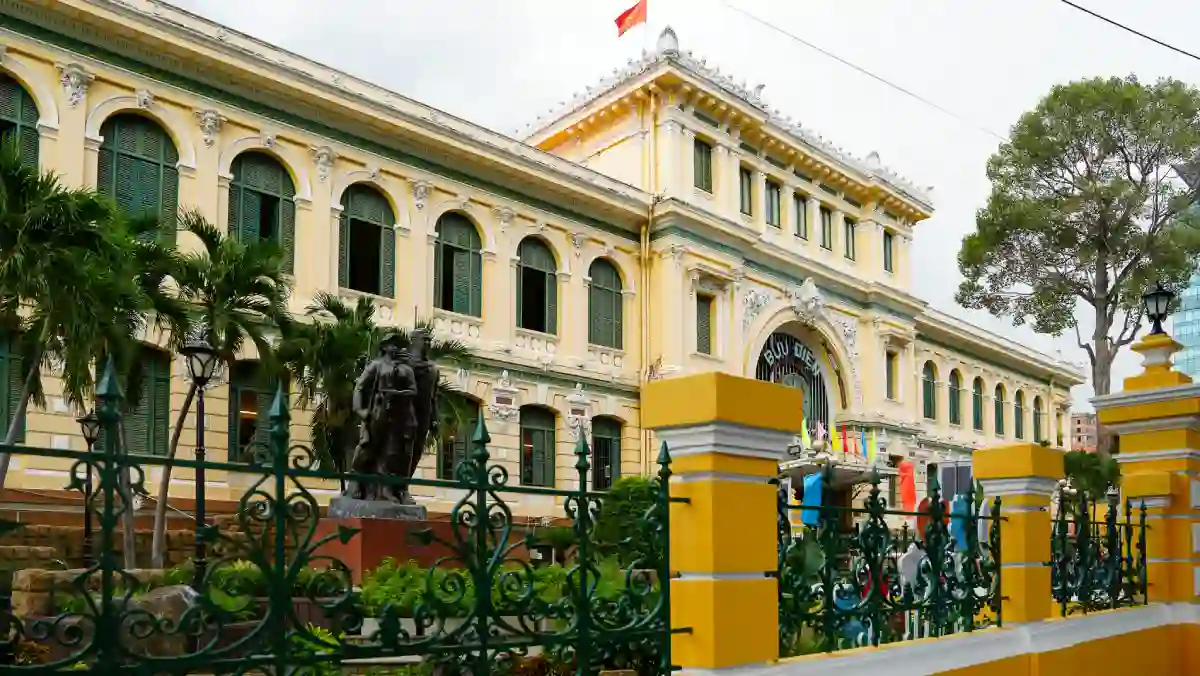
The Saigon Central Post Office chose a different path.
More than a century after its construction, it still serves the purpose for which it was built.
Visitors walk through its doors every day.
Some come to admire the architecture.
Others come to send postcards home.
Many simply stop to appreciate one of the most beautiful interiors in Vietnam.
The yellow façade has become an icon of Ho Chi Minh City tourism.
The elegant arches, decorative details, and grand central hall make it one of the most photographed landmarks in Saigon.
Yet what makes the Post Office special is its humanity.
This is not a monument frozen in time.
It remains part of daily life.
And perhaps that is why visitors remember it so fondly.
4. Notre Dame Cathedral: A Symbol of Endurance
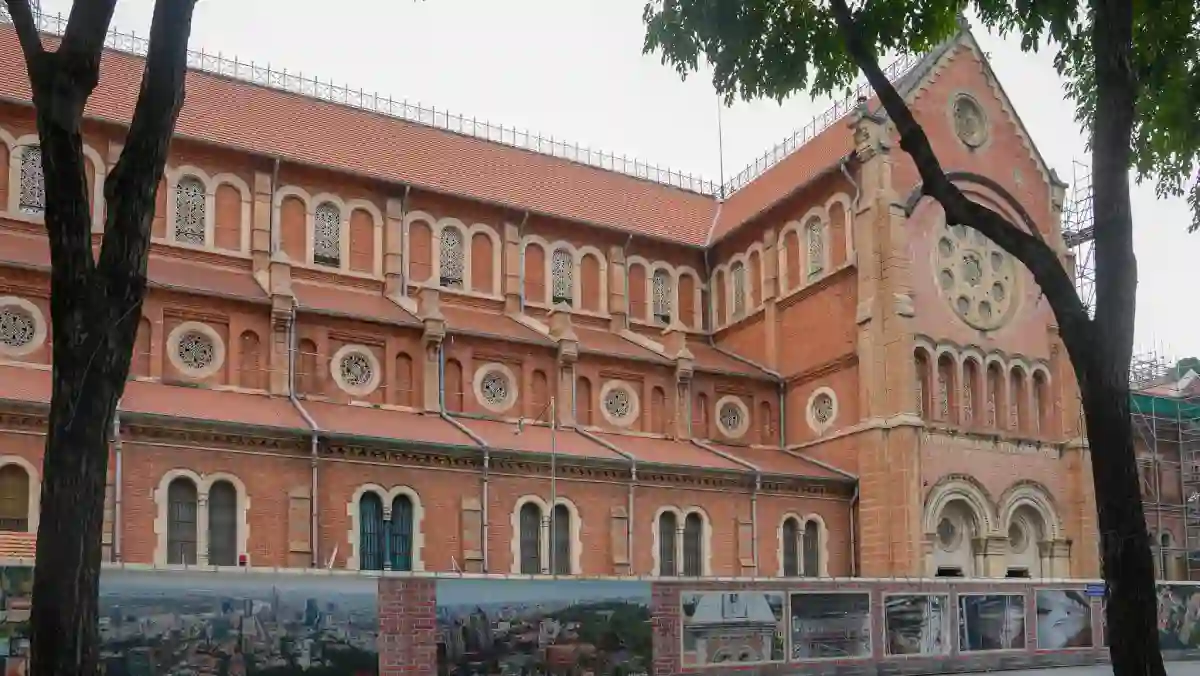
Directly opposite the Post Office stands another symbol of old Saigon.
Built from red bricks imported from France, the cathedral has witnessed more than a century of change.
Empires came and went.
Wars reshaped the nation.
Skyscrapers transformed the skyline.
Yet the cathedral remains.
Even during restoration periods, visitors continue to gather around its grounds.
Not because it is the largest church in Asia.
Not because it is the most elaborate.
But because it feels timeless.
The cathedral reminds visitors that Saigon's story is not defined by a single era.
Instead, it is a city shaped by many influences, many cultures, and many generations.
Standing beneath its red brick walls, it becomes easier to understand why Ho Chi Minh City feels so unique.
5. Independence Palace: Where History Changed Direction
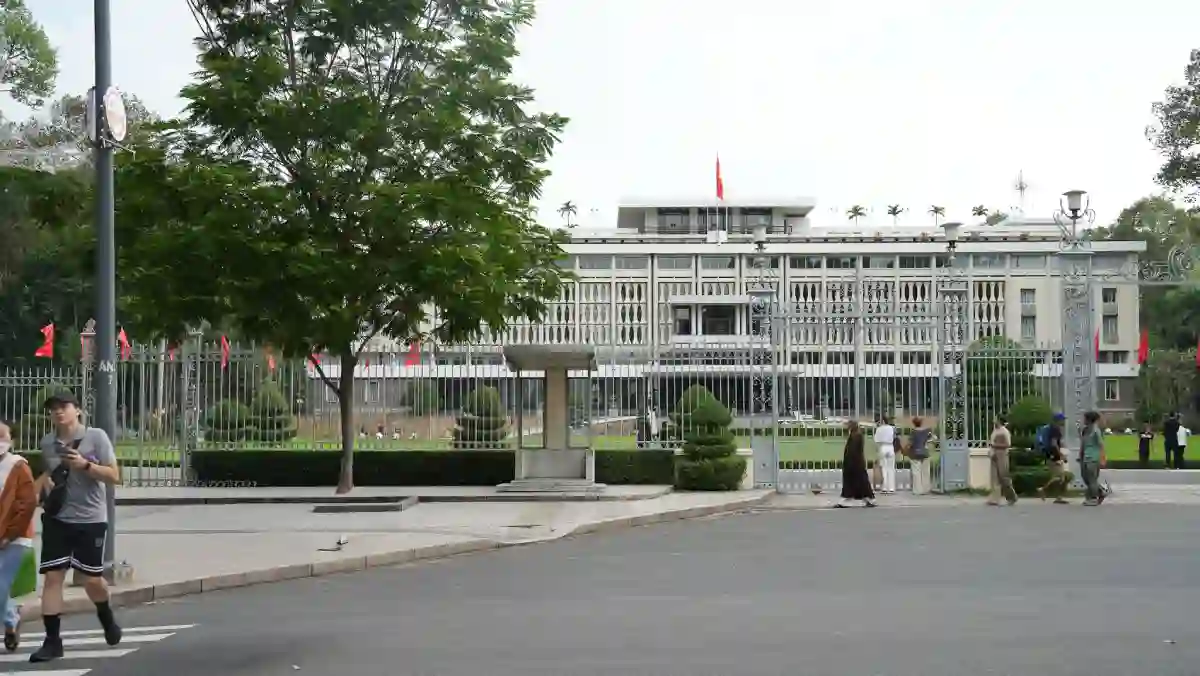
Every city has a place where history feels tangible.
For Ho Chi Minh City, that place is Independence Palace.
Unlike the colonial landmarks nearby, the palace represents a different chapter.
A chapter written by Vietnam itself.
Completed during the 1960s, Independence Palace became one of the most significant locations in modern Vietnamese history.
Today, visitors can still walk through preserved meeting rooms, reception halls, underground bunkers, and command centres.
Everything feels remarkably intact.
It is not difficult to imagine the events that unfolded here.
For many travellers, this is where the history of Vietnam becomes personal.
Books become real.
Dates become stories.
And the city reveals another layer of its identity.
And the city reveals another layer of its identity.
Something we often tell our guests here: read the dates on the small plaques inside, then walk back out into the traffic on Nam Ky Khoi Nghia. The people on those motorbikes are the children and grandchildren of the generation that lived through 1975. That short walk, from a quiet hallway back into a loud street, is the most honest history lesson Saigon can offer.
Five Landmarks, One Walk Through Saigon
What surprises most first-time visitors is how close these famous landmarks in Saigon actually are to each other.
From the Saigon Opera House to City Hall is a five-minute stroll. From there to the Central Post Office and Notre Dame Cathedral is another ten. Independence Palace sits just a few blocks further, behind a quiet line of tamarind trees.
You can see all five of the most iconic landmarks in Ho Chi Minh City in a single morning on foot — and walking is genuinely the best way to do it. Saigon is a city that reveals itself between the buildings: in a coffee cart parked under a banyan tree, in a grandmother stretching on the sidewalk, in the smell of grilled pork drifting out of an alley.
From inside a taxi, you only see the monuments. On foot, you see the city that built them.
Understanding Ho Chi Minh City Through Its Landmarks
These five landmarks are not really five separate stops.
They are one continuous story about how Ho Chi Minh City became itself — told in stone, brick, plaster and steel, in the small space of a few District 1 blocks.
Many visitors spend their first day searching for the best things to do in Ho Chi Minh City.
Some visit markets.
Some look for food in Saigon's back alleys.
Some chase famous photo spots after dark.
All of those experiences matter.
But the landmarks of District 1 tell a deeper story.
The Opera House shows the city's elegance.
City Hall reflects its ambition.
The Central Post Office reveals its human side.
Notre Dame Cathedral speaks of endurance.
Independence Palace explains its modern identity.
Together, they form the foundation of the city we know today.
They are not simply tourist attractions.
They are chapters of a living story.
And for anyone visiting Saigon for the first time, they remain some of the most meaningful places to discover.
Many of these landmarks are included on our Saigon City Highlights Walking Tour, where local guides share the stories, history, and hidden details that often go unnoticed by travellers exploring on their own. Because sometimes the best way to understand a city is not by looking at a map.
It is by walking through the places that shaped it.