
The Question We Hear Most Often
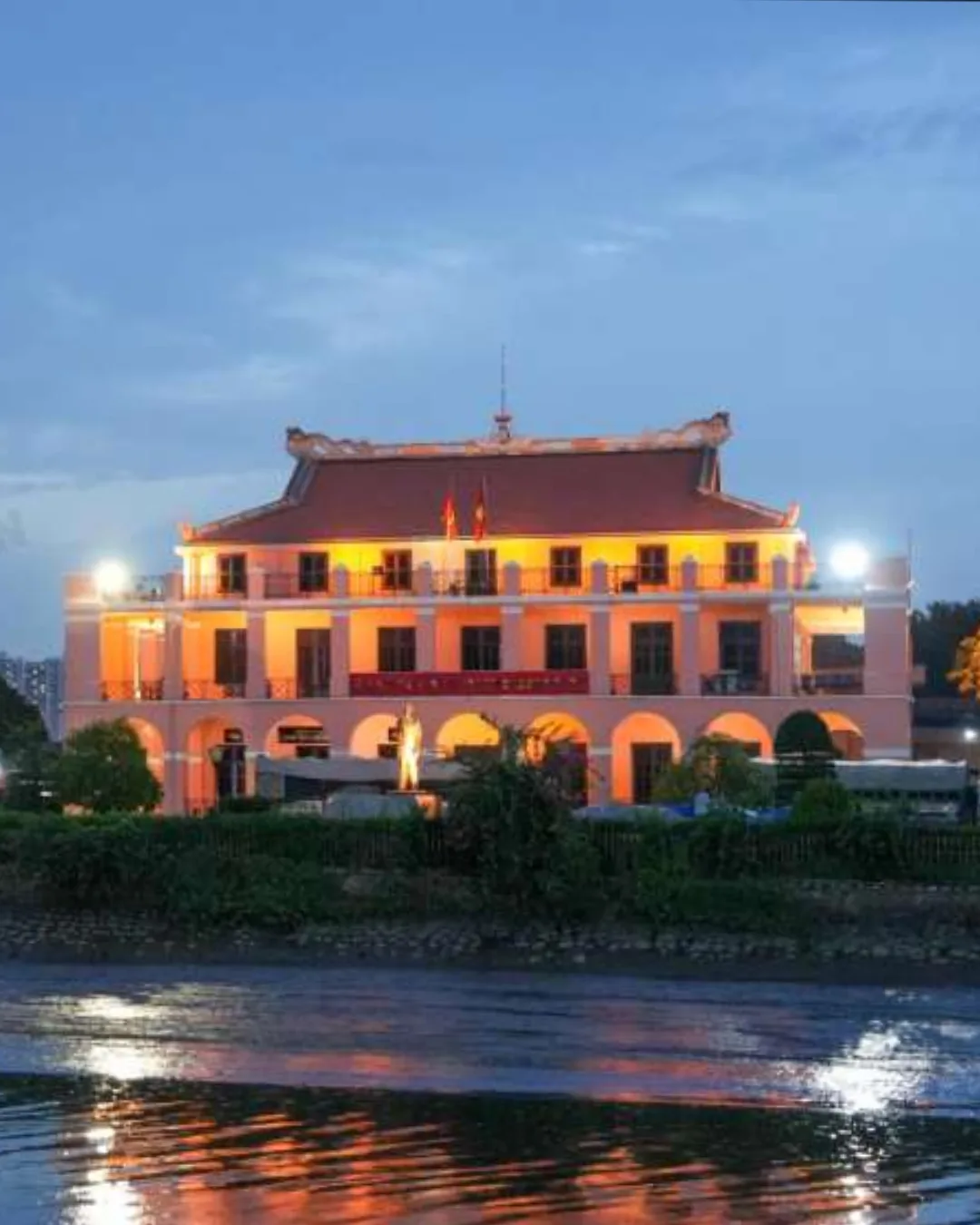
During a recent evening walk through District 1, a traveller paused in front of Ho Chi Minh City Hall and asked a simple question.
"Do local people actually come here, or is this mostly for tourists?"
The answer surprised them.
Almost every local guide has memories connected to this part of the city.
Some remember coming here with family during holidays. Others remember meeting friends along Nguyen Hue Walking Street. Many still visit simply to enjoy the atmosphere after dark.
That conversation became a reminder of something important.
The most interesting places in Saigon are not always famous because they are beautiful. They are famous because people continue to use them, live around them, and build memories there.
At night, that becomes easier to see.
A City Best Experienced on Foot
One of the reasons visitors increasingly search for a Free Walking Tour Saigon or a Ho Chi Minh City walking tour is because walking changes the way the city feels.
Inside a taxi, landmarks appear and disappear through a window. On foot, they become part of a larger story.
The route between destinations matters. The sounds matter. The people matter. The details matter.
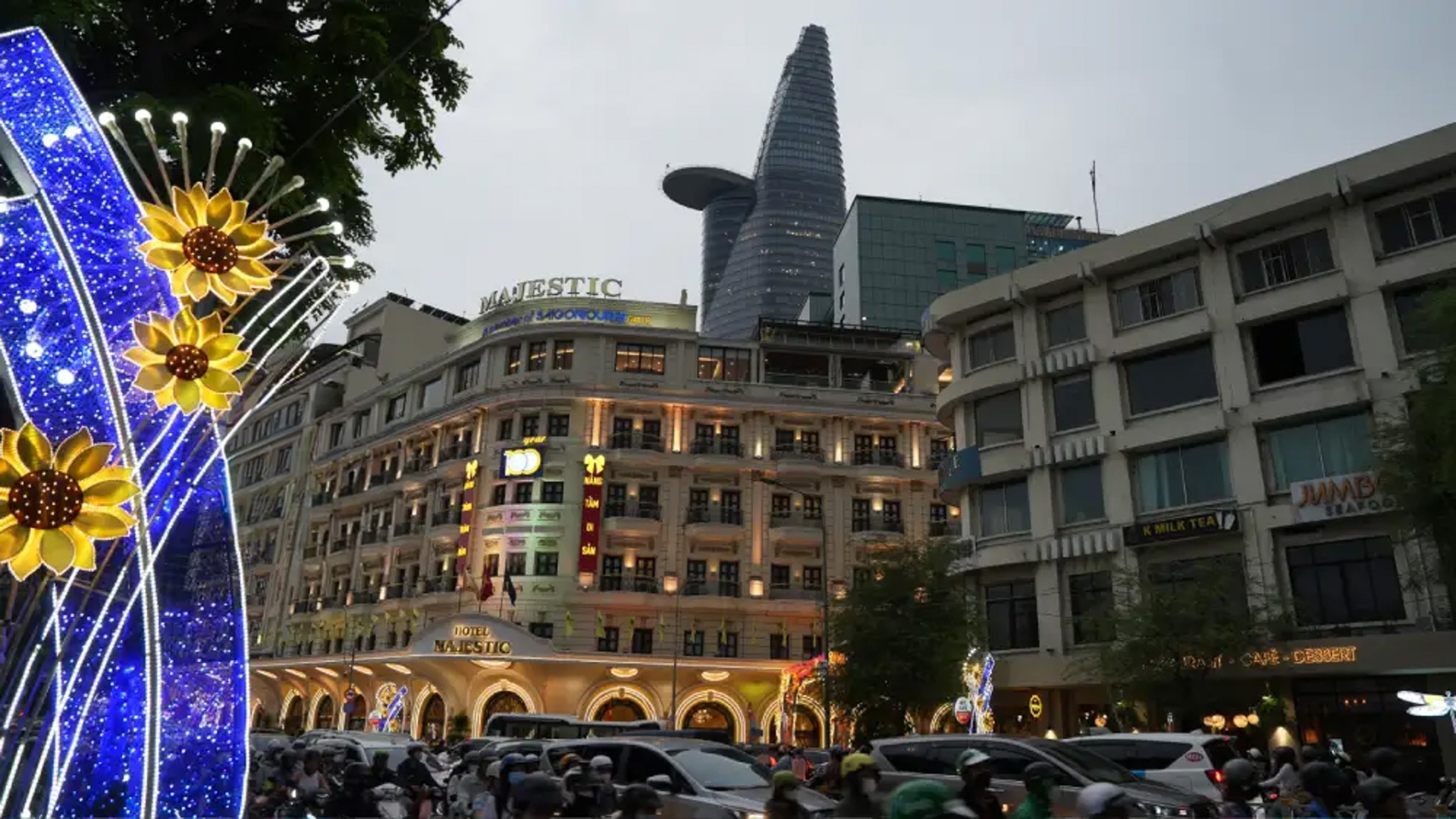
Walking through District 1 at night allows visitors to experience how modern Ho Chi Minh City and historic Saigon continue to exist side by side.
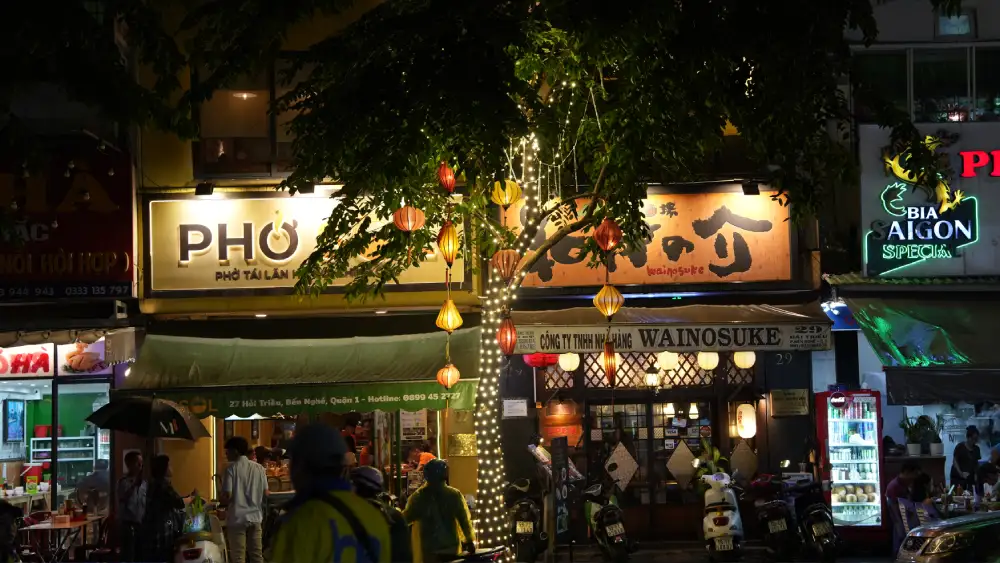
A colonial building stands beside a glass skyscraper. A traditional street food stall operates beneath a luxury apartment tower.
Old and new coexist in ways that make Saigon unlike anywhere else in Southeast Asia.
Ho Chi Minh City Hall After Dark
Few landmarks capture this contrast better than Ho Chi Minh City Hall.
Constructed during the French colonial period, the building has witnessed more than a century of change.
During the day, visitors admire its elegant architecture and historic significance. At night, the atmosphere changes completely.
Warm lighting highlights decorative details often missed in daylight. The surrounding square fills with locals enjoying the evening air. Couples stop for photographs while children play nearby.
The building feels less like a monument and more like part of everyday city life.
For many travellers joining a walking tour in Ho Chi Minh City, this becomes one of the most memorable stops of the evening.
And for those interested in the history behind the landmark, we recommend reading our guide to Ho Chi Minh City Hall – A Historic Landmark on a Free Walking Tour, where we explore the building's colonial origins and its role in modern Saigon.
The Opera House, Nguyen Hue and the Energy of Modern Saigon
A short walk away stands the Saigon Opera House. Its illuminated façade remains one of the most photographed sights in the city.
Nearby, Nguyen Hue Walking Street comes alive each evening.
Families stroll together. Young people gather in groups. Street performers entertain crowds. Visitors and locals share the same public space.
What many travellers find surprising is how social the city becomes after sunset.
Saigon is often described as energetic during the day. At night, it becomes connected.
The city's personality feels more visible.
Along the Saigon River
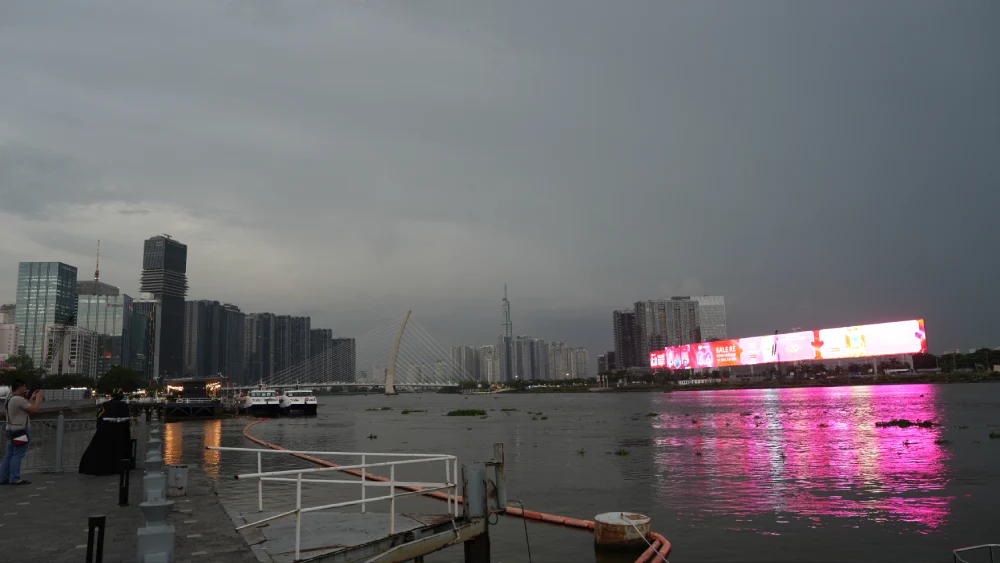
Perhaps nowhere demonstrates the transformation of modern Ho Chi Minh City more clearly than Bach Dang Wharf.
The riverside promenade has become one of the city's favourite gathering places.
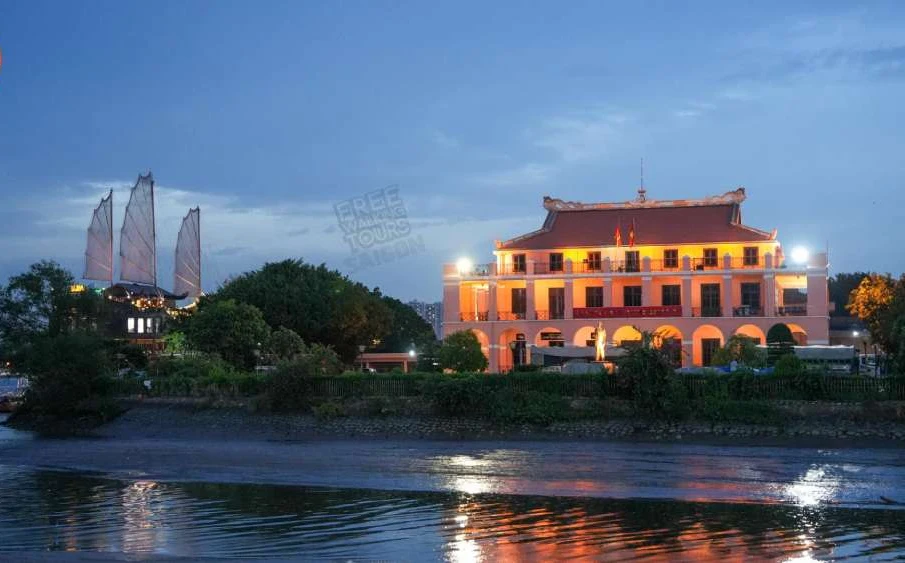
Looking across the water, visitors can see the skyline that defines contemporary Saigon.
The elegant curve of Ba Son Bridge. The lights of Landmark 81. The reflections dancing across the Saigon River.
It is a view that reminds visitors how quickly the city continues to evolve.
Yet even here, among the modern skyline, people gather for simple reasons. To walk. To talk. To relax after work. To enjoy the evening.
The city may change, but many of its rhythms remain familiar.
Why a Local Perspective Matters
Many visitors can identify famous landmarks. Fewer understand the stories behind them.
Why does Ho Chi Minh City Hall still matter to local residents? How did Nguyen Hue evolve from a canal into one of the city's most famous public spaces? Why do locals continue to gather along the river every evening?
These are the kinds of questions that rarely appear in guidebooks. They are often answered through conversations.
That is why many travellers choose a Free Walking Tour Saigon.
Not because it is free. Because it provides context. Because it offers local perspectives. Because it transforms sightseeing into understanding.
More Than a Night Walk
A Saigon night walking tour is not simply about architecture. It is not simply about history. And it is certainly not only about photographs.
It is about experiencing the city as it lives and breathes after dark.
The sound of conversations drifting from cafés. The smell of food from street vendors preparing late-night meals. The reflections on the river. The stories hidden behind familiar landmarks.
The feeling of discovering a city not as a tourist attraction, but as a place where millions of people build their lives every day.
Experience Saigon Through Local Eyes
Some travellers leave Saigon remembering a famous building. Others remember a photograph. Many remember a conversation.
A question asked during a walk. A story shared by a local guide. A perspective they had never considered before.
Those moments often become the most valuable memories of a journey.
Because sometimes the best way to understand a city is not to rush through it. It is to slow down, walk its streets, and see it through the eyes of the people who call it home.
Explore Further
• River context: Bach Dang Wharf & the Saigon River
• Walk the route: Saigon City Highlights
• Broader after-dark guide: Saigon at Night
• More Real Moments: /real-moments
Guide On This Walk
Ngoc — Local Guide, Free Walking Tours Saigon.
Passionate about Saigon's history, culture and everyday life.