
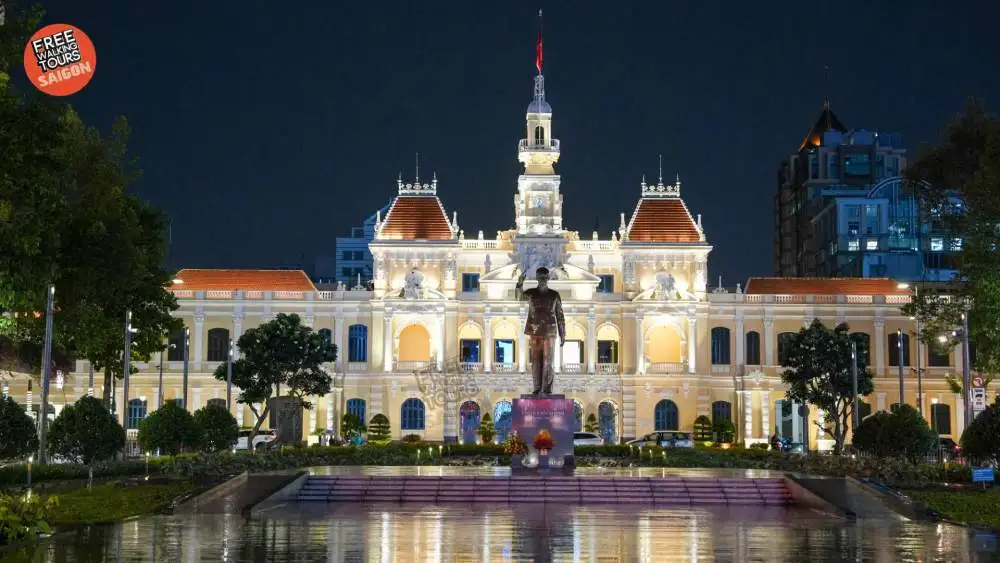
A French Colonial Landmark in the Heart of Saigon
Officially known as the People's Committee Building, Ho Chi Minh City Hall was constructed between 1902 and 1908 during the French colonial period. Inspired by the grand city halls of southern France, the building was designed to showcase authority, permanence, and administrative power in what was then one of the most important cities in French Indochina.
Its architecture remains one of the finest examples of French colonial design in Vietnam.
Visitors will immediately notice:
• The symmetrical façade
• Decorative sculptures and ornate reliefs
• Elegant arched windows
• The iconic central clock tower
• Classical European design elements adapted to the tropical climate
More than a century later, the building remains one of the most photographed landmarks in Ho Chi Minh City and one of the most recognizable symbols of Saigon's colonial heritage.
Witness to a Century of Change
Few places in Ho Chi Minh City have witnessed as much change as City Hall.
When it was first completed, Saigon was known as the "Pearl of the Far East" and served as the administrative centre of French Cochinchina. Over the decades, the building quietly observed periods of colonial rule, political upheaval, war, reunification, and rapid economic development.
While the city around it has changed dramatically, Ho Chi Minh City Hall has remained remarkably intact.
Today, modern skyscrapers rise behind historic façades. Luxury hotels stand alongside traditional cafés. New developments continue to reshape the skyline every year.
Yet City Hall remains a constant presence, connecting modern Ho Chi Minh City with the many chapters of its past.
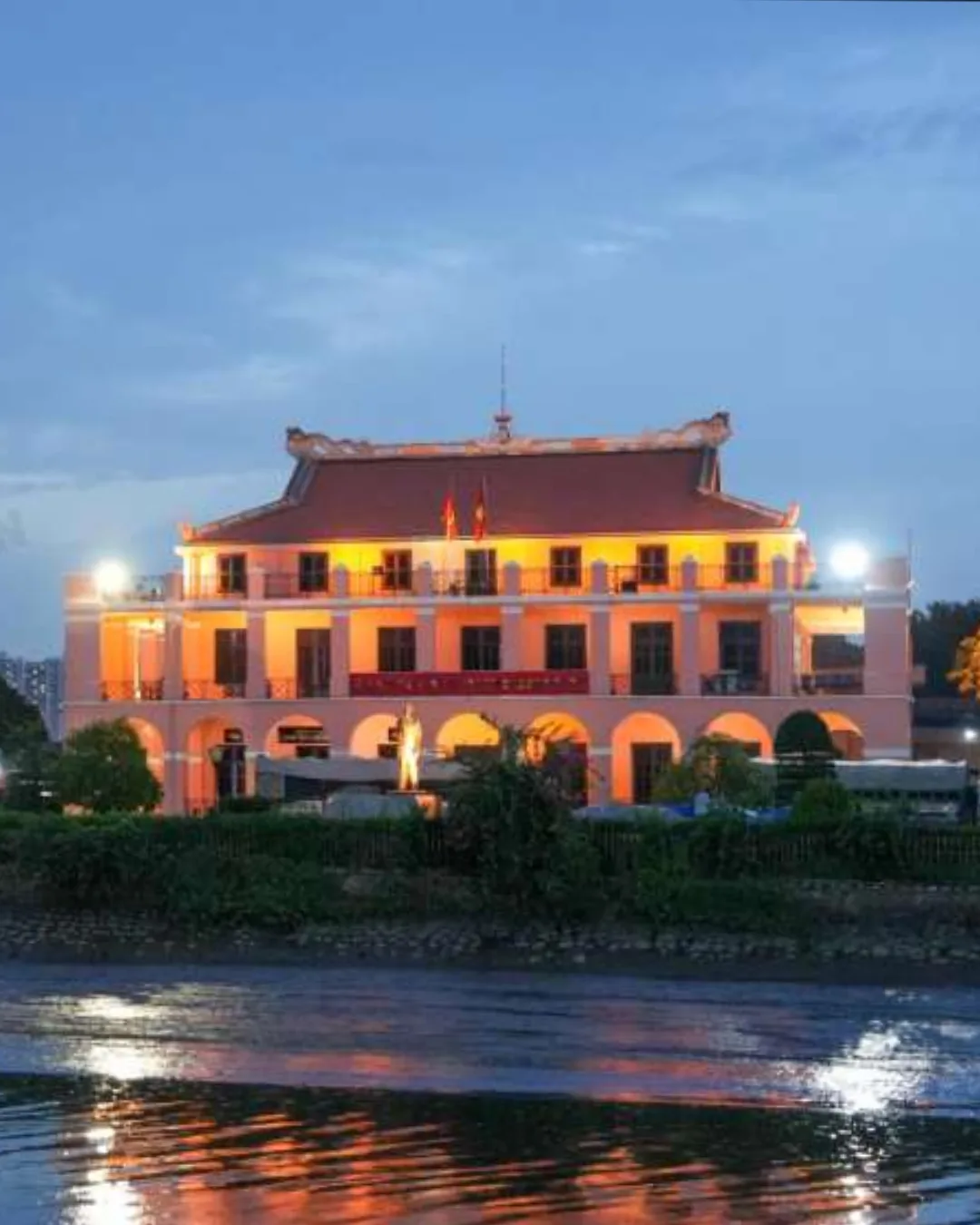
Day and Night: Two Different Experiences
One of the reasons visitors are drawn to Ho Chi Minh City Hall is that it offers two completely different experiences depending on the time of day.
**By Day**
During daylight hours, the building appears formal and stately. Its pale yellow exterior contrasts beautifully with the surrounding gardens and busy streets of District 1. Visitors can admire architectural details that are often overlooked from a distance while experiencing the energy of central Saigon.
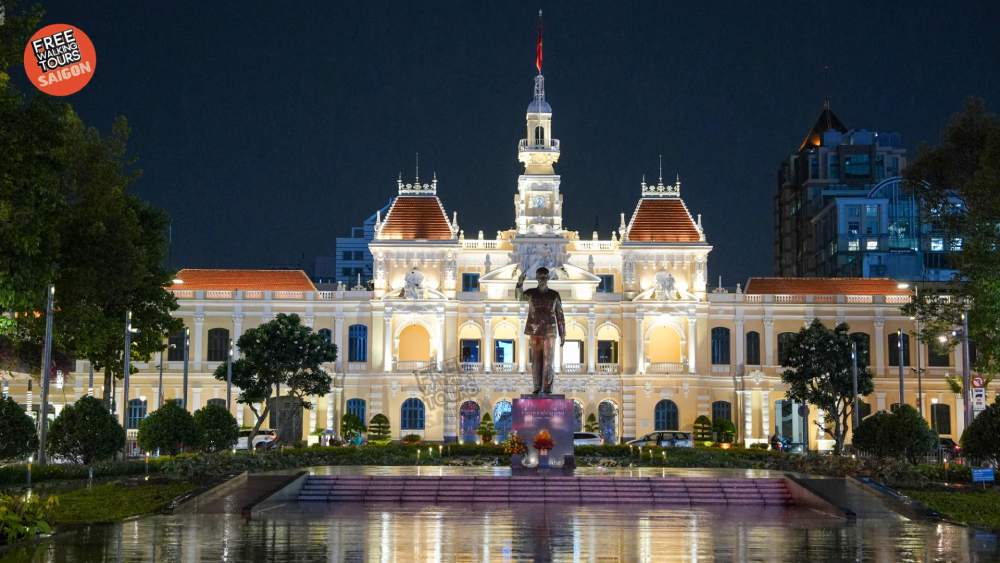
**By Night**
After sunset, the atmosphere changes completely.
Warm lighting highlights the building's decorative features, while the surrounding square becomes a popular gathering place for both locals and visitors. The illuminated façade creates one of the most beautiful night scenes in Ho Chi Minh City and is often considered one of the best photography locations in District 1. For a closer look at how the city feels from the water's edge, read The City Looked Different From The River.
The contrast between day and night reflects Saigon itself: modern yet historic, energetic yet reflective, constantly changing while remaining deeply connected to its past.
Why It Matters on a Free Walking Tour Saigon
Many visitors see Ho Chi Minh City Hall as simply another stop on a list of attractions.
For local guides, however, it represents something much more important.
During a Free Walking Tour Saigon, City Hall becomes a starting point for conversations about how Ho Chi Minh City developed, how colonial influences shaped the city, and how local people view the rapid changes taking place today.
Rather than simply looking at a building, visitors gain a deeper understanding of the people, events, and ideas that helped shape modern Saigon.
This local perspective is often what transforms sightseeing into a meaningful travel experience for guests who walked the city with our guides.
Things to See Near Ho Chi Minh City Hall
One reason City Hall is such a popular stop on a Ho Chi Minh City walking tour is its location.
Situated in the centre of District 1, it is within walking distance of many of Saigon's most famous attractions, including:
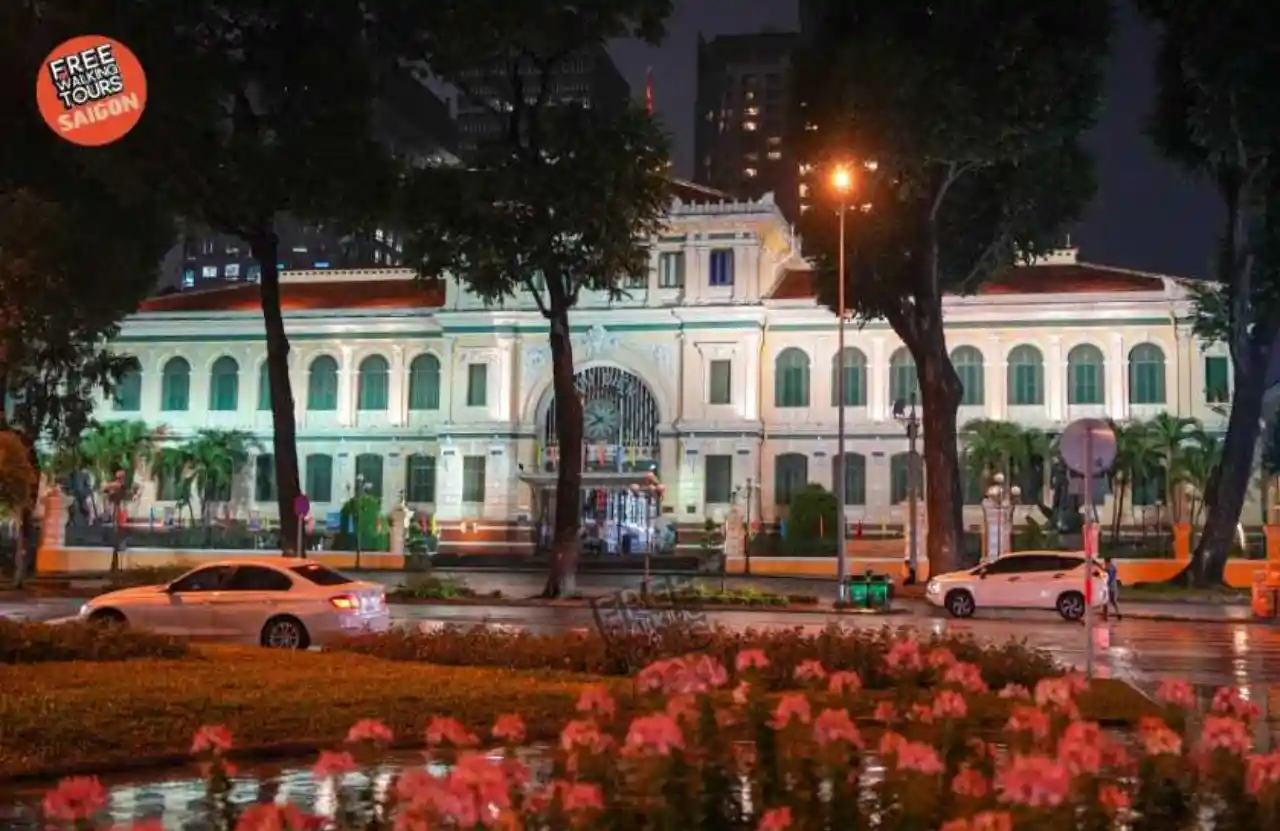
• Saigon Central Post Office
• Notre Dame Cathedral of Saigon
• Ho Chi Minh City Book Street
Together, these landmarks provide an excellent introduction to the history, architecture, and culture of Ho Chi Minh City — and they are all part of our Saigon City Highlights walking tour route.
A Symbol of Saigon's Identity
More than a government building, Ho Chi Minh City Hall represents the layered identity of Saigon itself.
It tells a story of colonial ambition, political change, resilience, and renewal. It reminds visitors that behind every modern city lies a complex history that continues to shape everyday life.
For travellers exploring Ho Chi Minh City, understanding this landmark offers a deeper appreciation of the city as a whole.
Experience It Through Local Eyes
The best way to experience Ho Chi Minh City Hall is not through a quick photograph or a passing glance from a vehicle.
It is by standing in front of the building, hearing the stories behind it, and understanding its place within the larger story of Saigon.
That is why it remains one of the highlights of our Free Walking Tour Saigon.
By exploring the city on foot with a local guide, visitors discover more than famous landmarks. They discover the history, culture, and everyday life that make Ho Chi Minh City one of Southeast Asia's most fascinating destinations.
Sometimes the most memorable travel experiences are not about what you see.
They are about what you come to understand.
Keep Exploring Saigon
• Related story: The City Looked Different From The River
• Start your walk: Free Walking Tour Saigon Meeting Point
• Walk it with us: Saigon City Highlights – Free Walking Tour Saigon
• Meet the people behind the walks: our local guides
Experience This With A Local Guide
Ho Chi Minh City Hall is best understood through conversation, not captions. Join the Saigon City Highlights – Free Walking Tour Saigon and walk District 1 with a local guide who knows the building's history, its place in the city's identity, and the stories travellers rarely hear elsewhere.