Coffee is a way of being in the city
Saigon coffee culture is easier to understand when you stop looking for one definitive café experience. Coffee can be quick, social, quiet, practical or part of a longer conversation. It may happen at a low street-side stool, in a family-run shop, in a modern room or beside a market. A self-guided cafe walk should leave room for those differences.
The purpose of this route is not to collect the most photographed interiors. It is to notice how people use cafés: how long they stay, how they share space, how drinks are prepared and how a small business fits into the street around it. These details are ordinary to residents, which is precisely why visitors should observe with restraint.
This is an editorial walking plan, not a list of guaranteed venues, prices or opening hours. Menus and businesses change. Check a café’s current information, and let the street tell you when a stop is busy, closed or not suited to the kind of pause you need.
Plan a walk with three different kinds of stop
Build the walk around one small area rather than a city-wide list. Choose one café that opens onto the street, one quieter stop where you can sit without rushing, and one flexible ending that you can change if the weather, walking conditions or current activity do not suit you. The stops do not need to be famous or identical.
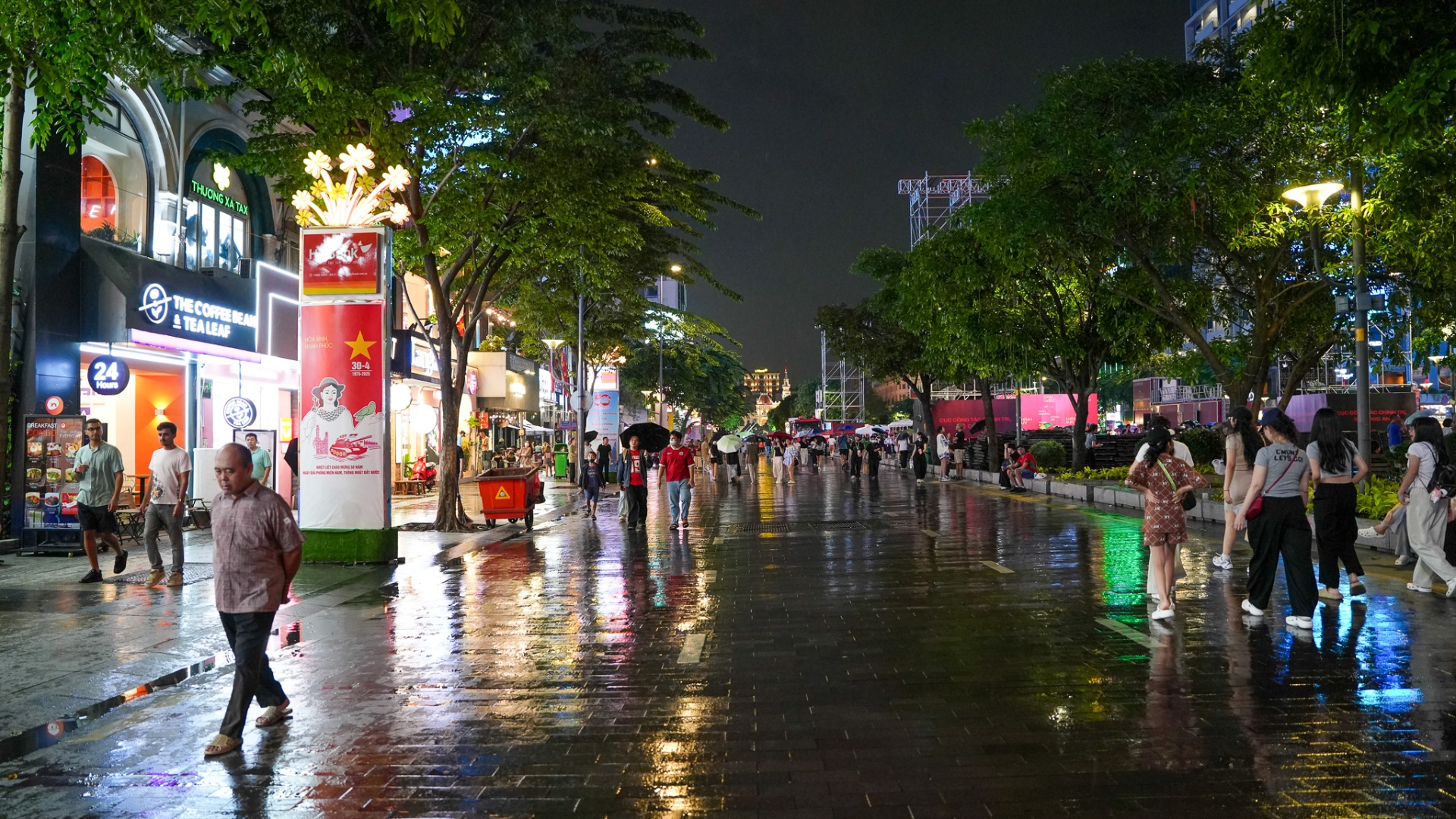
Do not treat those categories as fixed districts or confirmed venues. Saigon’s coffee life is spread across ordinary streets, commercial areas and neighbourhood lanes. A route near Nguyen Hue Walking Street can offer a different public atmosphere from a small local street, but the two should not be presented as interchangeable or equally quiet.
Check whether each café is currently operating when you arrive, and adjust for your own walking ability, heat and rain. Coffee is the subject, not an excuse to cross the whole city. One good stop is better than forcing a long checklist.
Understanding Vietnamese coffee without a lecture
Vietnamese coffee is often associated with robusta beans, phin preparation and condensed milk. Vietnam Tourism’s coffee-culture guidance describes these as features found in familiar Vietnamese coffee styles, but no single description covers every café or person’s preference. Drinks vary by region, house style, roast, equipment and the customer’s order.
You may see phin brewing, where coffee drips through a small metal filter. You may also see modern espresso equipment, ready-made drinks, tea and other choices. The point of a self-guided walk is to notice the range without ranking one form as more authentic than another.
Ask a staff member if you do not understand a menu item. A simple question is more respectful than photographing a worker and guessing. If a café is busy, keep the question brief and accept that staff may not have time for a long explanation.
How to order and share space
Look at how customers order when you enter. Some places take payment first, some settle at the table and some use a counter or token. Follow the café’s system rather than assuming that one habit applies everywhere. If you are unsure, point to the menu and ask politely.
Keep your belongings close without spreading them across a small table. A laptop, map and camera can quickly turn a compact café into a private office. If others are waiting during a busy period, finish your drink and make room. At a quieter café, staying longer may be fine, but read the room.
Street-side cafés share space with pedestrians, motorbikes, deliveries and residents. Keep stools and bags within the area the business is using, and do not move furniture into a passage. Our Saigon street-crossing guide is useful before you move between stops.
A self-guided cafe walk in practice
Begin by choosing a small area rather than a long list of famous cafés. Walk slowly for a few minutes before ordering, looking for a place where customers are already using the space in a way you can join without disruption. A busy shop can be a useful sign of local demand, but it is not an instruction to squeeze in.
At the first stop, order one drink and watch the preparation without turning the staff into a demonstration. Notice the sound of the street, the arrangement of stools and the way people leave space for one another. Then move on before the experience becomes a performance for your camera.
At the second stop, choose a different setting. Perhaps the room is calmer or the menu is broader. Compare the pace, not just the taste. A café’s social role may be visible in how people meet, read, work, wait or simply sit for a few minutes.
End with a stop near a route you already understand. If you want a wider evening context, our Saigon at night guide covers a different time of day. This coffee walk should remain flexible enough to finish when you are comfortable.
Respecting cafés as workplaces
Cafés are businesses and workplaces, not free exhibits. Ask before photographing staff, customers or close-up preparation. Do not move cups, stools or equipment to improve a picture. If the room is crowded, put the camera away and give people priority.
Avoid making confident claims about a family’s history, a recipe’s origin or a worker’s identity unless the business itself provides that information. A short online description is not proof. Describe what you observed and use cautious wording when discussing wider coffee traditions.
Coffee, markets and everyday food
Coffee often sits alongside breakfast, snacks or a market visit. That does not mean every café is part of a food tour. If you are hungry, choose food according to the menu, hygiene conditions and your own needs. Do not reach over another person’s table or assume that a vendor wants to explain the whole neighbourhood.
For a different kind of culinary context, compare this walk with the Ben Thanh Market story. The market and a small café answer different questions: one is a busy trading environment, while the other may be a short pause within a residential or commercial street.
For a guided specialty coffee programme in Saigon, see our Specialty Coffee Culture experience — or browse the full Food & Coffee hub.
A coffee walk can also lead to questions about how drinks fit into daily routines. Notice what is actually happening at each stop rather than applying a fixed story to every café, and confirm current venue details locally.
Weather, timing and comfort
Heat and rain affect a coffee walk because the distance between stops is part of the experience. Carry water even when your plan includes drinks, wear comfortable shoes and bring a light rain layer. A café is not automatically a safe place to wait if its entrance or pavement is crowded.
If rain becomes heavy, pause without blocking a doorway and reassess. Our Saigon rainy season walking guide covers wet pavements, visibility and changing plans. Do not turn a shower into a reason to hurry across a road while looking at a map.
Morning, afternoon and evening each show different uses of cafés. Morning can reveal breakfast routines; afternoon may be slower in some places; evening can bring conversation and street lights. Do not promise that one period is always quiet or always lively. The actual day matters.
What makes the walk successful?
A successful self-guided cafe walk is not measured by the number of drinks or photographs. It is measured by whether you gave each place enough attention, paid properly, left room for others and returned to the street with a clearer sense of how coffee fits into daily life.
Keep your route open to interruption. A closed shop, a full room or sudden rain is ordinary city information, not a failure. Choose another stop, shorten the walk or sit somewhere already welcoming. If you want local historical context while walking, a Ho Chi Minh City free walking tour offers a separate guided format.
Leave with fewer assumptions than you arrived with. Saigon coffee culture is not a single aesthetic, and a visitor does not need to explain it all after two cups. Watch carefully, ask modestly and let different cafés remain different.
Frequently asked questions
- What is special about Saigon coffee culture?
- Coffee in Saigon appears in many settings, from compact street-side stools to contemporary cafés. The culture is best understood as an everyday social and commercial practice rather than one fixed drink or neighbourhood.
- Can I explore Saigon coffee culture without a guide?
- Yes. A self-guided cafe walk lets you choose your pace and style of stop. Observe how each place works, order clearly, keep the pavement open and check current information before travelling.
- How do I choose three stops for a self-guided cafe walk?
- Choose one street-facing café, one quieter stop and one flexible ending within a small area. Check current activity, weather, walking conditions and each café’s own ordering system.
- Is it acceptable to sit for a long time in a Vietnamese café?
- It depends on the place and how busy it is. Order something, notice the café’s rhythm and avoid occupying a small table during a busy period if others need seats.
Sources: Vietnam Tourism’s Ho Chi Minh City café guide and Vietnam Tourism’s Vietnamese coffee-culture article. Venue details and menus should be checked before travel.