Street food is a shared urban space
Street food etiquette in Saigon begins before the first bite. A stall is often part kitchen, part shopfront and part public pavement. The people eating there are sharing a working space with pedestrians, deliveries, motorbikes and staff carrying hot food. Good manners are therefore practical: notice the flow, take only the space you need and do not make the vendor manage your confusion while serving others.
Vietnam Tourism describes Ho Chi Minh City’s cuisine through small eateries, alleys, markets and sidewalk businesses. That variety matters. There is no single rule for every stall, and a busy noodle shop may work differently from a drinks cart or a market counter. Watch for a moment, then follow the system already in use.
This guide avoids inventing prices, guaranteed dishes or fixed opening hours. Menus, vendors and conditions change. Choose food according to current information, your own dietary needs and what the stall can clearly explain.
Choose a stall by observing, not judging
When you see a food stall, pause at the edge rather than walking straight into the cooking area. Look at where customers order, where they sit and how finished bowls or plates are collected. If there is a queue, join it or wait until someone indicates where to stand. Do not touch ingredients, tools or condiments without permission.
A busy stall may show local demand, but it is not a guarantee of quality or food safety for every person. A quiet stall may be quiet because of the time, weather or neighbourhood rhythm. Use your eyes, smell and judgement, and avoid treating a social-media recommendation as a current inspection.
If the stall cannot accommodate you without blocking a doorway or service path, move on. There will be another option. Leaving politely is better than forcing a vendor to rearrange a small business around a visitor.
How to order when you do not speak Vietnamese
Pointing at a menu or a visible dish can work, but do it clearly and patiently. Keep a translation or note ready for allergies and dietary restrictions, while understanding that a small stall may not be able to guarantee the absence of every ingredient. If the answer is unclear, choose a different meal.
Do not shout across a busy kitchen or repeatedly interrupt the person cooking. Wait for eye contact, use a polite greeting and give the vendor time to finish the current task. A simple question is more useful than a long explanation delivered while several bowls are moving.
Confirm the quantity and any obvious options before sitting down. If you are uncertain about the total, ask politely before eating or when you are ready to leave. Keep the interaction straightforward; the vendor is working, not providing a private tour.
Eat first, pay according to the stall
At many casual Vietnamese food stalls, customers order, sit and pay when they finish, while other places take payment first or use a counter system. Vietnam Tourism’s beginner guide describes “eat first, pay later” as a common pattern, but you should still follow the particular stall’s practice.
Keep a note of what you ordered if several people are sharing. When finished, ask for the total or wait for the staff member who handles payment. Pay calmly and check change without creating a scene. If you need a receipt, ask before you leave, understanding that small stalls may not provide formal printed receipts.
Tipping is not a universal obligation. Tourism guidance notes that tipping is less expected in ordinary restaurants than in some guide or spa settings, although people may choose to show appreciation. Never use a tip to demand a photograph, a recipe or priority service.
Where to sit and how to share a table
Take an open stool or seat only when it is clear that customers may use it. Keep bags under your legs or close to your body, not on a neighbouring chair. At a compact stall, other diners may join the table. Make room without expecting a conversation.
Shared seating does not make the other diners public characters. Do not film their meal, comment on their food or ask them to pose. A smile and a small amount of space are usually enough. If you need a private table, choose a venue designed for that rather than trying to create privacy on a crowded pavement.
Keep your elbows, phone and camera away from the dishes of people beside you. Eat at a comfortable pace and move aside when you have finished if others are waiting. The aim is to participate in a shared system, not occupy it as a personal set.
Utensils, napkins and shared condiments
You may see diners wipe chopsticks or spoons before eating. Follow the local setting if that is how the table is arranged, where the stall’s system allows or expects it, but do not make a performance of suspicion. Use the utensils provided and ask for alternatives if you need them.
Herbs, lime, chilli and sauces may be available for customers to add themselves. Use a clean utensil where one is provided, and avoid reaching across another person’s bowl. Add a small amount first; you can add more, but removing too much spice is difficult.
Dispose of napkins, lime peels and herb stems where the stall’s system allows or expects it. Some casual places have a bin beside the table; others use a collection point. Do not push rubbish into drains or leave it on a neighbour’s seat. If the system is unclear, ask or copy what staff are doing.
Eating carefully without insulting the cook
Food safety decisions are personal and deserve calm judgement. Look for a clean enough preparation area for your own comfort, notice how food is handled and choose a busy period only if you are comfortable with the pace. People with allergies, pregnancy-related concerns or medical restrictions may need a more controlled setting. This is general practical guidance, not medical advice or food-safety certification.
Do not criticise a dish loudly because it differs from what you expected. If the food is not suitable, stop eating and explain the problem politely. A recipe can be unfamiliar without being wrong. At the same time, you do not have to finish something that creates a genuine health concern.
Avoid making medical claims about ingredients or telling another diner that a food is safe for them. Ask the vendor what they can reasonably confirm, and make your own decision. Respect includes knowing when a stall cannot answer a specialised question.
Photographs, video and consent
Food photography can be welcome, but consent still matters. Ask before taking a close photograph of a cook, vendor, customer or child. Do not place a camera in someone’s face while they are handling hot food or serving a queue. A general view of a public street is different from an identifiable portrait.
Never move a bowl, garnish or tool without permission to improve a composition. Keep the walkway clear and do not ask staff to remake food for a picture. If a vendor says no, put the camera away without arguing.
Our Saigon street food tour is a separate guided experience with its own route and arrangements. A link to that tour is not permission to photograph its guides, guests or partner businesses. Ask the people involved directly.
Street food and temple or market visits
A food stop may sit near a market, temple or assembly hall, but the etiquette of one place does not transfer automatically to another. Finish food before entering a worship space, keep smells and rubbish away from entrances and dress appropriately. Do not eat beside an altar or treat religious activity as entertainment.
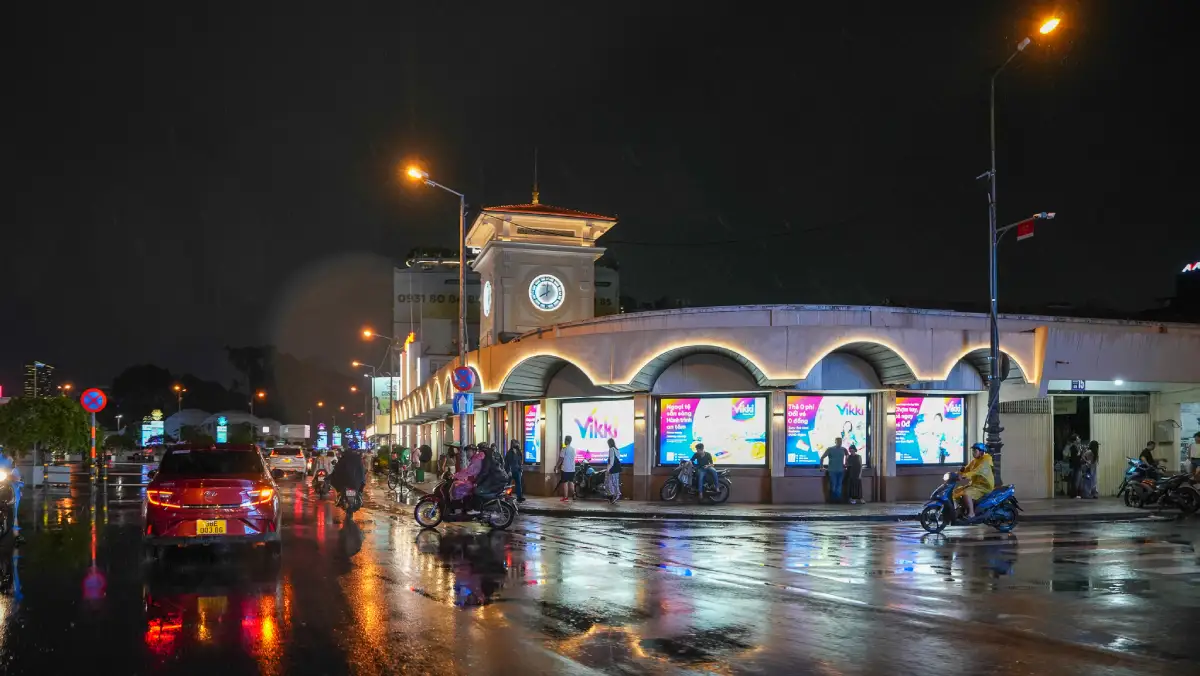
In a market, keep bags close, avoid blocking loading areas and ask before photographing workers. A market is a workplace as well as a visitor destination. Our Ben Thanh Market story offers context, while the current market conditions must be checked separately.
If you are walking in Cholon, the city’s Chinese–Vietnamese cultural landscape deserves the same care. The Cholon walking guide discusses temples, markets and working streets; food is one element of that setting, not a reason to ignore the people who use it every day.
Language, gratitude and leaving well
A greeting, a patient wait and a clear thank-you go a long way. You do not need fluent Vietnamese to show respect. Learn a few useful words if you wish, but do not force pronunciation or familiarity. A nod and a smile are enough when the stall is busy.
When you leave, take your rubbish with you if that is the stall’s practice and return shared items where they belong. Check that you have not left a phone, wallet or rain layer behind. Move away from the service area before checking maps or discussing the meal.
If you enjoyed the food, return at a suitable time, recommend the stall accurately and pay properly. Do not promise that a vendor will be available, cheap or welcoming forever. A respectful recommendation describes what you found and leaves room for change.
A practical etiquette checklist
Before ordering: observe the system, check that you can communicate essential dietary needs and choose a seat without blocking anyone. While eating: keep bags compact, share space, use condiments carefully and photograph only with consent. When paying: ask calmly, pay the correct amount and accept the stall’s normal process.
Remember that “local” does not mean every Vietnamese person eats in exactly the same way. Families, generations, regions and businesses differ. The most respectful visitor avoids turning one observed habit into a rule about an entire country.
Street food etiquette in Saigon is not a test you pass by memorising secret rules. It is the ordinary work of noticing other people, following the setting and accepting that your convenience is not the only priority. Eat with curiosity, patience and enough humility to change your plan.
Frequently asked questions
- What is the basic etiquette for eating street food in Saigon?
- Observe how the stall works, order clearly, take an available seat without blocking others, keep belongings close and pay according to the vendor’s system. Be patient and polite when the space is busy.
- Can I share a table with strangers in Saigon?
- Shared seating can be normal at busy food stalls. Sit where space is offered, keep your belongings compact and avoid treating other diners as part of your entertainment.
- Should I photograph a street food vendor?
- Ask before taking close-up photographs of a vendor, worker or customer. A public pavement does not mean every person has agreed to be photographed.
- Do I need to tip at a street food stall?
- Tipping is not a universal requirement in Vietnam. Pay the stated or agreed amount and follow the stall’s normal process; any extra should be voluntary and never used to demand special treatment.
Sources: Vietnam Tourism’s beginner guide to Vietnamese street food, Vietnam Tourism etiquette guidance and Vietnam Tourism’s Ho Chi Minh City cuisine overview.